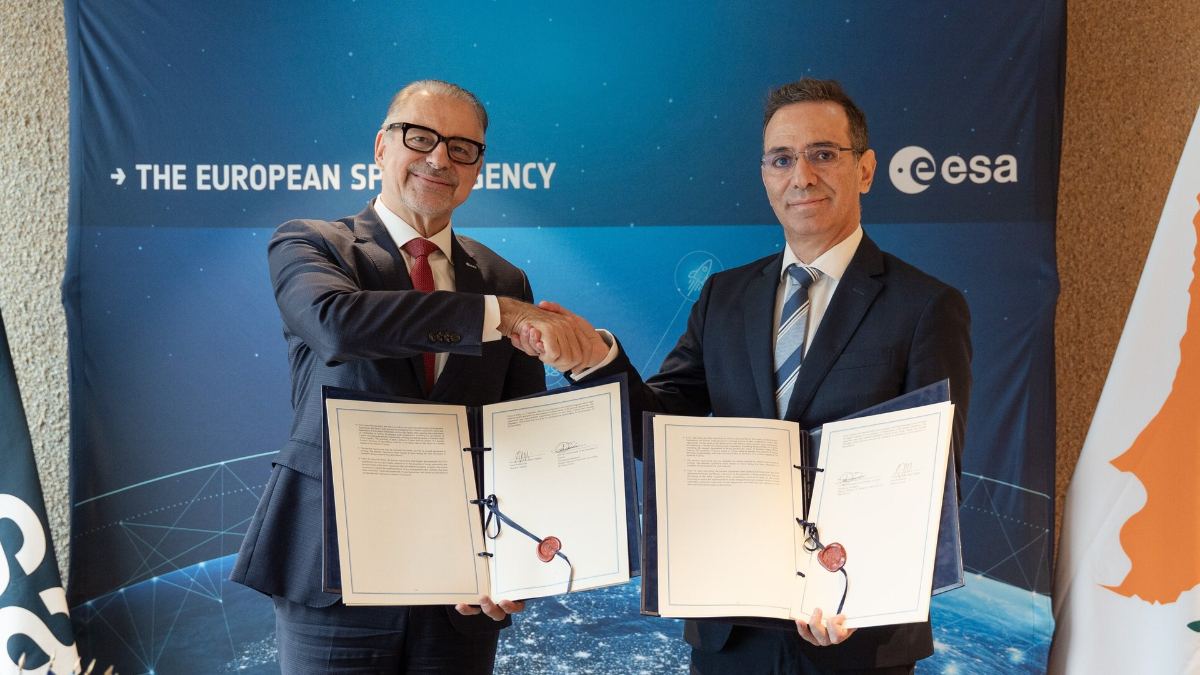
Taking to its website, the ESA announced that Cyprus has joined as its newest Associate Member. This is coming almost a decade after the region started officially cooperating with ESA on various space missions and programs.
Cyprus Joins Forces With The ESA As The Global Space Race Intensifies
While Cyprus isn’t a new face to the ESA, it hasn’t had any membership status, and has only partnered on various missions and programs. However, that changed with the official signing of the ESA Associate Agreement.
Present at this signing were delegations from all 23 ESA Member States and Nicodemos Damianou, Deputy Minister of Research, Innovation and Digital Policy of the Republic of Cyprus. By 2026, Cyprus will initiate the ratification process, which will grant it full associate membership.
This process will take place during the Presidency of the Council of the European Union, which will run from January to June 2026. Once all processes are officially completed, Cyprus will join Latvia, Lithuania, and Slovakia as the fourth ESA Associate Member.
By next month, Cyprus will subscribe to ESA’s optional programmes, establishing itself as a centre for telecommunications, Earth observation, and navigation. Over the years, Cyprus has developed its local space industry through a series of collaborations with the ESA, enabling it to reach this exact point.
Cyprus Readies To Take Part In Growing The Space Industry
Speaking on Cyprus becoming an ESA Associate Member, ESA Director General Josef Aschbacher congratulated the Deputy Minister Damianou, who had a few things to say. He not only applauded the growth of the Cypriot space sector but also the efforts of the people who collectively made this growth possible.
Minister Damianou of Cyprus said, “Today marks a significant milestone for Cyprus, reflecting our readiness to play an active and meaningful role within Europe’s growing space landscape.” He also highlights some features that will make Cyprus an asset to the ESA, saying the region’s “unique position at the intersection of four regions, combined with our elevated geopolitical role, enables us to serve as a trusted, stable, and secure gateway for global space operations, bringing both strategic and operational value.”
By next year, Cyprus will officially start contributing towards “fostering strong partnerships and advancing policies that translate Europe’s space ambitions into tangible benefits for its citizens and economy”, as Damianou says. The contributions of the region will aid in the development of Europe’s space industry.