An Israeli military drone was shot down by the UN Interim Force in Lebanon (UNIFIL) during a routine surveillance mission in the Kafr Kila area on Sunday, the military said Monday.
According to an IDF statement, the drone had posed no threat to the UNIFIL observers, who opened fire on the device and downed it on Sunday.
UNIFIL said at the time that the drone had flown over its patrol “in an aggressive manner.”
It added that “the peacekeepers applied necessary defensive countermeasures to neutralize the drone.”
The IDF said that after the UAV was shot down by UNIFIL, it flew another drone over the area, which dropped a grenade, apparently to prevent people from approaching the site of the downed drone.
UNIFIL claimed on Sunday that the grenade was dropped near its patrol, and that an Israeli tank also opened fire toward its observers, calling the incident a violation of both a UN Security Council resolution and Lebanese sovereignty.
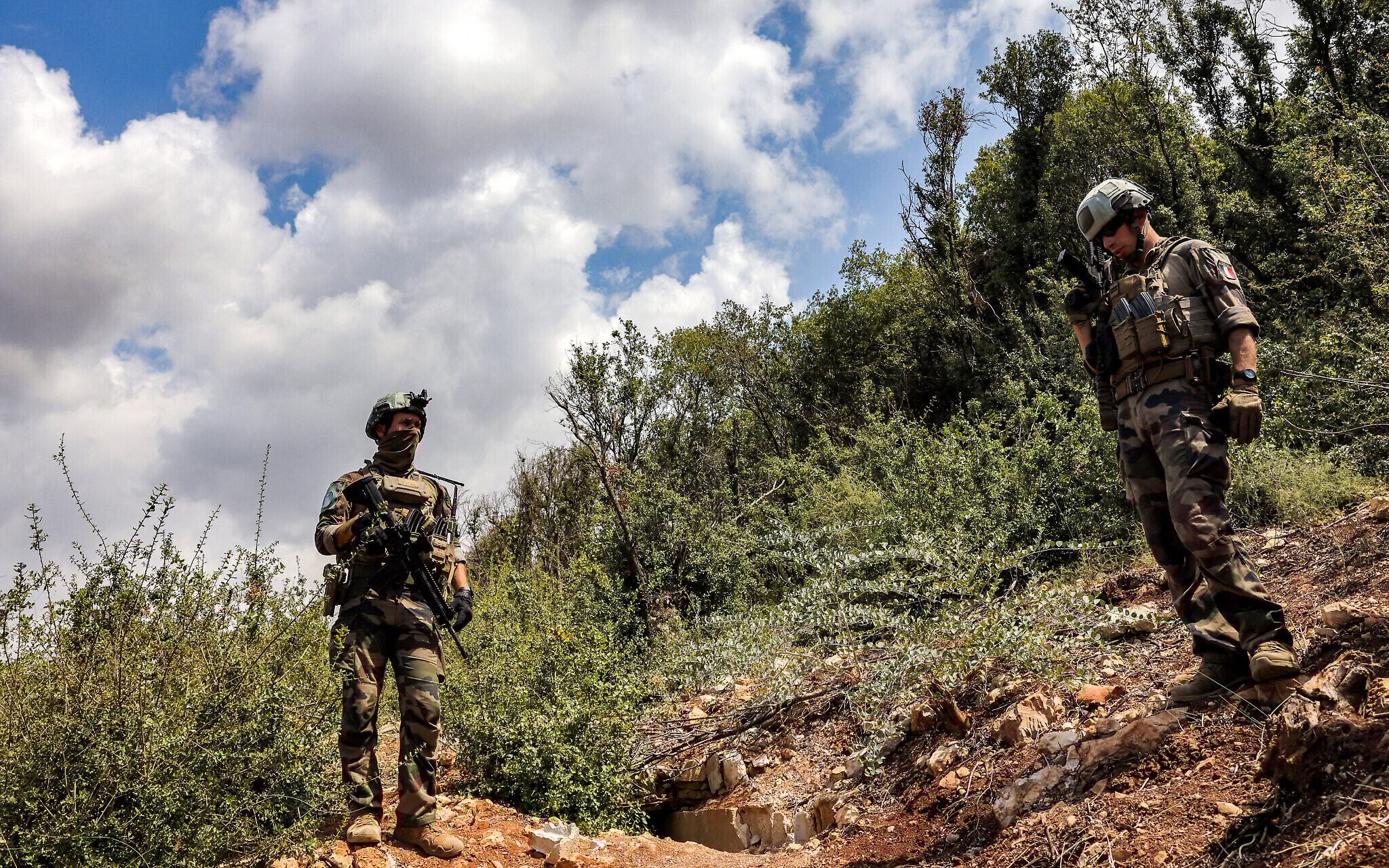
Peacekeepers of the United Nations Interim Force in Lebanon (UNIFIL) stand at a position formerly held by Iran-backed Hezbollah terror group in the Khraibeh Valley in el-Meri in south Lebanon on August 27, 2025. (ANWAR AMRO / AFP)
“An Israeli drone came close to a UNIFIL patrol operating near Kfar Kila and dropped a grenade. Moments later, an Israeli tank fired a shot towards the peacekeepers,” UNIFIL said in a statement.
“These actions by Israel Defense Forces (IDF) are in violation of Security Council resolution 1701 and Lebanon’s sovereignty, and show disregard for the safety and security of the peacekeepers implementing Security Council-mandated tasks in southern Lebanon,” UNIFIL said.
However, the IDF denied the accusation and said that no gunfire was directed toward the UNIFIL observers.
The Israeli army additionally said the incident was under further investigation “through the military liaison channel.”
Earlier this month, UNIFIL twice accused the IDF of dropping grenades near its observers, including one incident in which an observer was lightly hurt.
In both of those incidents, the IDF said it had attempted to disperse Hezbollah activity, with no intention to harm the UNIFIL observers.
Israel has long argued that the observer force has failed in its mission, doing little to block Hezbollah from building up its forces near the Israeli border over decades.
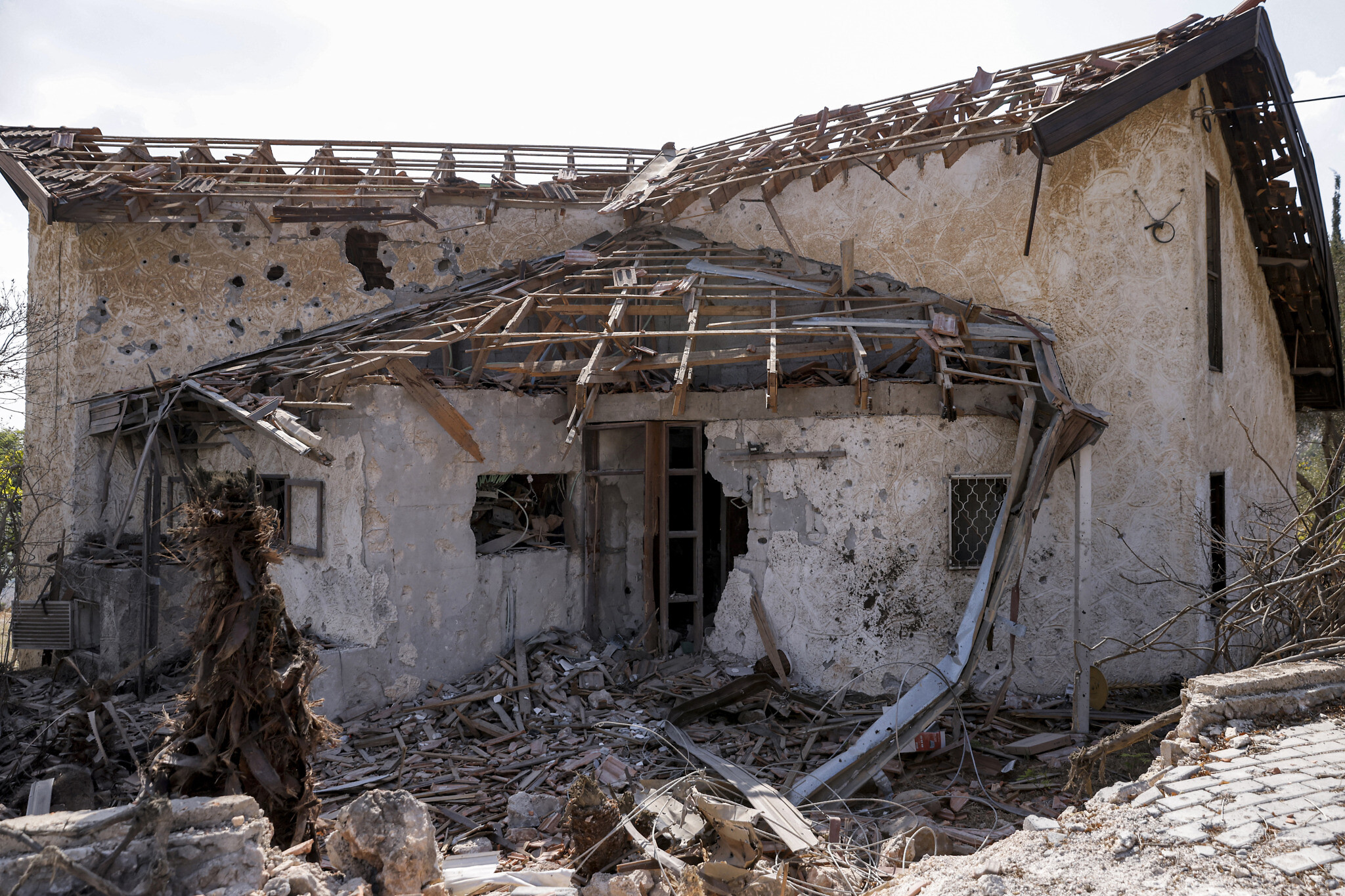
A house in Metulla, northern Israel, destroyed by a Hezbollah missile strike from Lebanon, October 25, 2024. (Jalaa MAREY / AFP)
A 2006 war between Israel and Hezbollah ended with the passage of UN Security Council Resolution 1701, which formed the basis of Israel’s November 2024 ceasefire with the Iran-backed terror group.
That ceasefire halted a conflict sparked when Hezbollah began launching near-daily attacks on northern Israel on October 8, 2023, a day after fellow Iran-backed terror group Hamas invaded southern Israel, sparking the Gaza war.
Hezbollah’s attacks displaced some 60,000 residents of northern Israel. In a bid to ensure their return, Israel escalated its operations in Lebanon in September 2024, decimating Hezbollah’s leadership and invading the country.
Under the US-brokered ceasefire, Hezbollah and Israel were both required to withdraw from south Lebanon, while UNIFIL deployed there alongside the Lebanese military, in part to help dismantle Hezbollah infrastructure.
Israel has maintained its troops in five locations it deems strategic, and kept up regular strikes on what it says are Hezbollah targets violating the truce.
UNIFIL has been deployed since 1978 to separate Israel and Lebanon, and numbers some 10,000 personnel from almost 50 countries. In August, the UN Security Council voted to end UNIFIL’s mission in 2027.