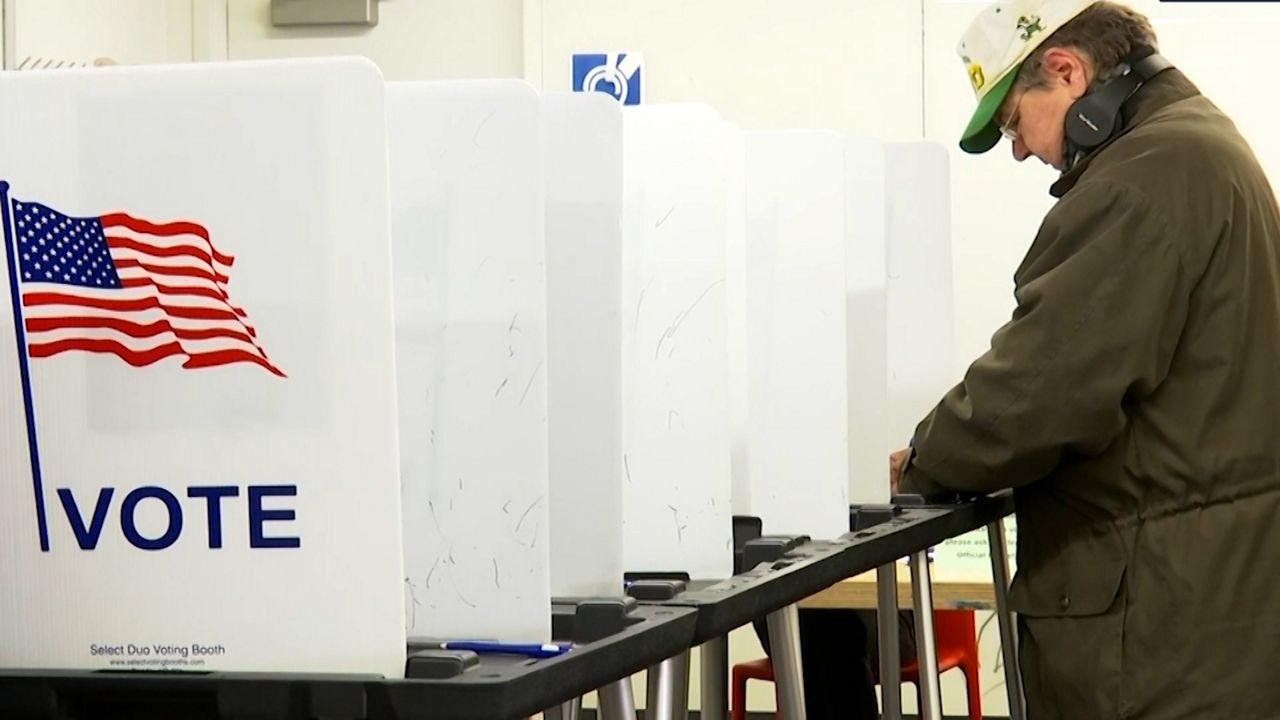
OHIO — Ohio has more school levies than any other state in the country, according to Howard Fleeter from the Ohio Education Policy Institute.
Districts find them necessary to fund essential services. But voters may be showing signs of levy fatigue.
Aubrie Davidson was born and raised in Westerville and is living out the life she always envisioned.
“It was always my dream to open my own salon,” Davidson said. “So after having three kids, I finally did it.”
As owner of Revere Salon and Spa, her customers help her grasp the pulse of the community, including their take on levies.
“I think it’s just part of the deal, when you have school districts in your city,” Davidson said.
Last November, voters in Westerville rejected a school levy. Now, there’s a new one on the ballot that looks to raise income taxes instead of property taxes.
The district is threatening major cuts if it doesn’t pass.
“I don’t want teachers to have to lose their jobs,” Davidson said. “There’s many, many positions that are supposed to be fired and let go if it doesn’t pass.”
Westerville isn’t alone.
In March of 2024, more than half of the school levies in Ohio failed, perhaps a sign that voters have levy fatigue.
“This is a structure of government issue in Ohio, and if voters are getting tired of that and I could certainly understand why they would be,” Greg Lawson, research fellow from the Buckeye Institute, said. “Then we need to have a much broader conversation.”
Lawson said part of the problem is that there are 6,000 different taxing authorities in Ohio.
“Everything from school districts to townships to public library districts to soil and water conservation district,” Lawson said. “As long as we have all these various things out there, we’re going to have a major issue in terms of how we fund things.”
But not everyone sees it that way.
Vanessa Tey Iosue is president of Burges &Burges. One of the things they do is strategizing for levy campaigns.
“It’s hard to make a generalization of our people ‘tired’ or are people willing to accept,” Tey Iosue said. “Because as you’re making your case to your community there are plenty of voters who keep saying yes.”
The reason Ohio has so many levies stems from a nearly 50-year-old law. It prevents a school district’s revenue from increasing when property values increase.
“It’s a little unfair to think about those property tax spikes as a problem for the organizations that are trying to really take the burden of doing things like educating our children,” Tey Iosue said. “Because really the spikes are caused by the timing of the property tax reappraisals.”
According to the Ohio Education Policy Institute, 50% of school levies passed in 2024. That’s a drop from the year before when 64% passed.
From her conversations with her clients, Davidson said it’s also a matter of trust and transparency.
“People are a little bit tired of maybe the way people are spending our money for the city of or for the school district,” Davidson said. “We kind of are wondering if the people higher up are being held accountable for the way they’re spending their money.”