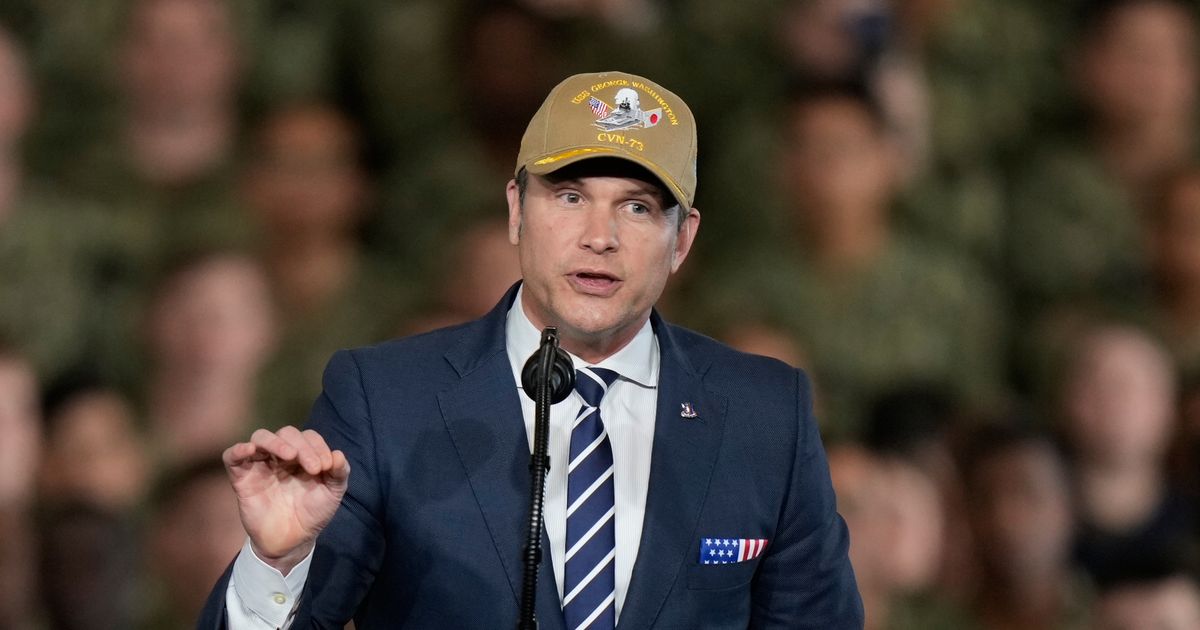
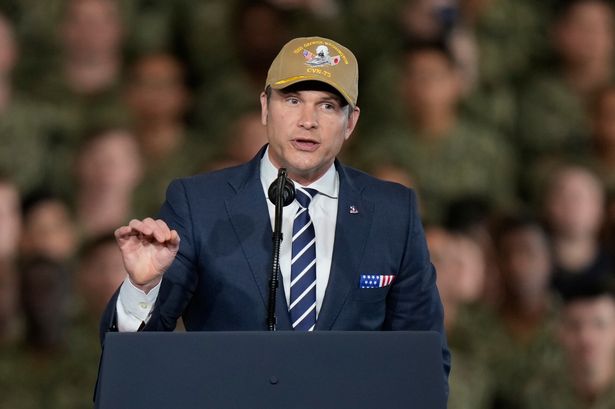
(Image: AP)
The Department of Defense, under Secretary Pete Hegseth, is reportedly directing military officials to sign non-disclosure agreements, the latest move in Hegseth’s long history of attempting to restrict media members’ access to and publication of information. The unprecedented order, first reported by Reuters, comes even as existing rules already prohibit military members from sharing national security secrets.
The death toll from Hegseth and President Donald Trump‘s fatal strikes against ships in the Caribbean that they claim are carrying drugs is growing. Military officials have thus far refused to provide lawmakers critical information about the operation — which some have called extrajudicial killings — including unedited footage of the strikes, the identities of the passengers that were killed, how they were chosen to be targets for attacks, how they were allegedly linked to drug-trafficking groups or proof they were indeed carrying narcotics at the time they were killed.
“Those in charge of deciding whom to kill, might let us know their names, present proof of their guilt, show evidence of their crimes,” said Republican Sen. Rand Paul earlier this month. “Is it too much to ask to know the names of those we kill before we kill them, to know what evidence exists of their guilt?”
READ MORE: Trump ally says he wants third presidential term to ‘finish what we started’READ MORE: ICE leadership shakeup exposes growing DHS friction over deportation tactics
The reported non-disclosure agreements follow orders from Hegseth earlier this month, which imposed government restrictions on members of the press covering the Pentagon, requiring reporters to receive Hegseth’s approval before publishing information obtained while on the beat.
Dozens of reporters, some of whom had covered the Pentagon for decades, turned in their press badges rather than agree. Only the conservative One America News Network signed on, according to The Associated Press.
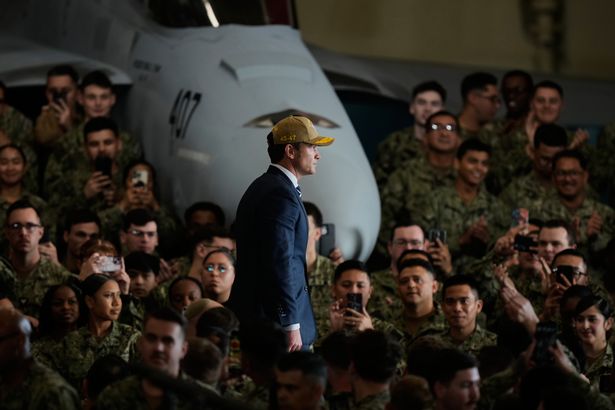
Hegseth released a document last month detailing the myriad circumstances that could lead to the revocation of journalists’ credentials(Image: AP)
“What they’re really doing, they want to spoon-feed information to the journalist, and that would be their story. That’s not journalism,” Jack Keane, a retired U.S. Army general and Fox News analyst, said on Hegseth’s former network.
In effectively replacing traditional news outlets with conservative reporters who are more favorable to the administration, former Pentagon officials say Hegseth is at odds with the news media to a degree never seen before.
In September, his Pentagon released a document detailing the myriad circumstances that could lead to the revocation of journalists’ credentials.
“Limiting the media’s ability to report on the U.S. military fails to honor the American families who have entrusted their sons and daughters to serve in it, or the taxpayers responsible for giving the department hundreds of billions of dollars a year,” the Pentagon Press Association said in a statement.
“The new media policy is not about any one person or any one outlet,” the Pentagon told The New York Times. “It is about preventing leaks that damage operational security and national security. It’s common sense.”
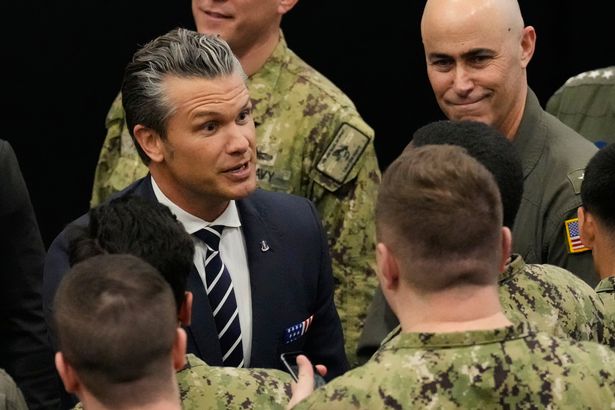
Pentagon officials have previously accused Hegseth of endangering national security procedures(Image: AP)
“I don’t remember any secretary of defense — and I’ve worked for a number of them — saying, ‘OK, put a shackle on them,’” Raymond DuBois, a former Pentagon official, told the Times.
Pentagon officials have also accused Hegseth of endangering national security procedures by allowing his third wife to involve herself in his ongoing battle with members of the media.
Shortly after he took office, he and fellow Fox host Jennifer Rauchet reportedly ordered an NBC News reporter barred from the Pentagon, an apparent act of revenge for her coverage of Hegseth’s allegedly abusive past. Though the order was denied, he reportedly invited Rauchet to sit in on a private meeting as they discussed other ways they could impede reporters, a move his colleagues told The New York Times was “strange and inappropriate.”
Despite a largely united front among Trump’s closest administration allies regarding the apparent malleability of free speech rights and reporters’ access to government employees, several of them expressed radically different opinions not long ago.
Stephen Miller, currently serving as the White House deputy chief of staff, upheld the traditional conservative stance on free speech in 2022. Following the Capitol attack, tech giants such as Twitter, Reddit, Twitch, and Google swiftly banned or removed Trump and his followers from their platforms, a move that sparked outrage among many conservatives who saw it as an infringement on their First Amendment rights.
“If the idea of free speech enrages you – the cornerstone of democratic self-government – then I regret to inform you that you are a fascist,” Miller tweeted on April 15, 2022, reacting to the bans.
Brendan Carr, now at the helm of the Federal Communications Commission, similarly stated in 2023 that “censorship is the authoritarian’s dream.”