Sensory conditions can make that confusion even stronger. “Uniform lighting can eliminate depth and shadow contrast, which dulls spatial cues,” says Tauke. “Temporal stillness—no movement, no variation in sound—signals environmental ‘wrongness.’”

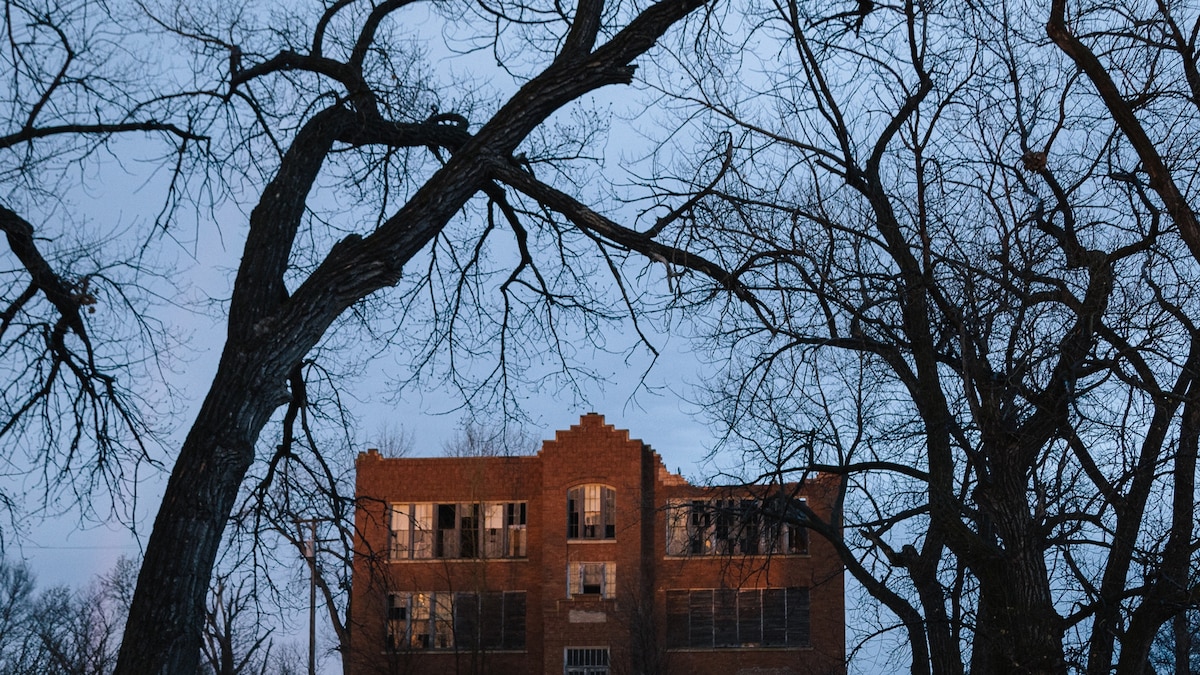
Inside a long-abandoned home in rural Saskatchewan, peeling walls and uneven light distort depth perception, forcing the brain to work harder to map the space.
Brendon Burton
Prediction errors shape perception
The brain’s spatial mapping system depends on stability, says Giocomo. “When something is uncertain, violates our prediction, like a sudden unexpected dead end, or is in conflict, like when the walls are moving faster or slower than our body movement tells us they should be, this can create discomfort, unease, and a loss in certainty,” she adds.
“Haunted spaces” exploit this predictive system with corridors that loop back on themselves, random dead ends, or perfectly symmetrical junctions. Grand, crumbling staircases descending into darkness further amplify disorientation, triggering the brain’s orientation, memory, and threat-detection systems simultaneously. “Psychologically, the dark staircase represents a descent into the unconscious, where repressed fears reside,” Tauke says. “Even without explicit threat, the image carries the cultural memory of suspense.”
Darkness flattens the visual field, forcing the eyes and body to deliver conflicting cues to the vestibular system, which manages balance. “When light is low or shadows obscure the steps, the visual cortex receives incomplete information about depth, contrast, and edge definition,” Tauke explains. “The mismatch between expected and actual feedback, like where the next step is, creates ‘prediction errors,’ which heighten attention and physiological arousal.”
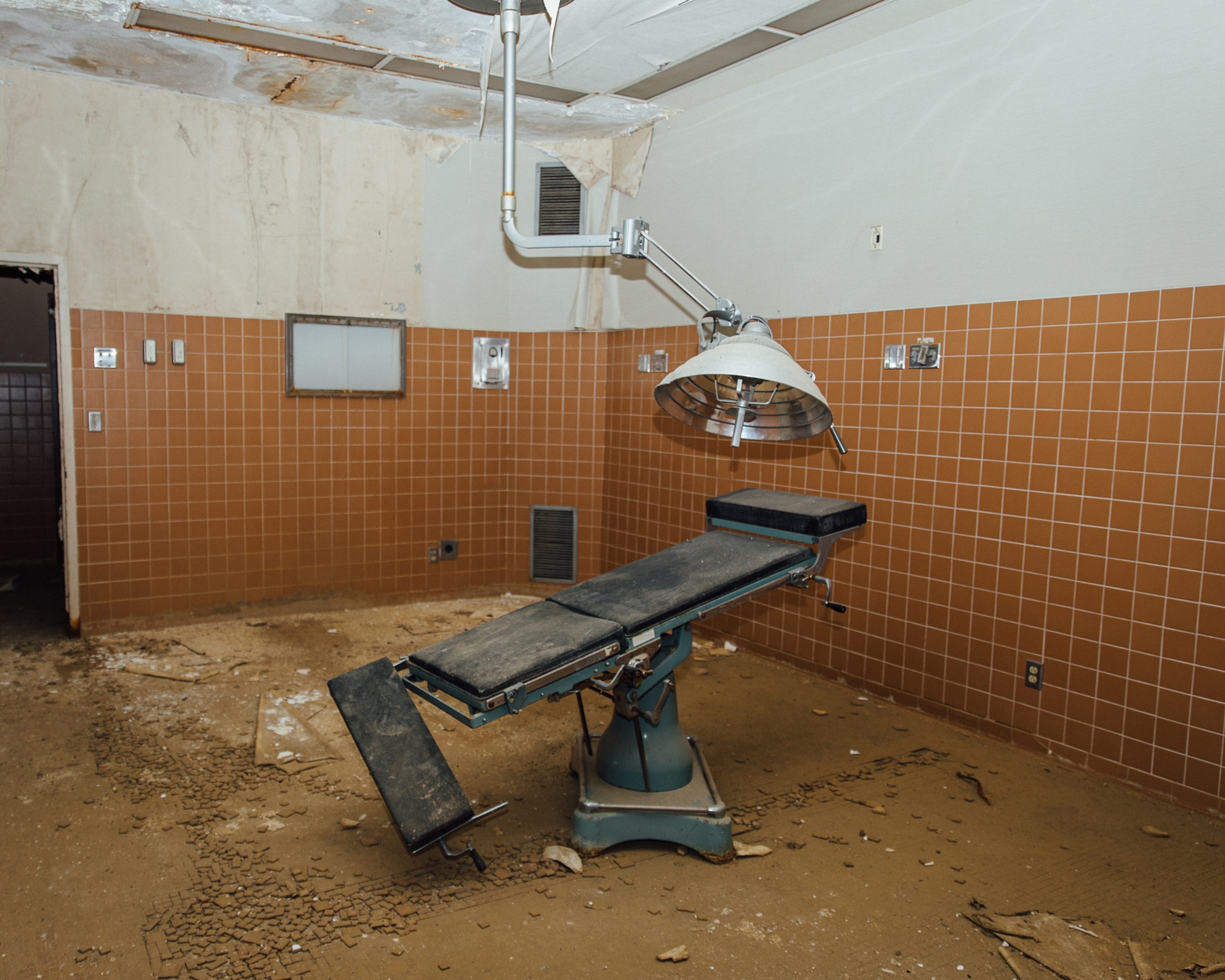
In eastern Montana, an abandoned military hospital exposes how architecture meant to reassure can feel ominous when stripped of sound, light, and purpose.
Brendon Burton
Ancient instincts are at play
Our most primal survival systems evolved to spot danger and seek safety—and “haunted spaces” exploit both.