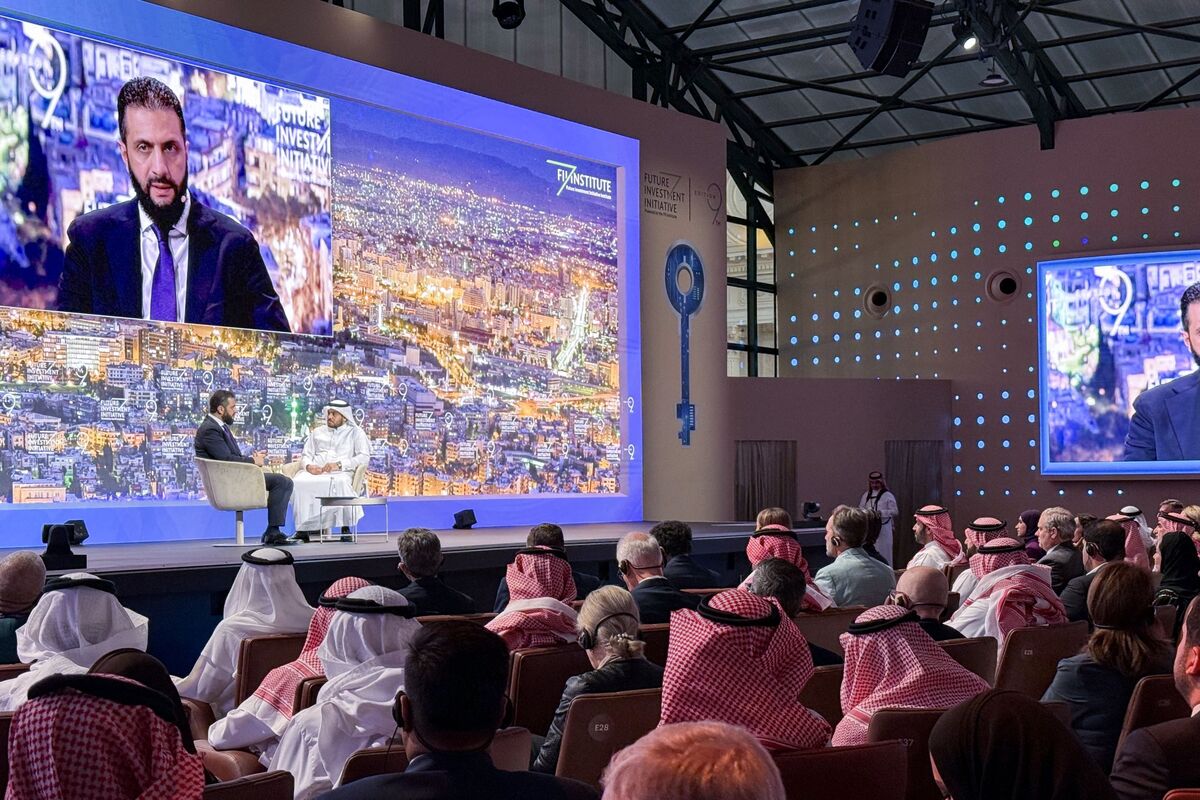
Al-Sharaa revealed that major Saudi companies have already commenced projects worth $7 billion
Syrian President Ahmed Al-Sharaa recently announced that Syria has attracted approximately $28 billion in investments during the first six months of the year after amending its investment laws, highlighting significant participation from companies based in the United Arab Emirates, the Kingdom of Saudi Arabia and the State of Qatar.
Speaking during a panel discussion at the ninth edition of the Future Investment Initiative in Riyadh, Al-Sharaa revealed that major Saudi companies have already commenced projects worth $7 billion, while leading Qatari firms have begun investing in the Damascus Airport and in power generation projects totaling 5,000 megawatts.
Syria’s investment laws among the world’s top ten frameworks
He stressed that Syria, having regained its regional position, now serves as a key pillar of regional stability, noting that the country currently enjoys strong and constructive relations with the UAE, Saudi Arabia, Qatar and Türkiye. Al-Sharaa explained that Syria’s investment laws have been amended to better serve investors, adding that the new legislation has been ranked among the world’s top ten investment frameworks.
Al-Sharaa also highlighted Saudi Arabia’s role in regional economic leadership and its support for Syria’s post-war recovery. “We want to rebuild Syria through investment, not through aid and assistance,” he said. “Saudi Arabia is a major player in the region, and under Crown Prince Mohammed bin Salman’s vision, it has become a hub for economists in the Middle East.”
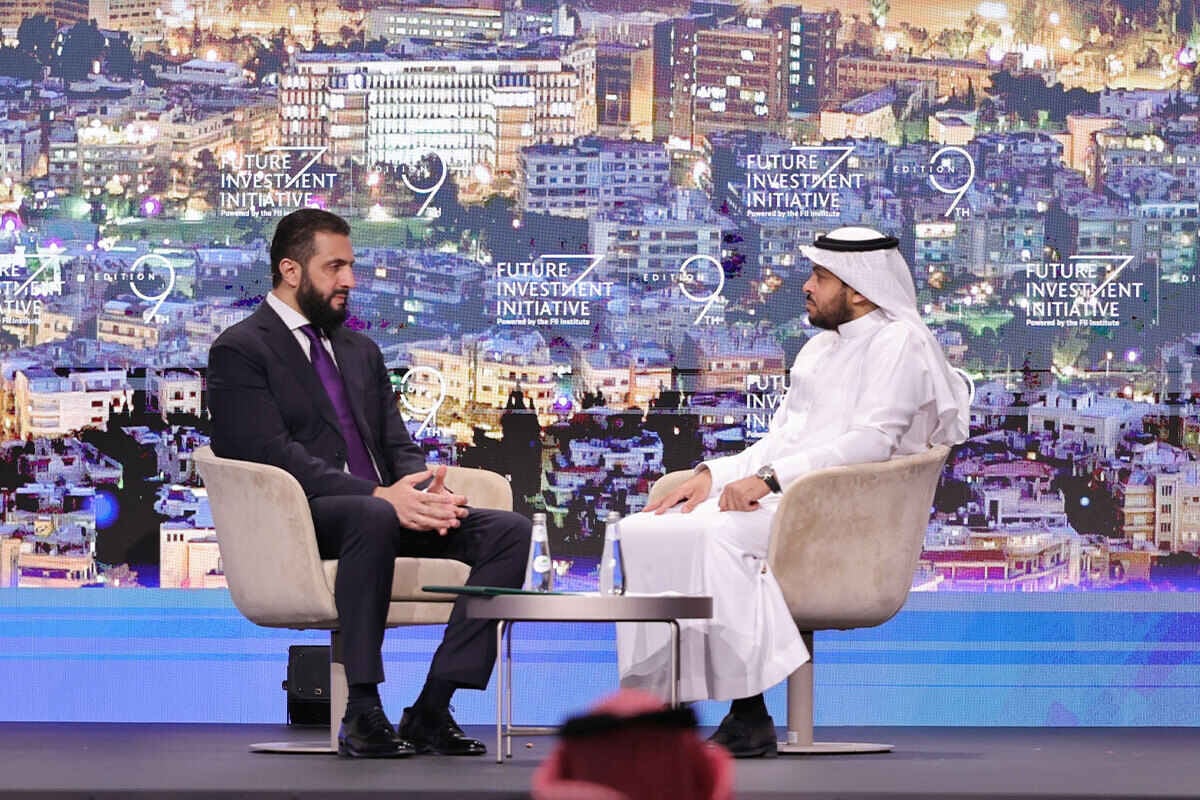 Source: QNAGovernment committed to integrating Syria into the regional and global economy
Al-Sharaa also noted that the economy is closely tied to regional security and that instability in Syria during the civil war has posed strategic risks, including the spread of drugs and migration crises. “The world has experienced Syria in turmoil over the past 14 years and as a generator of crises over the last 60 years,” he said.
“Syria’s investment opportunities are rich, and major global economists recognize this,” he said, adding that the country has partnerships with Türkiye, Saudi Arabia, Qatar, the UAE, Bahrain, Jordan and U.S. companies.
“Saudi Arabia supports prosperity, stability and development in Syria, and I have been following for years the vision put forward by the Saudi crown prince, which encompasses the entire region,” he added.
Al-Sharaa stressed the government’s commitment to protecting investors under the law and integrating Syria into the regional and global economy. “We cannot live in isolation. Integration with other countries creates a fully connected future economy,” he said.
The Syrian leader concluded by underscoring that Syria will achieve balanced economic rankings regionally and internationally and “will be among major economies within several years.”
Read: UAE central bank cuts interest rate to 3.90 percent following Fed’s move
Al-Sharaa meets with Saudi Crown Prince
Separately, Al-Sharaa met with the Saudi Crown Prince to discuss bilateral cooperation, particularly in investment and economic ties, as well as exchanging views on regional and international developments, the Syrian presidency said in a statement.
A number of ministers and senior officials from both countries attended the talks, reflecting the depth of the fraternal relations between the Syrian Arab Republic and the Kingdom of Saudi Arabia and their shared desire to strengthen and develop them.
The Syrian President landed in Riyadh on Tuesday to participate in the third day of the ninth edition of the Future Investment Initiative (FII) conference, hosted by Riyadh through October 30. The event brings together more than 8,000 participants, including senior officials from around the world.
This is the third visit by the president to the Kingdom since he assumed Syria’s presidency in January 2025. Syria has been working to revive the country’s economy by attracting investors and signing trade agreements with regional states and companies after Bashar al-Assad fled to Russia in late 2024, ending the Baath Party’s decades-long rule since 1963.