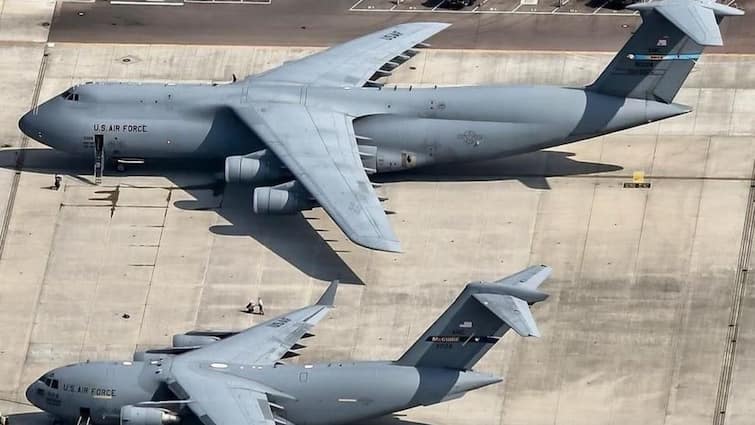
Taliban-ruled Afghanistan and Pakistan have resumed negotiations after a prolonged stalemate. Pakistan Defence Minister Khwaja Asif blamed India for the earlier collapse of peace talks in Turkey. However, the real reason behind the deadlock was Islamabad’s inability to stop US drone strikes in Afghanistan conducted from Pakistani territory.
Dispute Over Drone Flights
According to a TOLO News report on Wednesday, Afghan negotiators agreed to prevent the use of Afghan soil for attacks against Pakistan only if Islamabad stopped violating Afghan airspace and prevented US drone operations. Pakistan, however, refused to accept the condition.
In a renewed attempt to salvage the dialogue, Afghan and Pakistani delegations met again in Istanbul, TOLO News reported.
Pakistan Admits to Drone Agreement With US
During the discussions, it emerged that a “foreign country” was using Pakistani soil to launch drone attacks into Afghanistan. TOLO News confirmed that the United States was operating the drones from within Pakistan.
Kabul-based journalist Tameem Bahiss posted on X: “According to Afghan news channels, Pakistan has acknowledged signing an agreement with a ‘foreign country’ that permits drones to operate within its airspace for surveillance and potential strikes inside Afghanistan.”
On October 28, TOLO News wrote on X: “For the first time, Pakistan admitted during these negotiations that it has an agreement with the United States allowing drone strikes, and claimed it cannot break that agreement.”
The report added that Pakistani negotiators initially accepted some conditions but reversed their stance after receiving a phone call, believed to be from Pakistan’s high command, saying they had no control over US drone activity or the fight against ISIS.
“Qatari and Turkish mediators were also surprised by the Pakistani delegation’s conduct,” TOLO News stated.
Blame on India Amid Changing Stance
Despite the revelations, Pakistan shifted blame onto the Taliban and India for the failed talks. “The people in Kabul pulling the strings and staging the puppet show are being controlled by Delhi,” Defence Minister Khwaja Asif told Geo News. “Whenever we got close to an agreement when negotiators reported to Kabul, there was intervention, and the agreement was withdrawn,” he said.
Asif’s remarks overlooked how Pakistan’s position changed after the phone call concerning US drone strikes from Pakistani soil.
Threat to the Taliban
Following the breakdown of talks, Khwaja Asif warned the Taliban using a reference to the 2001 Battle of Tora Bora. “Let me assure them that Pakistan does not require to employ even a fraction of its full arsenal to completely obliterate the Taliban regime and push them back to the caves for hiding. If they wish so, the repeat of the scenes of their rout at Tora Bora, with their tails between the legs, would surely be a spectacle to watch for the people of the region,” Asif said, as reported by Dawn.
US-Pakistan Alignment Under Trump
Under President Donald Trump, Pakistan deepened its defence and strategic ties with the United States, marked by high-level meetings, including Prime Minister Shehbaz Sharif’s visit to the Oval Office with Army Chief Asim Munir in attendance.
Trump has demanded the return of the Bagram airbase from Taliban-controlled Afghanistan, warning that “bad things would happen” if the US did not regain it. Sharif, meanwhile, has praised Trump’s “leadership”, describing his “role in the India-Pakistan ceasefire as a historic achievement” and even nominating him for the Nobel Peace Prize.
Durand Line Tensions Continue
Although Trump claimed to have ended the Afghanistan-Pakistan war, the border along the British-era Durand Line remains volatile. Afghanistan does not recognise the boundary dividing the Pashtun homeland.
Clashes erupted in early September after escalating Tehrik-i-Taliban Pakistan (TTP) attacks prompted Islamabad to launch air strikes deep into Afghanistan, targeting Kabul and Kandahar. Drone strikes and JF-17 bombings killed over 200 people on both sides. The Taliban government reported that dozens of civilians, including women and children, were among the victims.
Pakistan’s Contradictions Exposed
Pakistan, which has deployed its air and drone power against Taliban-led Afghanistan, inadvertently admitted to allowing US drone strikes from its territory.
“Pakistan admitting the US conducts drone strikes from its territory is quite telling. Pakistan was a massive victim of Barack Obama’s drone wars itself,” journalist Ali M Latifi wrote on X.
With its economy in crisis, Pakistan has been using its soldiers and land for foreign operations. The Istanbul talks revealed that Pakistan has a secret agreement with the United States to permit drone strikes on Afghanistan from its soil — a reality Islamabad is unable to alter. This admission was the true reason why the peace talks ended in a stalemate.