Key Points
Set the U.S. refugee admissions cap for fiscal year 2026 at 7,500, the lowest level since the program’s inception, reducing from 125,000 under President Biden.
Prioritized refugee admissions primarily for white Afrikaners from South Africa under Executive Order 14204, citing claims of racial discrimination against them.
Faced widespread criticism for narrowing refugee definitions and cutting admissions amid global refugee crises, with concerns over political motives and humanitarian impact.
On September 30, 2025, the Trump administration made a seismic announcement that has sent shockwaves through the global humanitarian community and ignited fierce debate in political, diplomatic, and advocacy circles. In a presidential document published that day, President Donald Trump set the United States’ refugee admissions cap for the 2026 fiscal year at a mere 7,500—by far the lowest in the program’s four-decade history. The move, which will last from October 1, 2025 through September 30, 2026, represents a dramatic departure from the 125,000 refugees admitted under President Joe Biden in his final year in office, according to reporting from BBC and other major outlets.
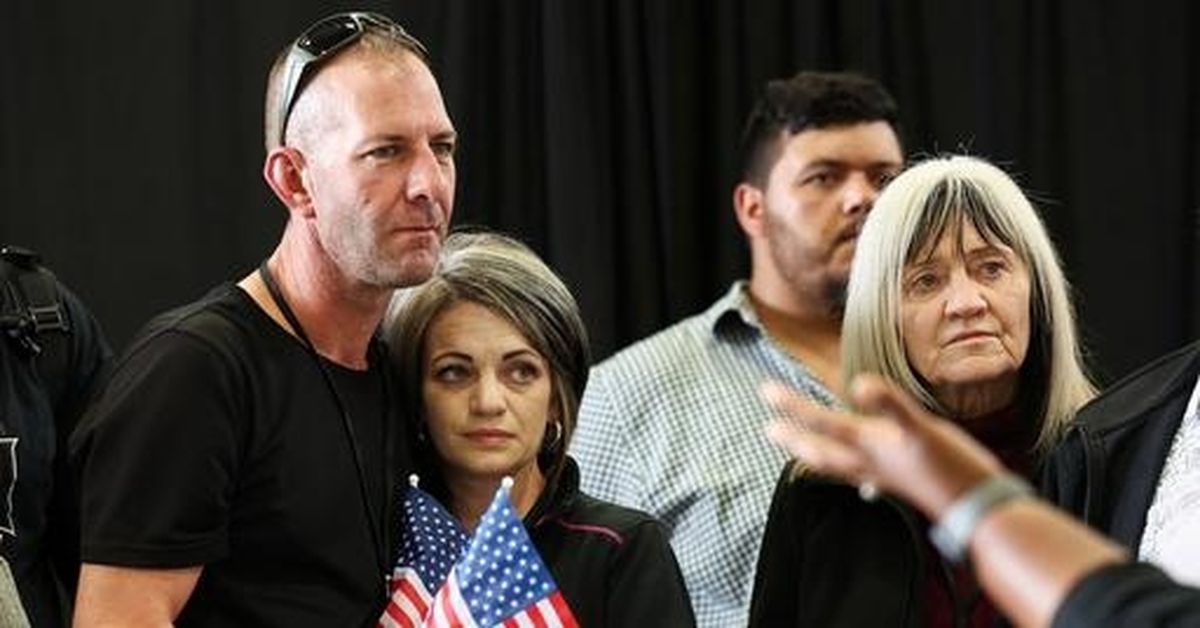
But the controversy doesn’t end with the numbers. The administration declared that priority for those scant 7,500 slots would go primarily to white Afrikaners from South Africa, citing Executive Order 14204 issued in February 2025. This executive order, as documented by the Associated Press, claimed that Afrikaners—descendants of Dutch and French settlers—are victims of “unjust racial discrimination” in their homeland. Trump’s declaration stated, “The admissions numbers shall primarily be allocated among Afrikaners from South Africa pursuant to Executive Order 14204 and other victims of illegal or unjust discrimination in their respective homelands.”
This shift has drawn sharp criticism from refugee advocates, U.S. lawmakers, and international observers alike, who argue that the United States is turning its back on millions of vulnerable people worldwide. As of 2025, the United Nations High Commissioner for Refugees (UNHCR) reports a staggering 42.7 million refugees around the globe—people fleeing war, ethnic cleansing, and persecution. Traditionally, the U.S. Refugee Admissions Program (USRAP), codified by the Refugee Act of 1980, has been a lifeline for those most at risk. Since its inception, at least two million refugees have found safety in America, many referred by the UN and vetted through a rigorous process lasting months or years.
Yet, as the Associated Press and CBS News note, the Trump administration’s new policy marks a fundamental change—not just in numbers, but in the very definition of who qualifies as a refugee. Aaron Reichlin-Melnick, a senior fellow at the American Immigration Council, observed on X (formerly Twitter), “Trump’s new refugee determination appears to call for admitting refugees who wouldn’t meet the definition of refugee—someone who faces persecution (not ‘discrimination’) on the basis of race, religion, nationality, membership in a particular social group, or political opinion.” He lamented, “Now it will be used as a pathway for White immigration. What a downfall for a crown jewel of America’s international humanitarian programs.”
The White House did not specify reasons for the drastic cut, beyond stating it was “justified by humanitarian concerns or is otherwise in the national interest.” Critics, however, see a clear political motive. The International Refugee Assistance Project’s president, Sharif Aly, said in a statement, “Today’s announcement highlights just how far this administration has gone when it comes to abandoning its responsibilities to displaced people around the world.” He added, “America’s refugee program was built to reflect our values, and the thousands of individuals we’ve closed our doors to represent thousands of missed opportunities of people who could have strengthened a local community or economy.”
Trump’s crackdown on immigration has been a hallmark of both his terms in office, but some advocates had held out hope that the refugee program—long enjoying bipartisan support—might be spared. That hope was buoyed in recent years by the U.S. withdrawal from Afghanistan, which left many Afghans who aided U.S. forces in desperate need of resettlement. But with specialized immigration programs backlogged or restricted, many of these allies have now been left in limbo, as the new cap and its priorities effectively shut them out.
According to BBC reporting, in February 2025, Trump not only suspended critical aid to South Africa but also offered Afrikaners refugee status in the U.S. This move was met with outrage from South African officials. South Africa’s ambassador to Washington, Ebrahim Rasool, was expelled after accusing Trump of “mobilising a supremacism” and trying to “project white victimhood as a dog whistle.” President Cyril Ramaphosa, during a tense Oval Office meeting in May, pushed back against Trump’s claims that white South African farmers were being killed and persecuted, stating there was “doubt and disbelief about all this in [Trump’s] head.” The White House even played a video purporting to show burial sites for murdered white farmers—though it later emerged that the footage was from a protest, and the crosses represented farmers killed over multiple years, not a sudden wave of violence.
South Africa’s government has repeatedly denied that Afrikaners or other white South Africans are being systematically persecuted. Crime figures released for October to December 2024 showed that, of 7,000 murders nationwide, only 12 were killed in farm attacks, and just one of those was a farmer. Five others were farm dwellers and four were employees, likely Black South Africans. As BBC notes, the country does not release crime statistics by race, complicating Trump’s narrative.
The first group of Afrikaners granted refugee status under the new program arrived in the U.S. in May 2025. In the same month, the U.S. granted asylum to 60 Afrikaners, a symbolic gesture that set the tone for the administration’s new approach. Meanwhile, refugee admissions from countries facing war and ethnic violence—such as Afghanistan, Myanmar, Sudan, and Venezuela—have plummeted, drawing accusations of preferential treatment and undermining the program’s credibility.
Krish O’Mara Vignarajah, president of Global Refuge, one of the major organizations working with the U.S. government to resettle refugees, minced no words: “This decision doesn’t just lower the refugee admissions ceiling. It lowers our moral standing.” She continued, “At a time of crisis in countries ranging from Afghanistan to Venezuela to Sudan and beyond, concentrating the vast majority of admissions on one group undermines the programme’s purpose as well as its credibility.” Refugees International echoed this sentiment, stating the policy “makes a mockery of refugee protection and of American values.”
In addition to the admissions cap and shift in priorities, the Trump administration also rerouted refugee resettlement grants and contracts to the Office of Refugee Resettlement within the Department of Health and Human Services, aiming for “better alignment of resources, oversight, and accountability” for activities within the U.S., according to the Associated Press. However, critics argue that this centralization further narrows the range of organizations involved in refugee support and oversight, potentially reducing transparency and community involvement.
Historically, the U.S. refugee program has been a beacon for those fleeing the world’s worst crises. In fiscal year 2024, the Biden administration admitted more than 100,000 refugees—the highest number since the 1990s. The Trump administration’s new policy, as reported by CBS News, marks a stark reversal, one that many see as a retreat from America’s longstanding humanitarian commitments.
As the global refugee crisis continues to escalate, with millions seeking safety, the U.S. decision to drastically reduce admissions and prioritize one group above all others has sparked a reckoning over the nation’s role in the world—and what it means to offer refuge in the 21st century.