Blog
October 30, 2025

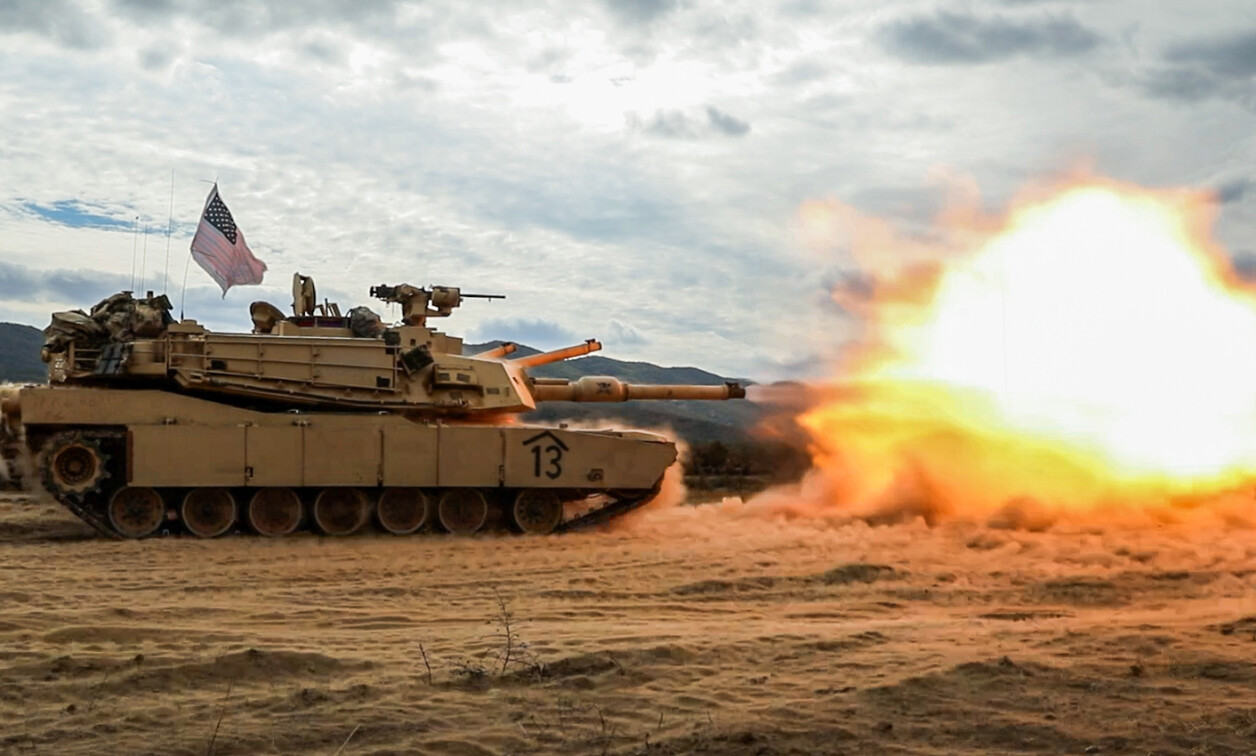
M1A2 Abrams main battle tank. Credit: Army Sgt. 1st Class Richard Perez
WARFARE EVOLUTION BLOG. Before we jump to another topic in these articles, it would be appropriate, relevant, and instructive if we conclude this series on the worldwide military markets by looking at NATO in Europe, and the spending by military alliances and security agreements in the Pacific area. The SIPRI report (Stockholm International Peace Research Institute) does a nice job of breaking down the regional military markets if you need more details than we cover here. Put this information under demand-side data in your collection.
Let’s start with NATO. The North American Treaty Organization is a military and political alliance created in 1949 by the U.S., Canada, and 10 countries in Europe. According to Hastings Lionel Ismay (the first Secretary General), “The purpose of the NATO alliance is to keep Russia out, the Americans in, and the Germans down.” European countries have been fighting each other for hundreds of years, culminating in WWI and WWII against Germany. There are 32 countries in NATO today and they haven’t fired a shot at each other since May 8, 1945, so NATO is working.
NATO’s 2025 budget is $4.6 billion Euro ($5.36 billion). About 2.37 billion Euro ($2.76 billion) goes into military operations and common needs, 483 million Euro ($564 million) goes to administrative staffing and the headquarters facilities in Brussels, and the rest goes for special programs like infrastructure. The U.S. supplies 16% of the total NATO budget, Germany 16%, U.K. 11%, France 10%, Italy 9%, Canada 7%, Spain 6%, and Belgium 2% for a total of 77%. The 24 smaller NATO countries contribute the remaining 23%. Keep in mind here that direct NATO spending is a small part of total European military spending. In 2024, European NATO countries spent $454 billion on their defense.
NATO organizes and coordinates the military defenses of all the member countries for a conflict with Russia or any other attacker. And it creates standards, called STANAGs (standards agreements), for weapons, ammunition, communications systems, and other common elements. During WWII, The U.S. used 7.62mm ammunition in its rifles and machine guns. France used 7.5mm, England used 7.7mm, and Holland used 6.5mm so none of the allies could share ammunition. After WWII, NATO established common ammunition specifications with STANAGs, including artillery shells. But even today, 14 NATO countries take liberties with the STANAG specifications for 155mm artillery shells, to protect their local industries from competition. This showed up when the U.S. and European 155mm artillery rounds were shipped to Ukraine. The different shells hit in different places when fired on Russian targets by Ukrainian cannons. The rounds from different countries require different artillery firing and range tables. NATO leadership are trying to fix this problem now.
To read more Warfare Evolution Blogs by Ray Alderman, click here.
As of early 2025, the U.S. has 49 military bases and more than 100,000 troops moving around in Germany, Italy, U.K., Poland, Romania, Spain, Belgium, Greece, and Netherlands. Russia invaded Ukraine in 2022 and there are four NATO countries that border Ukraine: Poland, Slovakia, Hungary, and Romania. There are six NATO countries that border Russia: Norway, Finland, Estonia, Latvia, Lithuania, and Poland. Under Defense Cooperation Agreements, U.S. troops shuffle in and out of the border countries for training and deterrence activities.
It has been estimated that if the U.S. closed the 49 bases, pulled our troops out, and left NATO, that Europe would need an additional 300,000 soldiers to defend the Suwalki Gap (the path along the Poland-Lithuanian borders from Russia to Kaliningrad) and the Fulda Gap (the shortest path through Germany to attack Paris) that Russian tanks would use to invade. And Europe would need an increase of 250 billion Euro ($291 billion) per year in defense spending to buy equipment (i.e., fighter planes, ships, tanks, missile systems, satellites, etc.) to replace what the U.S. deploys today on the continent. The weapons that Europe presently has are old, their military supply chain is nonexistent, and their military technology is antiquated.
As the U.S. shifts its attention away from Europe and toward the Pacific, NATO countries have increased their military spending by about 17% in 2024. But that’s not enough to offset America’s potential reductions. At the recent NATO Summit in June, the European countries agreed to increase their military spending to 5% of their GDP, a significant increase over their previous goal of 2% before Russia invaded Ukraine. About 20% of each NATO country’s new military spending goal will be used to acquire new platforms, weapons, and equipment.
Where the money comes from and how it will be used is confusing. Each NATO country has their own military budget that favors spending on their local industries, even if their products are inferior and outdated. Additionally, the European Union (E.U.) has devoted about 7 billion Euro ($8.2 billion) to their European Defense Fund, to be used for military platform research and development (R&D) efforts by different companies across Europe. And finally, there are NATO STANAGs for common equipment, weapons, and ammunition that could be in conflict with the EU and individual country priorities.
Take the European 6G fighter plane project for example. There are presently three programs underway. France, Germany, and Spain are developing FCAS (Future Combat Air System). Then, there’s GCAP (Global Combat Air Programme) being developed by the U.K., Italy, and Japan. Sweden, Brazil, South Africa, Hungary, and the Czech Republic are working together on the Future Combat Aviation Concept (FKS). You can bet that the only common part on these three different fighter planes is the jet fuel they burn. The same thing is happening on the next generation European battle tank. There are three programs underway: MGCS (Main Ground Combat System), MARTE (Main Armored Tank of Europe), and FMBTech (Technologies for Future Main Battle Tank). Don’t expect any common parts on these three platforms either.
In each of these programs, the participating countries are squabbling about who gets the money from the E.U., who is the lead contractor on the project, and who gets the jobs, the revenue, and the taxes for building which parts for these new platforms. Each country has their own agenda, and trust of the E.U. leadership in Brussels is weak. So, I think NATO will have the greatest influence over how each country spends their defense money. Today, 13 European countries buy the American-made F-35 fighter plane. It could be decades before an advanced European fighter plane is flying.
The same messy situation could occur with tanks. Today, the only NATO country operating Abrams tanks, other than the U.S., is Poland. Ukraine (not a NATO member) is also operating the Abrams tank against Russia. Any war in Europe will be an Air-Ground war, primarily with fighter planes, missiles, drones, tanks, and infantry. Russia isn’t much of a naval threat. It could take a decade to field a new European-made battle tank so more NATO countries might buy the Abrams tank.
Next is the Pacific region. There are 66 major U.S. military bases in the Pacific area and as many as 400 total installations scattered across different countries and islands. Over 300,000 U.S. personnel are deployed in the Pacific area. Hawaii has 11 major military bases and about 60,000 troops. Japan has 14 U.S. military bases housing over 52,000 troops. The largest facility is Kadena Airbase on Okinawa where over 30,000 troops are stationed, followed by South Korea with about 28,000 soldiers. There are about 7,000 U.S. military personnel on Guam.
There are 14 independent nations and about 37 small island nations in the Pacific area with no large-scale mutual defense agreements covering all those nations like NATO does in Europe. There are some scattered agreements. The Quad is a diplomatic agreement between the U.S., India, Australia, and Japan. AUKUS is a military agreement between the U.S., the U.K., and Australia. The U.S. has a defense agreement with Japan, South Korea, and the Philippines. There are trade and diplomatic agreements with India and Vietnam.
Only India, Japan, South Korea, Australia, the Philippines, and Taiwan have enough military spending to be interesting. Collectively, those countries spent about $245 billion on defense in 2024. Compare that to the $454 billion spent on defense by the European NATO countries. In 2024, Japan increased their military spending by 21% so they sense threats from both North Korea and China. Any war in the Pacific area will be an Air-Sea war, involving ships, missiles, and long-range aircraft. Not much need for tanks and infantry on small dots of land in vast areas of ocean. North Korea is the exception and a conflict there would be a localized air-ground war like a war in Europe, just smaller.
We could go through the Middle East here, but Israel has given Hamas a beating and Gaza is calming down, Asaad is gone and Syria is quiet, Iran has been neutralized, the Houthis in Yemen are not very active, and Hezbollah in Lebanon have been diminished. Afghanistan and Pakistan are shooting at each other occasionally. Hopefully, this region will be tranquil for a while, give or take a terrorist bombing now and again.
U.S. forces are blowing up drug boats from Venezuela in the Caribbean while CIA infiltrators could start blowing-up drug labs inside South American countries soon, but I don’t see those events starting any big conflicts. Africa is fairly quiet but some ancient tribal dispute, over some obscure piece of jungle, always flairs-up somewhere and starts a fight that splits one of the countries in half. Obviously, Europe and the Pacific are where significant military spending will be.
So, there you have it. The U.S. was 37% of global military spending in 2024, Europe was 24% (excluding Russia), and the Pacific area was about 12% (excluding China). That’s 73%. The rest (27%) comes from China, Russia, Asia, the Middle East, South America, and Africa. If you have followed this series of 11 articles fervently, you should now have a good understanding of the worldwide military markets.
Next time, we’ll take a look at the Army’s concept of “launched effects”. That’s the tip of the spear, the people and the platforms that make first contact with the enemy on the battlefield.
Featured Companies