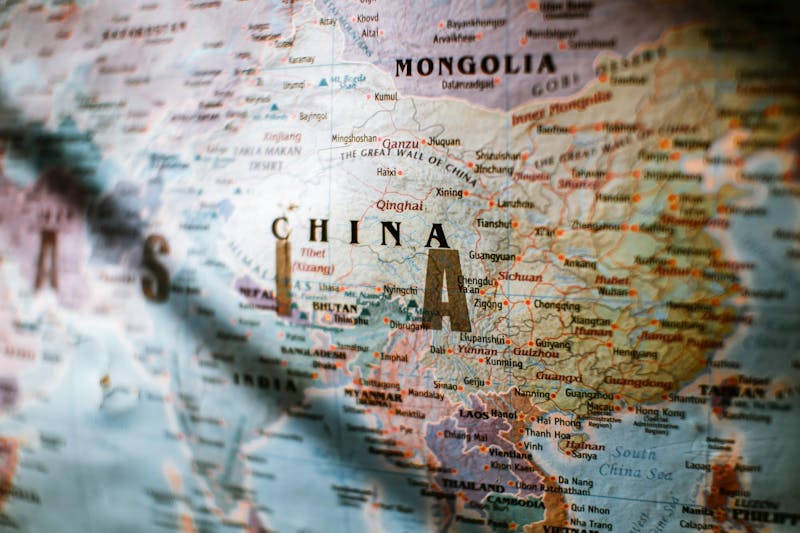
On Sunday, President Donald Trump embarked upon his six-day tour throughout east Asia, meeting with key partners in the region, seeking to secure economic investments and trade policies with Japan, South Korea and China. His trip began in Malaysia with the signing of a peace agreement between Cambodia and Thailand and continued with meetings with new Japanese prime minister Sanae Takaichi, South Korean President Lee Jae Myung and Chinese President Xi Jinping.
Global affairs professor Kyle Jaros wrote in a statement to The Observer that the stakes are high in Trump’s first East Asia trip of his second term.
“The headline here is certainly the effort to strike more durable trade deals with China, South Korea, and Japan, all of which are key trade partners but also, to varying degrees, economic competitors of the U.S.,” he wrote.
During Trump’s meeting with Takaichi, both leaders made commitments to various projects in areas of energy, artificial intelligence and critical minerals. Additionally, Japan promised a $550 billion investment in the U.S. as part of a deal to relieve tariff pressures from the Trump administration.
Similarly, Lee agreed to invest $350 billion into the U.S. in return for lower tariff rates on South Korea.
International economist and economics professor Robert Johnson characterized the Trump administration’s approach to deals with Japan and South Korea as focusing on lowering tariffs in exchange for investment commitments.
“The U.S. is a large financially integrated country with the rest of the world,” he said. “So when we’re getting promises from Japan and Korea to invest in the U.S., I don’t really understand exactly how that’s changing the overall investment dynamics in the U.S. in any way that is meaningful.”
Trump met with Xi in South Korea Thursday. Both sides agreed to extend a truce designed to limit tariffs and Trump suspended port fees on Chinese ships. Xi agreed to pause China’s export controls on rare earth minerals.
“The current economic and security relationship between the U.S. and China is volatile, making any in-person meeting between President Trump and President Xi Jinping very sensitive,” Jaros wrote.
Professor of politics Joshua Eisenman contextualized China and the United States’ relationship as lacking trust and reliability.
“The U.S.-China relationship is never and has never been built on trust, but the question is can they figure out a way to put aside certain grievances in order to make progress on issues of importance in the relationship,” he said.
According to Trump, during Trump and Xi’s meeting, China also agreed to buy U.S. soybeans and crack down on fentanyl in exchange for the U.S. cutting down on tariffs. Additional information about discussions that occurred in the meeting have yet to be announced.
“They’re creating pressure points: soybeans, rare earths, etc. The goal of gaining some leverage over the US and therefore forcing Trump to cut a deal,” Eisenman said.
China’s bargaining advantage has raised concerns about the potential compromises Trump will make in order to secure a trade deal, particularly surrounding Taiwan.
“One concern about the planned Trump-Xi meeting is that Xi will seek geopolitical concessions from the Trump administration (whether over Taiwan or another sensitive issue) in exchange for a more comprehensive trade deal of the sort Trump wants,” Jaros wrote. The Observer interviewed Jaros before Thursday’s meeting.
“Trump has also not been willing to do what Joe Biden did, which was to say outwardly that he would defend Taiwan. And that kind of deterrence, I think, is really important,” Eisenman said.
Additionally, both Eisenman and Jaros highlighted the importance of reliability between China and U.S. relations, and how the lack thereof could undermine the potential for a mutually beneficial, productive and sustainable economic trading relationship.
“While Trump is genuinely interested in reaching a more lasting trade deal with China, the administration’s frequent shifts in rhetoric and policy and brinksmanship tactics don’t go over well with Chinese leaders, who highly value stability and predictability in trade relations with the US,” Jaros wrote.
Eisenman said, “This idea of consistency of long term friends, developing relationships, maintaining and adhering to agreements, generally speaking, is part of the Chinese approach.”
Eisenman explained how it would be beneficial for the U.S. if Trump could maintain and build these relationships with state leaders throughout Asia.
“I do think it serves the interest of the United States for him to be meeting with these folks, reminding everybody that the US isn’t absent from the region, that America first doesn’t mean America is absent,” Eisenman said.
Jaros explained how any East Asia trip is about geopolitics. “Trump himself and several economic advisors around him are far more concerned about righting what they see as decades of unbalanced trade between the US and China, Japan, and South Korea by extracting major economic concessions from each of these countries,” he wrote.
Johnson expressed doubt that these meetings will result in productive, progressing trade agreements. “The deals that they’re announcing seem to be very heavily focused on basic economic questions that concern the administration about tariffs versus investment,” he said.
“I think what’s going to happen is we’re going to strike a deal, and we’re basically going to go back to where we were eight months ago or close to that on some level,” Johnson continued, “I don’t think the problems in the U.S.-China relationship are principally about trade and trade policy and economic policy. They are really about foreign policy.”