Show summary Hide summary
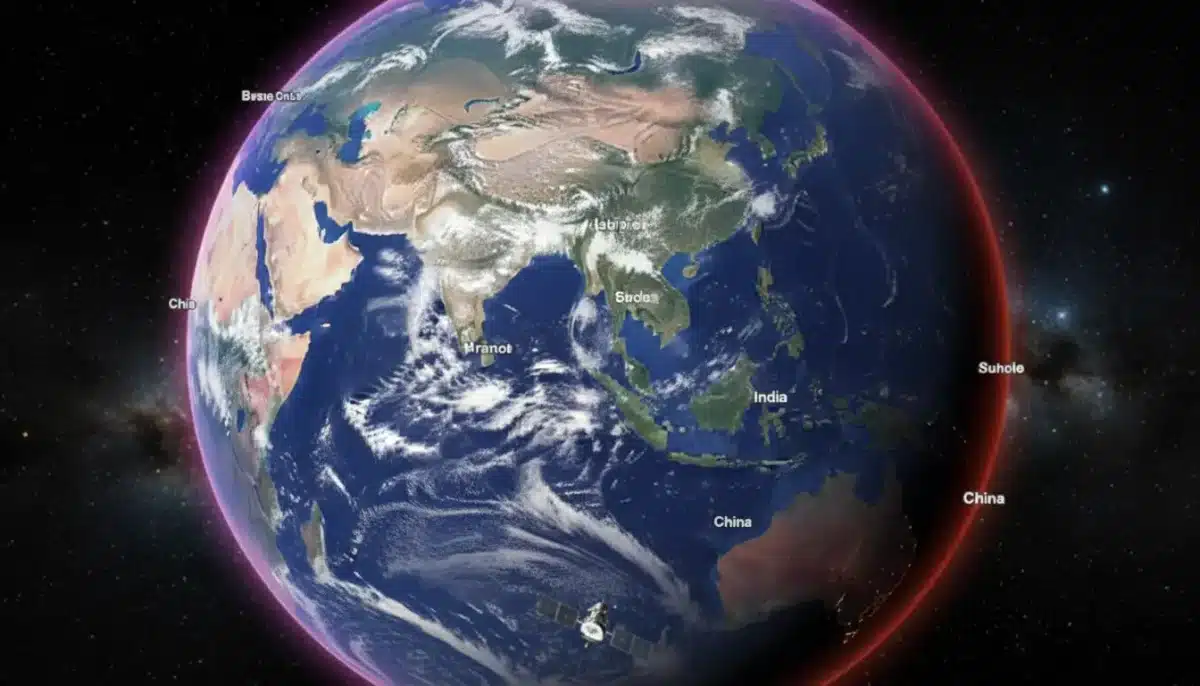
Think the most visible human-made structure from space is the Great Wall of China? Prepare to have your cosmic socks knocked off: the real answer lies far from China and will have you seeing plastic in a whole new (reflective) light.
The Great Wall Myth: More Camouflage Than Neon Sign
For generations, people around the world have believed the tale that the Great Wall of China is so enormous that it’s easily seen from space, waving up at passing astronauts like an 8,851.8-kilometer-long stone snake. As it turns out, this is about as true as those emails from “a distant relative” who wants to send you a fortune.
Let’s break down why the Wall is actually a master of disguise, not visibility:
Material Magic: It’s built largely from the same stone as the surrounding mountains—not exactly the recipe for standing out. Instead, it melts into the landscape.
Natural Ninja: More than 2,000 kilometers of the Wall follows natural features like rivers and mountains. Plus, about 360 kilometers are just trenches—literally not walls.
No Night Lights: The Wall doesn’t glow in the dark or broadcast neon signs at passing satellites. It can be harder to see than a long country road!
To put it simply, even satellites and astronauts struggle to tell where the Wall ends and the hills begin. Not convinced? Even Neil Armstrong was clear on this point: from space, he couldn’t see the Wall, despite being a lot closer to Earth than the Moon’s fabled 350,000 kilometers away.
And where did this myth come from? Blame an 18th-century British antiquarian who, in all fairness, only speculated. He guessed it “could” be visible. The world ran with it.
What REALLY Catches the Eye from Space?
Swipe east to west across a map and land in southern Spain, because the most visible human-made structure from space is actually Los Invernaderos de Almería. Yes, a colossal patchwork of greenhouses, and unless you know a fruit importer or a Spanish astronaut, you probably haven’t heard about it.
Pedro Duque, Spain’s first astronaut and veteran of the International Space Station (ISS), stated that these greenhouses are so bright and reflective they’re easily spotted from space. Why?
Size: Over 40,000 hectares, giving “big” a new definition.
Shine On: The white plastic covers bounce sunlight in all directions, making the area, often called the “sea of plastic,” glint like a signal mirror to those above Earth’s atmosphere.
From high above, the sunlight washing over Los Invernaderos de Almería makes it stand out dramatically against the surrounding landscape. If the Great Wall could be said to wear camouflage, the “sea of plastic” is wearing a disco suit.
The High Cost of Being Visible: Environmental Concerns
This jaw-dropping visibility comes with a heavy tag. The greenhouses are a pillar of the local economy, feeding immense demand for fruits and vegetables across Europe.
But there’s a catch—one big enough to lose sleep over. The white plastic so visible from space is a major source of pollution. According to Greenpeace Spain, the creation, use, and eventual disposal of all that plastic has had a severe impact on local plants and animals. The greenhouse model, while efficient, creates more than just shiny vistas. It leaves a deep ecological footprint, one that’s tough to overlook and even tougher to fix. And with large parts of Europe—including France and other EU countries—depending on this system, simple answers are hard to come by.
Challenging What We Think We Know
So, what does this wild twist in “space trivia” teach us—besides never to bet money on the Great Wall? Myths are easy to fall for, but reality often hides in the details, surprising and sometimes a little unsettling.
What we assume is obvious (like the Great Wall’s visibility) may be entirely wrong.
What becomes spectacularly visible from space might have big, unexpected implications here on Earth.
Next time you gaze up, remember: the splash of white you see from orbit is less about ancient glory and more about modern agriculture—and its impact on our world. Maybe that’s a call to not just look at what’s easy to see, but to really think about why it stands out in the first place.
★★★★★
Be the first to rate this post
or leave a detailed review