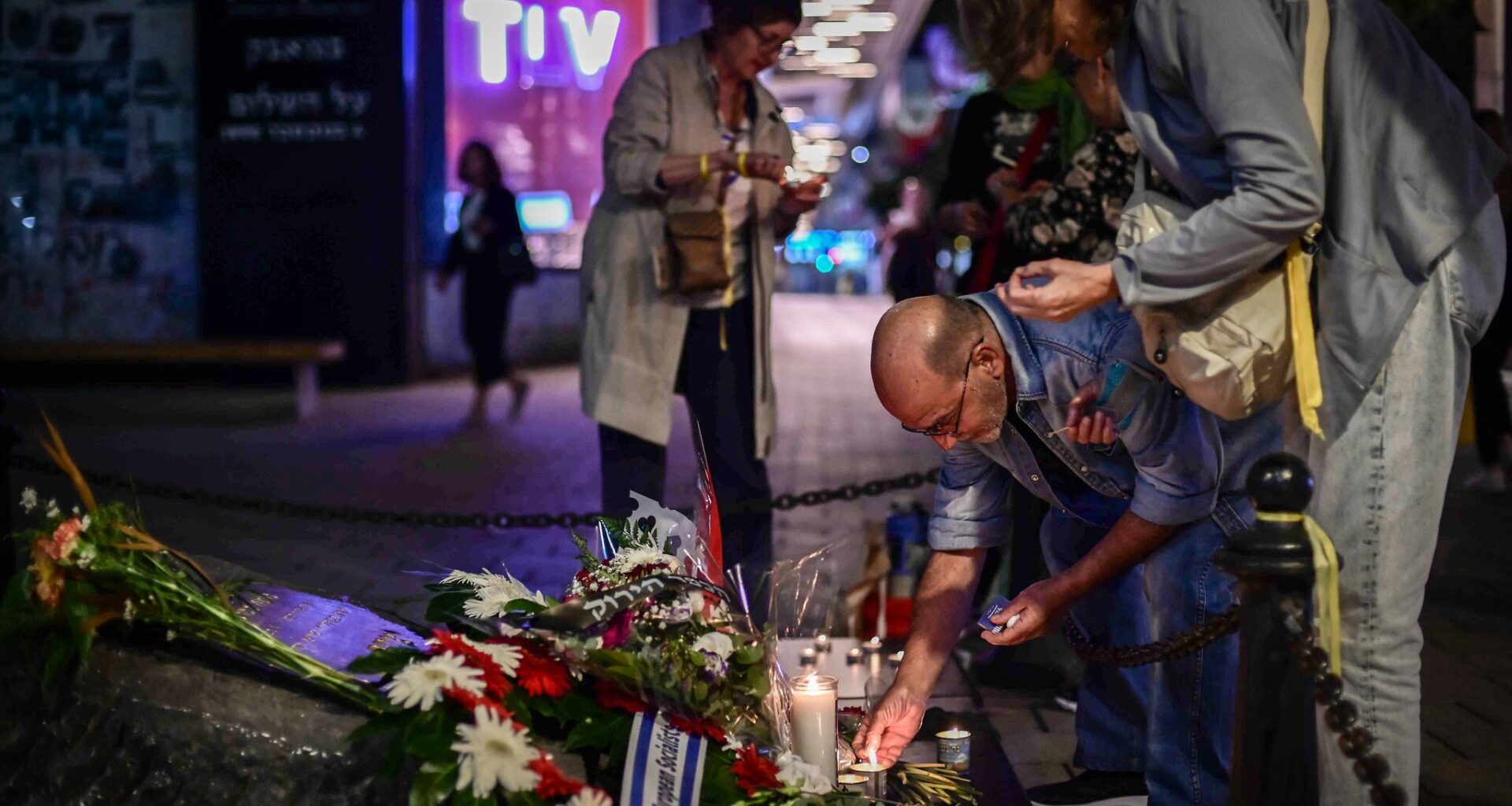
As Israel prepared to mark 30 years since the assassination of prime minister Yitzhak Rabin, his son Yuval — who has spoken only sparingly over the past decade — said in an interview broadcast Friday that the country’s divisions today echo the incitement that led to his father’s murder.
The memorial rally for the former premier, returning after five years, will take place Saturday evening near the Rabin Memorial on Ibn Gabirol Street in Tel Aviv — the very site of the assassination.
Organizers said the event had not been held in recent years due to ongoing construction at Rabin Square and the security and logistical challenges posed by the war.
Preparations were underway Saturday for a large expected turnout, with traffic closures and large screens for live broadcasts along the street and in surrounding areas.
Speakers at the event will include Opposition Leader Yair Lapid, former IDF chief of staff and MK Gadi Eisenkot, Democrats chair Yair Golan, and former foreign minister Tzipi Livni.
Get The Times of Israel’s Daily Edition
by email and never miss our top stories
By signing up, you agree to the terms
The program will feature performances by Dana International, Boaz Sharabi, Ester Rada, and others, and participants will include released hostage Gadi Mozes, community leader Rabbi Benny Lau, and Arab society expert Nasreen Haddad Haj-Yahya.
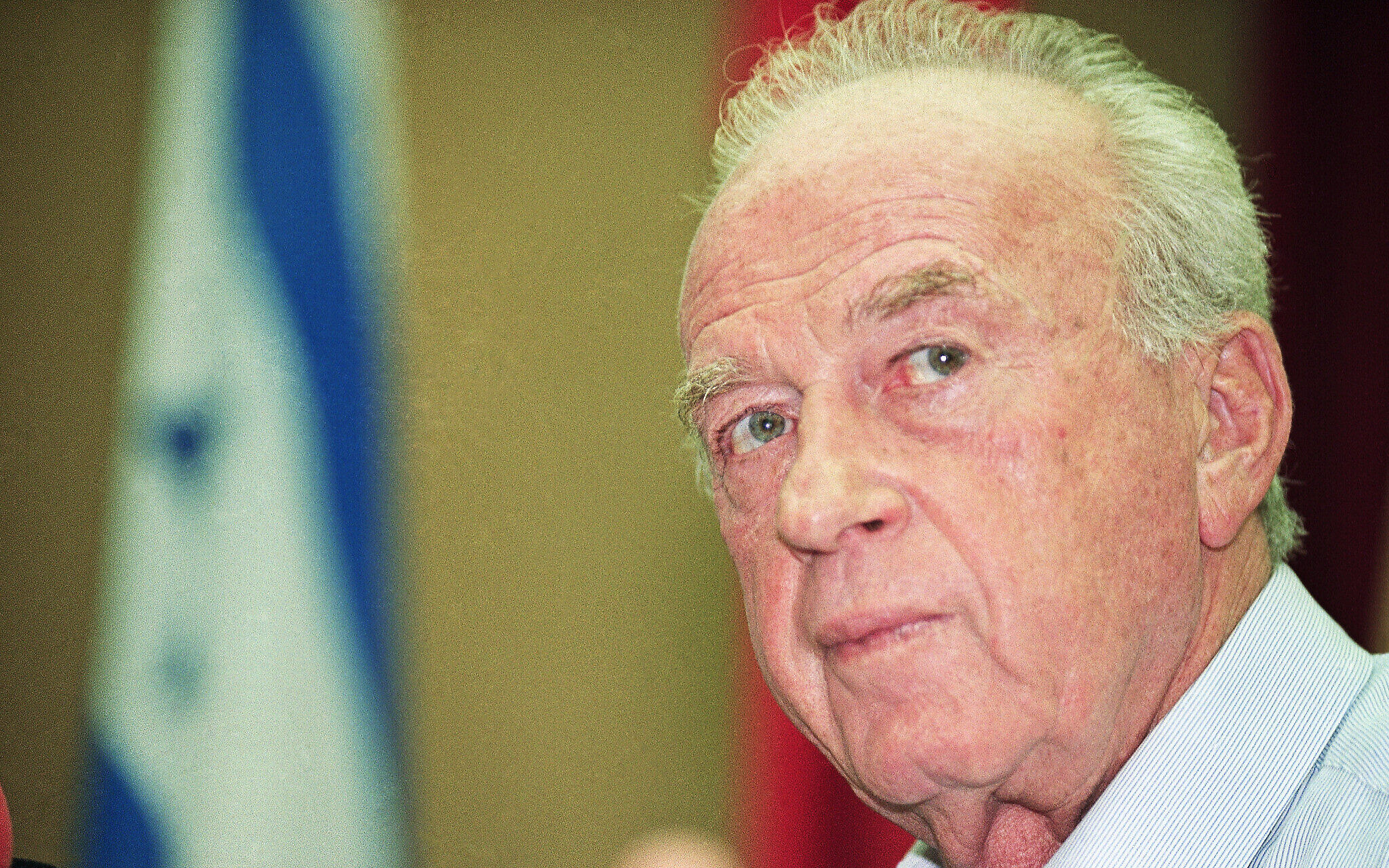
Yitzhak Rabin adresses a news conference at Labor Party headquarters on Wednesday, June 24, 1992 in Tel Aviv, a day after he was elected prime minister. (AP Photo)
The ceremony will open with a screening of Rabin’s final speech, include a moment of silence at 9:42 p.m. — the exact time of his 1995 assassination — and conclude with the singing of the national anthem and “Shir LaShalom” (Song for Peace), the song Rabin famously sang just minutes before he was killed.
Rabin, a Labor prime minister, was assassinated on November 4, 1995, by right-wing extremist Yigal Amir following a mass peace rally in Tel Aviv that was called to highlight opposition to violence and to showcase public support for the prime minister’s efforts to negotiate with the Palestinians.
In a rare interview aired by Channel 12 on Friday, Yuval Rabin — who now lives in central Europe — reflected on Israel’s political climate and the growing tide of hatred and polarization.
Speaking candidly about life in the shadow of a father who became a national symbol, Yuval Rabin said: “I never wanted to put myself out there or be known as a public figure.”
But three decades after his father’s assassination, he said he felt compelled to break his silence amid Israel’s deepening divisions.
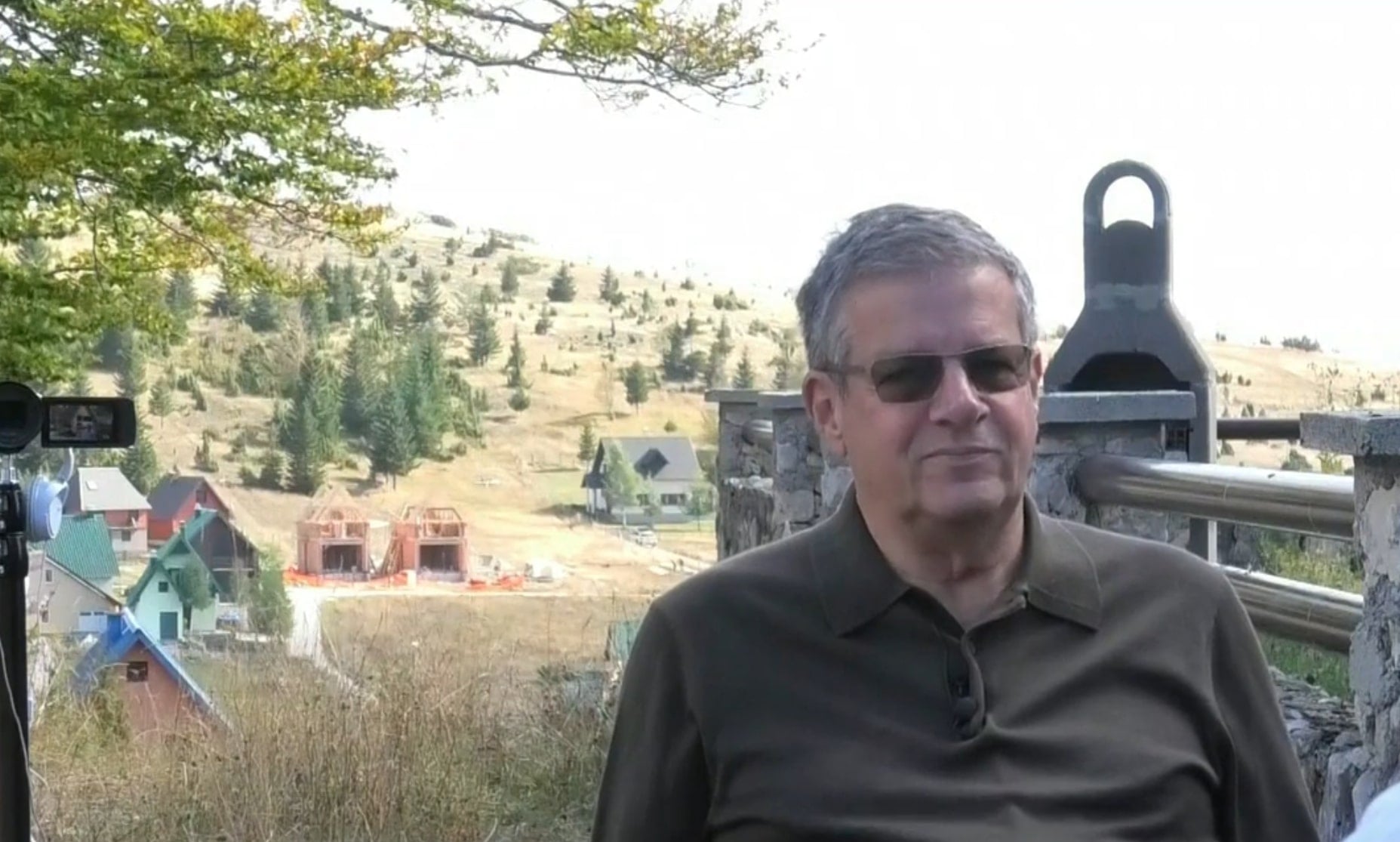
Yuval Rabin, son of late prime minister Yitzhak Rabin, speaks to Channel 12 in a rare interview, unknown date. (Screen capture: Channel 12)
He reserved some of his sharpest criticism for the political leaders he believes have fueled those divisions and normalized incitement.
Speaking about Prime Minister Benjamin Netanyahu, Yuval Rabin said: “The man is disconnected, doesn’t listen, doesn’t pay attention. He only thinks about what advantage he can get from the situation.”
He also said Netanyahu was a “Hamas collaborator. That was the strategy.”
“What is the role of the state, of the government that you’ve been heading for 2,500 years? What is your role in this matter? Hollow and empty statements. How many times did you promise to eradicate Hamas? Why didn’t you eradicate Hamas?” he said, apparently addressing the premier.
“The easy escape for those who bear responsibility today is to blame Rabin from 30 years ago,” he said.
Recalling the moment his mother, Leah Rabin, hesitated before ultimately shaking Netanyahu’s hand at her husband’s memorial service, he said that he would not do the same today.

The late Leah Rabin, wife of assassinated prime minister Yitzhak Rabin, shakes then-MK Benjamin Netanyahu’s hand at the memorial service marking two years since Rabin’s death, November 12, 1997. (Moshe Milner)
“It’s no longer personal,” Yuval Rabin explained. “I feel I would be betraying hundreds of thousands or millions who fought this struggle.”
A month before the assassination, Netanyahu spoke at a Jerusalem protest where protesters held posters showing Rabin dressed in Nazi uniform. The demonstration was considered one of the key events at which incitement levels peaked in the lead-up to the assassination.
Yuval Rabin also addressed Netanyahu’s claim that the Oslo Accords were a “fateful error” that laid the groundwork for the October 7, 2023, Hamas attacks.
“The truth? What does it matter? You want to say my father is guilty. Fine. What are you doing with it now? What did you do in 17 years as head of government to prevent this? Is Oslo so terrible? Cancel it,” he said.
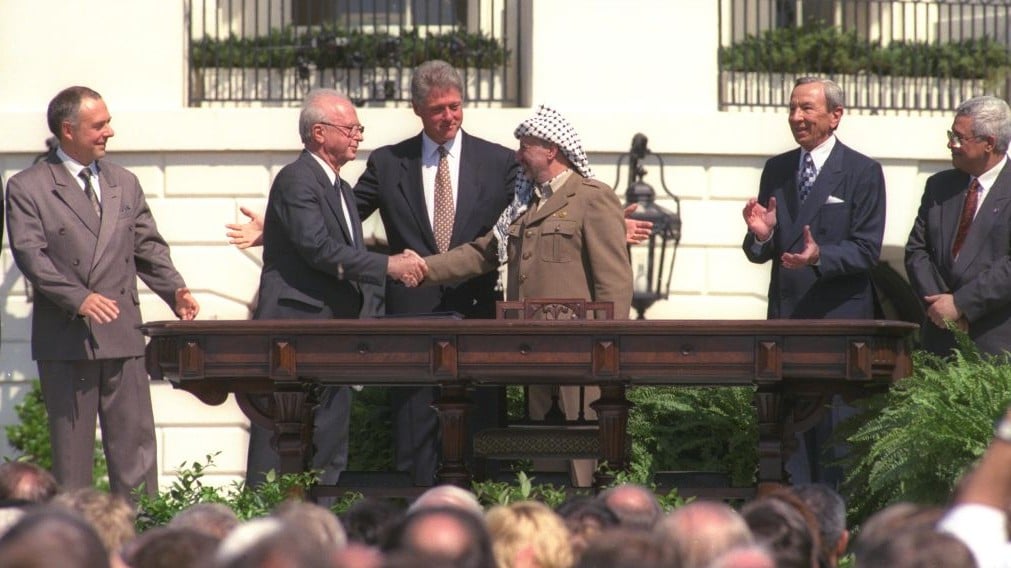
Former US president Bill Clinton looks on as then prime minister Yitzhak Rabin and PLO head Yasser Arafat shake hands during the signing of the Oslo Accords, September 13, 1993. (Courtesy/GPO)
“Of course, I don’t think [my father is] guilty, I don’t think there’s any connection at all. If anything, the person who defined Hamas as an enemy and fought it in secret is my father,” he said.
Turning to Netanyahu’s son, Yair, who recently made headlines for his nomination to a senior position at the World Zionist Organization, Yuval was blunt: “That creature, Yair Netanyahu, is an empty vessel in my eyes — fully funded, fully protected, and feels entitled.”
Yair Netanyahu has previously sparked controversy for posts on social media falsely accusing Rabin of responsibility for killing Holocaust survivors, statements that Yuval and others have condemned as defamatory and inflammatory.
Yuval Rabin also denounced the appointment of far-right ministers — such as National Security Minister Itamar Ben Gvir — with records he considers dangerous, calling it “a dramatic flaw” in Israel’s security system.
He decried “the hatred, the incitement” and said the role of the young Ben Gvir should not be forgotten.
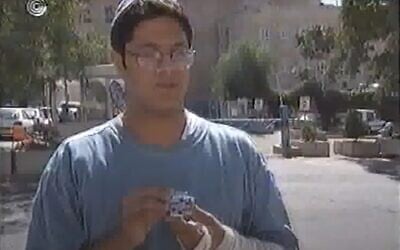
Itamar Ben Gvir seen holding up an ornament from prime minister Yitzhak Rabin’s car, in an October 1995 interview. (Screen capture: YouTube/IBA)
As a young activist, Ben Gvir infamously held up a stolen emblem from Rabin’s car weeks before the assassination and warned, “We got to his car, and we’ll get to him too.” He has since become one of the most prominent figures in Netanyahu’s hardline coalition.
Despite the years of distance and grief, Yuval Rabin emphasized his connection to Israel.
“Nothing will ever change the fact that I’m Israeli… Identity isn’t something you can swap out — there’s no disk you can replace or ‘change language’ option like on Android,” he said.
Reflecting on the country’s future, he invoked his father’s legacy: “My father was the only one who truly asked, ‘Where is the way?’ — not when the gun [is at our head] or the knife [at our throat], but from a position of strength.”
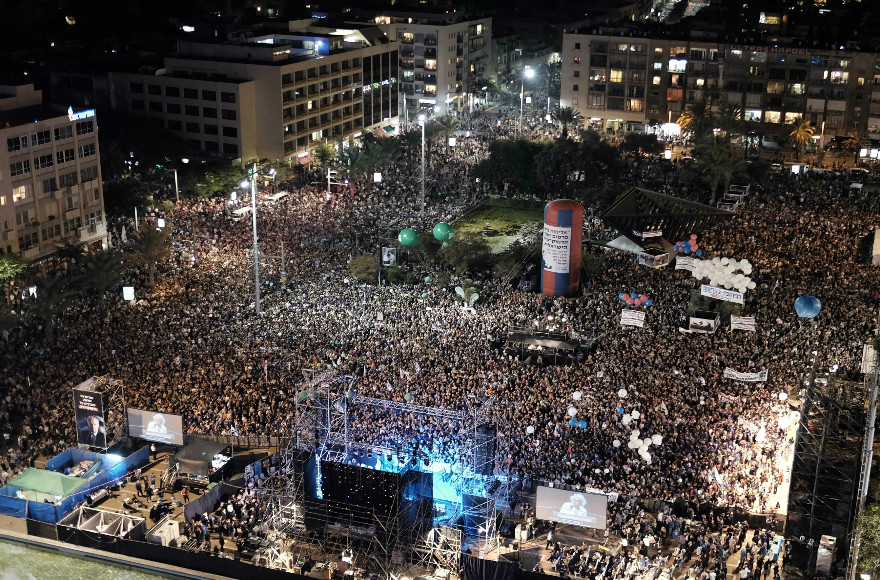
Some 100,000 attend a rally marking the 20th anniversary of the assassination of Israeli prime minister Yitzhak Rabin in the same Tel Aviv square in which he was killed during a 1995 peace rally, in 2015. (Flash90/Tomer Neuberg)
This year’s memorial rally, produced by the group “Returning to the Square” in coordination with the Tel Aviv Municipality and Israel Police, will serve both as a tribute to Yitzhak Rabin and a reminder of the values he championed, organizers said.
“Thirty years ago, at the horrific peak of an unrestrained campaign of incitement, Yitzhak Rabin walked down the stairs when a despicable assassin fired three bullets, murdering the prime minister and destroying the peace process,” event organizers said in a statement.
“Today, thirty years later, and two years after the October 7, 2023, massacre, incitement and division are once again on the rise… Israeli society stands at a breaking point, and it is our shared responsibility to stop the deterioration,” they said.