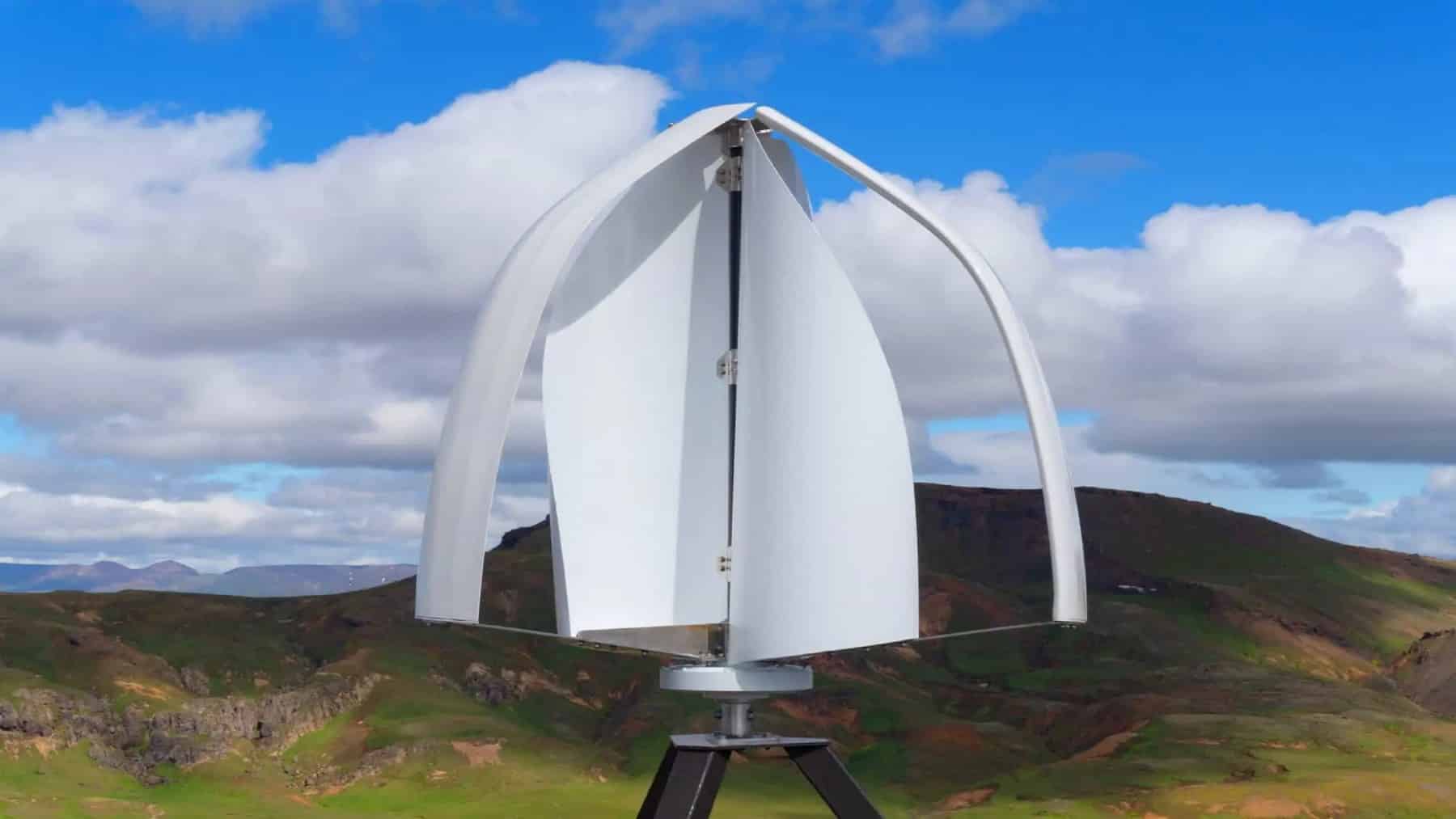
Ever thought of implanting a device in your backyard that thrives only in wind speeds of over 130mph, but powers your home for 30 years? Icelandic engineers have come up with this whole new concept dubbed “hurricane destroyers,” suitably made for a world where climatic extremes and power grid instability are the order of the day. But what exactly are these “destroyers”? And how realistic is the claim of 30 years of home power?
Unlocking the reason why this concept was termed “hurricane destroyers”
At first glance, a hurricane destroyer, as it is called, resonates like pure fiction, a device made to eliminate a storm. But in a sense, it’s a poetically grandiose way to celebrate enduring, not destructive, typified by the fact that these turbines do not destroy hurricanes; they withstand them.
To this end, the IceWind brand has come up with vertical-axis turbines that are capable of working even in extreme wind conditions without destroying or disturbing the systems. The design below contributes to the witness of the functional features, which can withstand the wind of more than 130mph; this is the power of a Category 4 hurricane.
This is an excellent value to the energy community. On top of this, portability to a conventional wind turbine that can fit in the backyard of one person. The turbine dubbed as a hail storm destroyer can withstand and produce power amidst a lack of safety during adverse weather conditions.
How the Iceland hurricane-proof backyard wind turbine works
IceWind is innovative in the way it has been designed around a vertical axis, unlike the opposing wind propellers that are required to turn with the wind. This is an omnidirectional backyard turbine. Iceland’s hurricane-proof wind turbine can take the wind from any direction, a significant benefit in an earthquake-prone urban or coastal environment.
The turbine incorporates two blades; one is suitable for normal wind speeds, and the second is reinforced for higher wind speeds. This design allows the turbines to enter production at low wind speeds (4 to 5 mph), and they are efficient and safe during hurricanes that otherwise tear apart most turbines, just like this powerful typhoon turbine shocking the grid.
What are the potential implications for homeowners?
The implications of these “hurricane destroyers” are substantial. For homeowners in areas that are both susceptible to hurricanes and have unreliable grid, a turbine that can sustain extreme weather means independence and resilience. A single unit can meet a large share of a home’s electricity usage, and unlike solar panels, it will continue to provide electricity at night and during storms.
That being said, there are some essential factors to consider; wind strength varies by location, and homeowners must evaluate whether their site has sufficient amounts of consistent wind to make it worthwhile to install the turbine. Energy output might be low for those low wind site characteristics. Other variables, such as local permits and regulations, noise, and upfront costs etc., should also be considered.
What makes Iceland’s harsh environment the perfect test-bed for these turbines
IceWind’s strong backstory provides genuine credibility. They originated in Iceland, a terrain of icy wind gusts, volcanic ash, and stormy weather; the turbines were designed for the harshest environments. Therefore, if they can withstand the Icelandic climate, they can withstand the strongest tropical storms on the planet, giving Floridians and homeowners in the Philippines the confidence in reliability.
IceWind’s “hurricane destroyers” represent a significant advancement in resilient, home-scale energy technology. Designed to survive severe winds while delivering decades of reliable power, these machines offer hope to homeowners struggling with climate uncertainty and grid instability, harnessing extreme weather into a source of clean energy, just like this revolutionary sonic wind transforming clean energy.