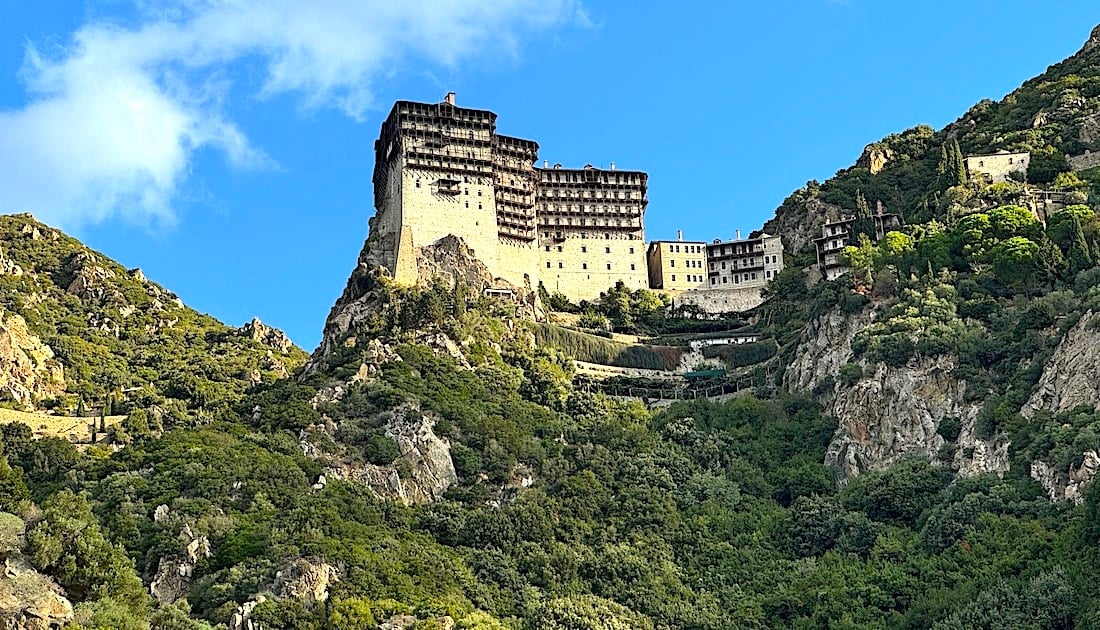
Mount Athos was brought under Greek sovereignty during the First Balkan War. Credit: Greek Reporter
Sunday marks the 113th anniversary of a swift and decisive military operation that permanently brought the monastic community of Mount Athos under Greek sovereignty during the First Balkan War.
On November 2, 1912, a small Greek naval detachment landed on the Holy Mountain, preempting a potential Bulgarian military takeover and forever altering the peninsula’s geopolitical landscape.
Greece launches a preemptive strike at Mount Athos
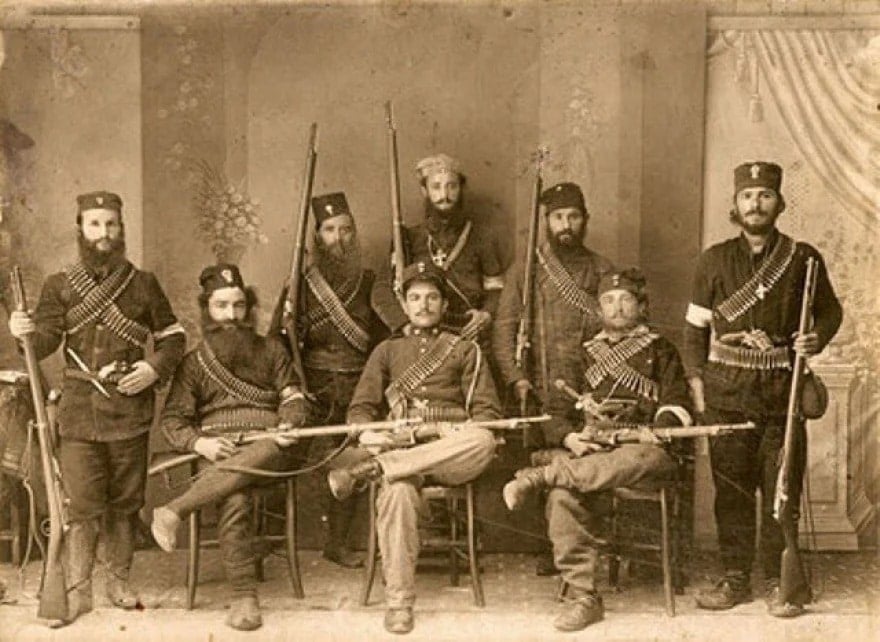
Some of the Greek liberators of Mount Athos. Public Domain
While the Balkan League (Greece, Bulgaria, Serbia, and Montenegro) was allied against the Ottoman Empire, intense rivalries over newly liberated territories—particularly Macedonia—led to a race for control. Mount Athos, a self-governed monastic state under Ottoman suzerainty for centuries, became a critical prize due to its immense religious and strategic value.
Under the direction of Prime Minister Eleftherios Venizelos, Greek military command was aware that Bulgarian forces were advancing toward the Athos peninsula. To prevent a rival claim, the Greek Navy was given the urgent task of securing the territory.
A small contingent of sailors from the Greek torpedo boat Foúlla (or a similar vessel) disembarked at Dafni. They marched to Karyes, the administrative center, where the last Ottoman governor officially relinquished authority to the representative of the Kingdom of Greece. The majority of the monastic community, being ethnically Greek, welcomed the Greek forces as liberators.
The “Zografou” factor and Bulgarian ambition
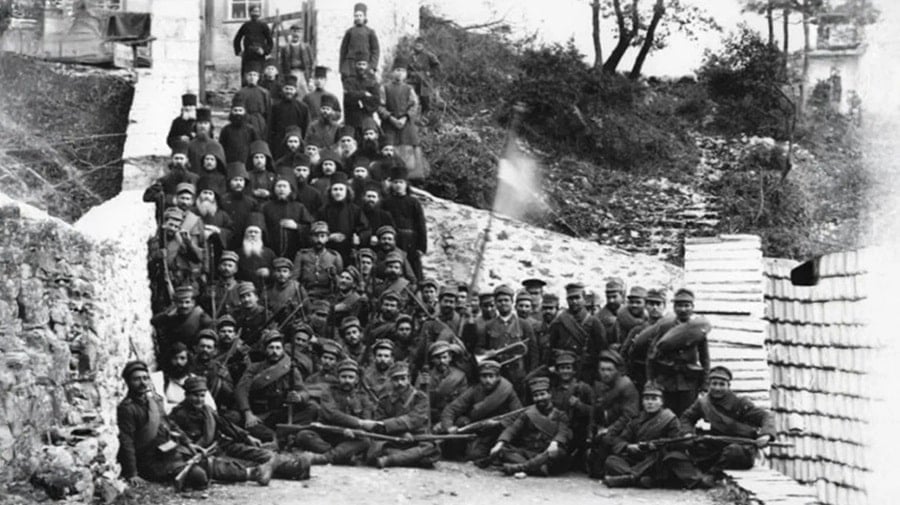
Monks and soldiers at Mount Athos. Public Domain
Credible reports of a direct Bulgarian military threat fueled the urgency of the Greek action.
Though a full Bulgarian occupation of Mount Athos did not occur, historical sources indicate that a limited presence of Bulgarian military or paramilitary forces, likely in coordination with the Bulgarian Zografou Monastery, may have been a factor in the final hours before the Greek landing.
Zografou, the historical Bulgarian monastery, was a natural focal point for Sofia’s expansionist goals, which aimed to secure an exit to the Aegean Sea.
The Greek preemptive landing effectively neutralized this threat, ensuring that the peninsula was brought under Greek jurisdiction rather than becoming a source of contention among the victorious Balkan allies.
A status finalized: Mount Athos joins Greece
The liberation ended centuries of continuous Ottoman control. While international diplomatic wrangling over the status of Athos continued for several years after the Balkan Wars, the peninsula’s incorporation into Greece was ultimately formalized by the Treaty of Lausanne in 1923.
Today, Mount Athos retains its unique self-governed status as an Autonomous Monastic State within the Hellenic Republic, standing as a living monument to the successful military and diplomatic efforts of November 2, 1912.
Related: Mount Athos: The Monastic Community in Greece Where Time Stands Still