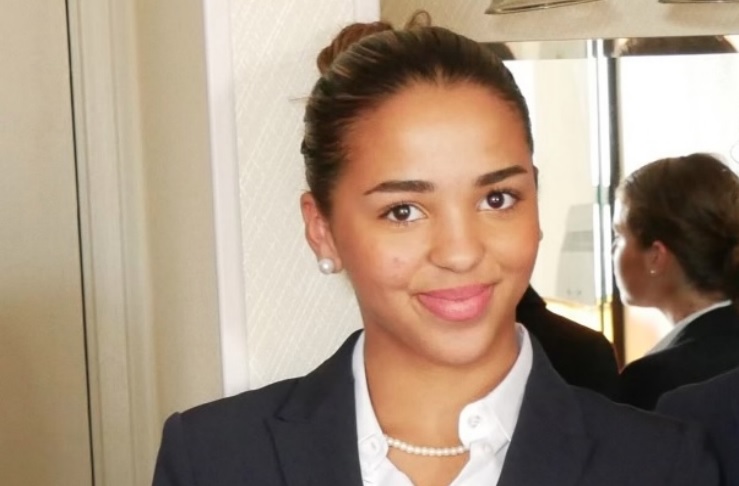
As a Swiss college student who spent five formative years in Morocco, I’ve witnessed how religion can be weaponized to justify oppression. While I cannot claim to fully understand the brutal reality Iranian women face, I do understand the silence that surrounds abuse — the shame, the taboo, and the fear that keeps people from speaking out. That silence is deadly. In Iran, it took the death of a young woman, Jina Mahsa Amini, beaten by morality police for allegedly wearing her hijab “improperly,” to shake the world awake. But even then, the global response has been tepid. The United Nations, and particularly U.N. women, must do more than express concern — they must name and shame.
Iran’s regime has institutionalized gender discrimination. Women are denied equal rights in marriage, divorce, custody, and inheritance.
They are barred from leadership roles and face legal restrictions on travel, dress, and public behavior. Iran remains one of only six U.N. member states that have refused to ratify the Convention on the Elimination of All Forms of Discrimination Against Women (an International Human Rights Treaty designed to promote gender equality, often referred to as an International Bill of Rights for women). This is not cultural nuance — it is systemic abuse.
The “Woman, Life, Freedom” movement that erupted after Amini’s death was met with horrifying violence. U.N. fact-finding missions have documented rape, torture, and executions of women and girls who dared to protest. The regime’s new Hijab and Chastity Law imposes fines, travel bans, and prison sentences for defying compulsory veiling.
Surveillance drones and facial recognition software are now deliberately used to enforce dress codes on women. This is not governance; it is gender apartheid.
Yet, when Iran enters global discourse, it’s usually about nuclear negotiations. Women’s rights are treated as a side issue, a footnote. U.N. Women has issued statements, but they lack the force and urgency this crisis demands.
Where is the coordinated campaign to hold Iran accountable? Where is the push to codify gender apartheid as a crime against humanity?
Naming and shaming works. When South Africa’s apartheid regime was globally condemned, it catalyzed internal resistance and international sanctions. When Saudi Arabia faced backlash over its treatment of women, it eventually lifted the driving ban and introduced limited reforms. Iran must be subjected to the same pressure. Silence is complicity.
The United Nations must take decisive and concrete steps to confront Iran’s gender apartheid.
First, it should work to codify gender apartheid as a crime under international law, ensuring that systemic gender-based oppression is recognized and prosecuted with the same gravity as racial apartheid.
Second, the UN must establish robust accountability mechanisms to investigate and respond to gender-based persecution, including independent fact-finding missions and legal pathways for justice.
Third, it is imperative that the international community pressure Iran to ratify the Convention on the Elimination of All Forms of Discrimination Against Women (CEDAW) and repeal its discriminatory laws that institutionalize gender inequality.
Fourth, Iranian women activists must be supported with tangible resources — platforms to amplify their voices, funding to sustain their movements, and protection from retaliation.
Finally, women’s rights must be placed at the center of all diplomatic negotiations with Iran, not treated as peripheral concerns. These actions are not optional; they are essential if the U.N. is to uphold its founding principles of human dignity and justice.
These are not radical demands — they are moral imperatives. The U.N. was founded to uphold human dignity. If it cannot defend half of Iran’s population from state-sponsored violence, then its credibility is truly at stake.
I write this not only as a student but also as a woman who has witnessed how oppression often hides behind tradition. I saw how religion, when deliberately misinterpreted and distorted, turns into a tool for control. Iran’s regime has perfected this tactic by hiding behind a god they alone created. Therefore, unless we name it, shame it and dismantle it, we are endorsing it.
The world must stop treating Iranian women’s suffering as collateral damage in geopolitical chess. Their fight is not just for freedom; it is for recognition. And it is time the U.N. recognized that fight as its own.
Shaya Mariji is a junior at Rollins College studying political science.