
Tehran will rebuild its nuclear facilities “with greater strength,” Iran’s President Masoud Pezeshkian told state media on Sunday, claiming again that the country does not seek atomic weapons.
US President Donald Trump has warned that he would order fresh attacks on Iran’s nuclear sites should Tehran try to restart operations at facilities that the United States bombed in June.
Pezeshkian made his comments during a visit to the country’s Atomic Energy Organization, during which he met with senior managers from Iran’s nuclear industry.
“Destroying buildings and factories will not create a problem for us; we will rebuild and with greater strength,” the Iranian president said to the press.
In June, the US joined Israel to launch strikes on Iranian nuclear facilities long suspected to be part of a program geared toward developing nuclear weapons.
Get The Times of Israel’s Daily Edition
by email and never miss our top stories
By signing up, you agree to the terms
Tehran, which routinely calls for the destruction of Israel, maintains that its nuclear program is for purely civilian purposes. However, before the war, Iran had been enriching uranium to levels just below weapons-grade, which has no peaceful application.
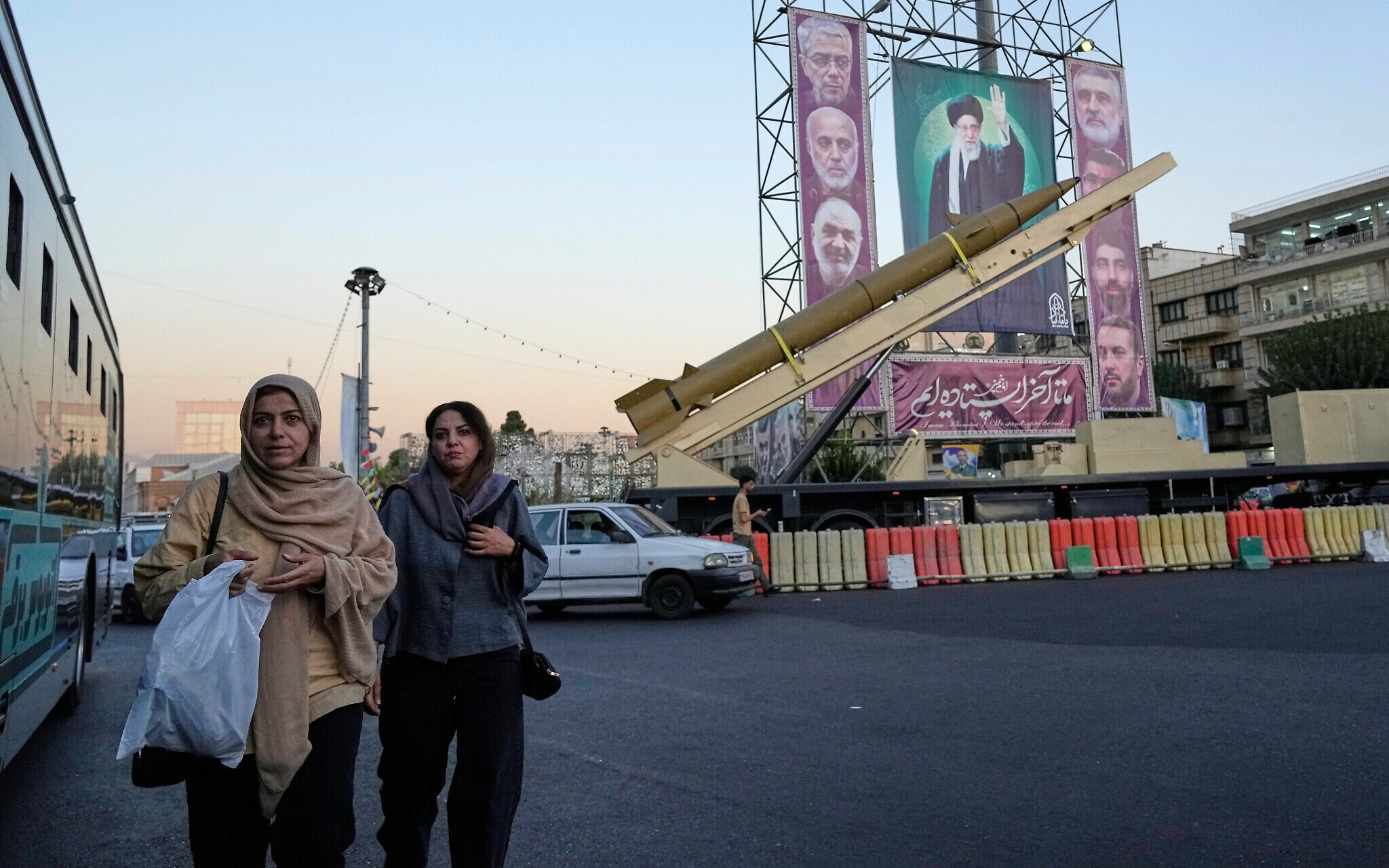
People walk past a domestically-built ‘Khaibar-buster’ missile and banners showing portraits of the Iranian Supreme Leader Ayatollah Ali Khamenei, center, and armed forces commanders who were killed in Israeli strikes in June, displayed in a military exhibition commemorating the anniversary of the start of the 1980-88 Iraq-Iran war, and 12-day war with Israel in June, at Baharestan Square in Tehran, September 25, 2025. (AP Photo/Vahid Salemi)
“It’s all intended for solving the problems of the people, for disease, for the health of the people,” Pezeshkian said Sunday in reference to Iran’s nuclear activities.
On Saturday, Iran’s Foreign Minister Abbas Araghchi said Tehran has no desire for direct talks with the US over its nuclear or missile program, insisting that the Islamic Republic would not give up its ability to enrich uranium, according to a report by Al Jazeera.
“We will never negotiate our missile program, and no rational actor would disarm. We cannot stop uranium enrichment, and what cannot be achieved by war cannot be achieved through politics. We have no desire for direct talks with Washington, but can reach an agreement for indirect negotiations,” he told the Qatari outlet.
“We are ready to negotiate to remove concerns about our nuclear program and are confident in its peaceful nature. Reaching a fair agreement is possible, but Washington has proposed unacceptable and impossible conditions,” Araghchi added.
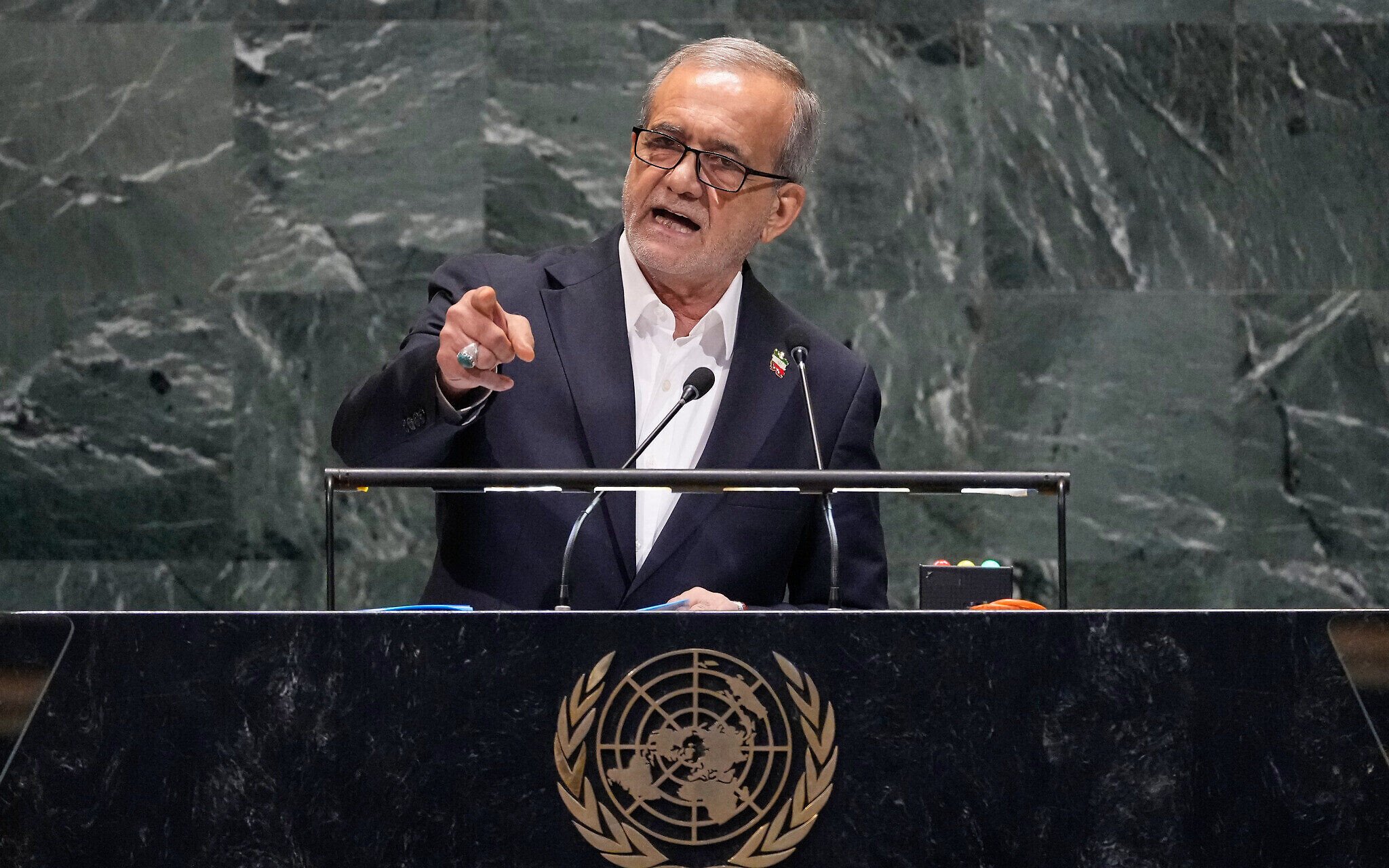
Iran President Masoud Pezeshkian addresses the 80th session of the United Nations General Assembly, in New York City, September 24, 2025. (AP Photo/Richard Drew)
Speaking at the United Nations General Assembly in New York in September, Pezeshkian expressed a similar sentiment, vowing to “never bow before aggressors,” as Iran faced snapback sanctions over its nuclear program.
In his speech, Pezeshkian denied that Tehran was seeking nuclear arms, and he slammed “the Zionist regime” over the war in Gaza.
He also went on to denounce the “aerial assaults of the Zionist regime and the United States of America against Iran’s cities, homes and infrastructures precisely at a time when we were treading the path of diplomatic negotiations.”
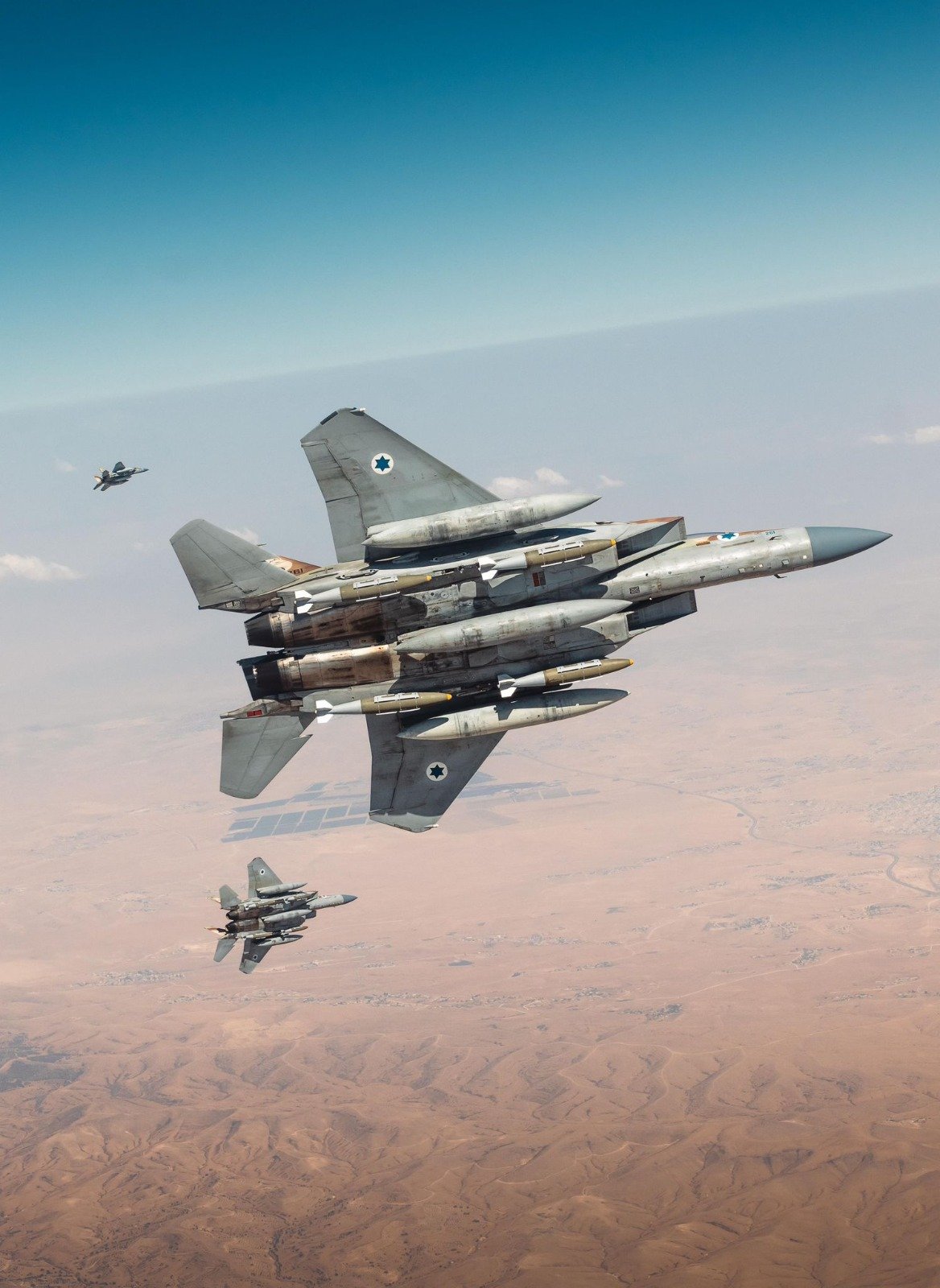
Israeli Air Force F-15 fighter jets fly over Israel en route to carry out strikes in Iran, in a handout photo published on June 25, 2025. (Israel Defense Forces)
Israel said its sweeping assault in June on Iran’s top military leaders, nuclear scientists, uranium enrichment sites, and ballistic missile program was necessary to prevent the Islamic Republic from realizing its avowed plan to destroy the Jewish state.
Iran retaliated to Israel’s strikes by launching over 500 ballistic missiles and around 1,100 drones at Israel, killing 32 people and wounding over 3,000.
Watch DocuNation Season 3: The Heart of Israel
when you join the ToI Community
Support The Times of Israel’s independent journalism and receive access to our documentary series, DocuNation: The Heart of Israel.
In this season of DocuNation, you can stream eight outstanding Israeli documentaries with English subtitles and then join a live online discussion with the filmmakers. The selected films show Israel beyond the conflict: a place of storytellers and musicians, of dreamers, makers, and communities rooted in meaning and trust.
When you watch DocuNation, you’re also supporting Israeli creators at a time when it’s increasingly difficult for them to share their work globally.
To learn more about DocuNation: The Heart of Israel, click here.
Support ToI and get DocuNation
Support ToI and get DocuNation
Already a member? Sign in to stop seeing this
You appreciate our journalism

You clearly find our careful reporting valuable, in a time when facts are often distorted and news coverage often lacks context.
Your support is essential to continue our work. We want to continue delivering the professional journalism you value, even as the demands on our newsroom have grown dramatically since October 7.
So today, please consider joining our reader support group, The Times of Israel Community. For as little as $6 a month you’ll become our partners while enjoying The Times of Israel AD-FREE, as well as accessing exclusive content available only to Times of Israel Community members.
Thank you,
David Horovitz, Founding Editor of The Times of Israel
Already a member? Sign in to stop seeing this