Recognised as Malta’s national insect, the Maltese honey bee is a key pollinator supporting local ecosystems and agriculture. Yet behind the scenes, countless other pollinators are equally important to keep the islands blooming, even as they struggle to survive in an increasingly urbanised and environmentally alienated country.
The University of Malta campus will be the main stage for a research-led initiative focused on pollinators, thanks to BeeScape@UM.
The project, officially titled ‘BeeScape@UM: Building Ecological Enclaves to Support and Promote Biodiversity Conservation’, began as a proposal by the Foundation for the Conservation of the Maltese Honey Bee, and was subsequently awarded funding through Bank of Valletta’s Rebbiegħa 2024 CSR initiative.
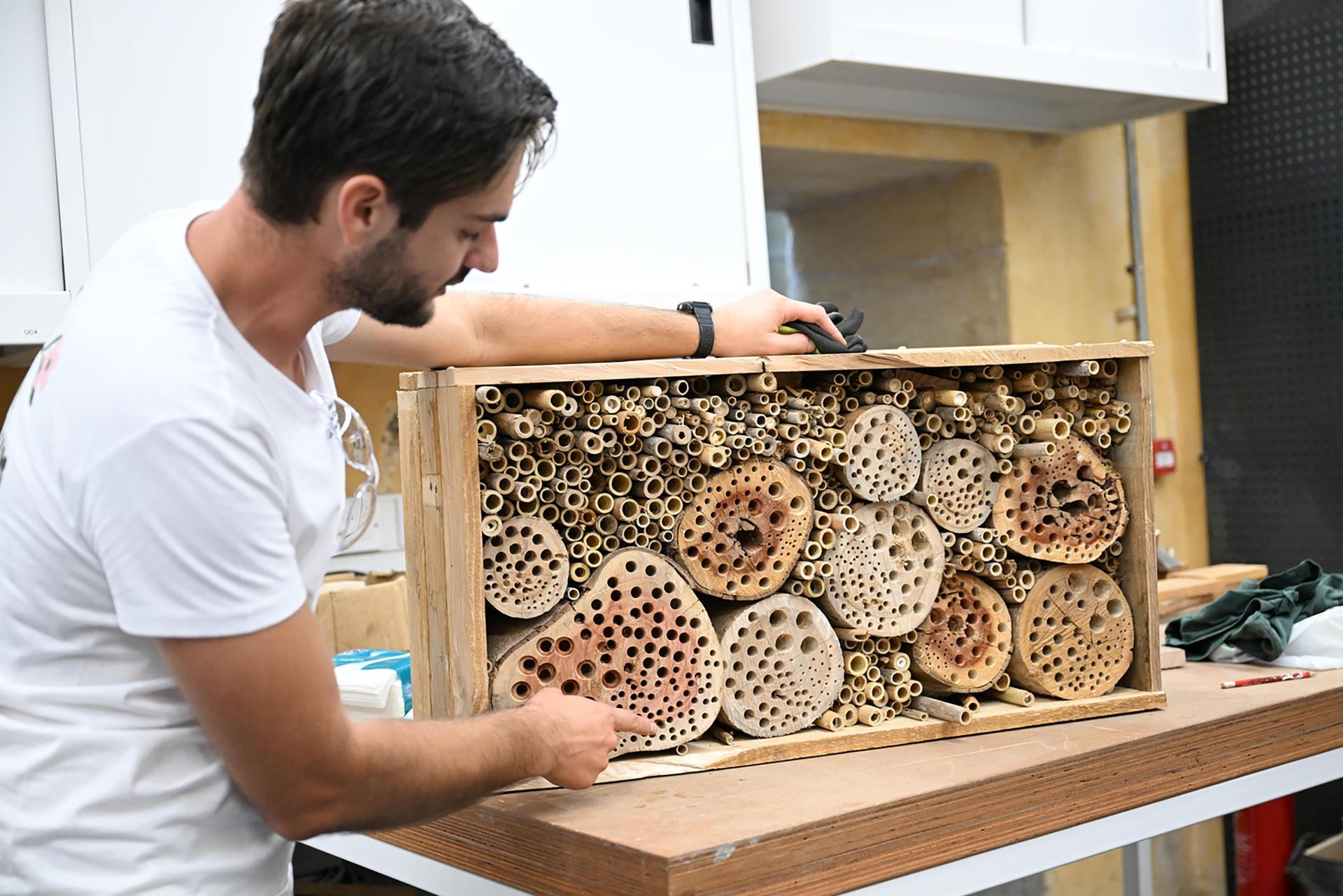 A central feature of the project is the construction of bee hotels.
BeeScape@UM aims to create ecological spaces that support wild bees and other vital insect pollinators, while engaging the student community and the wider public in hands-on conservation.
A central feature of the project is the construction of bee hotels which are nesting structures for solitary bees. These were built using recycled materials such as wooden pallets, local wood from native dead trees, and wood from invasive alien species. These hotels will soon be installed across the University grounds. Over the coming year, researchers will study the bee hotels to assess how different materials and nesting hole sizes affect pollinator activity.
The project promotes urban greening by protecting wild flora, enhancing flower diversity and reducing grass cutting in controlled, selected areas to assess benefits both to plants and pollinators populations. Additionally, a selection of rural passageways in Malta will be monitored to gain a clearer understanding of ecological conditions and emerging trends related to pollinators in the countryside.
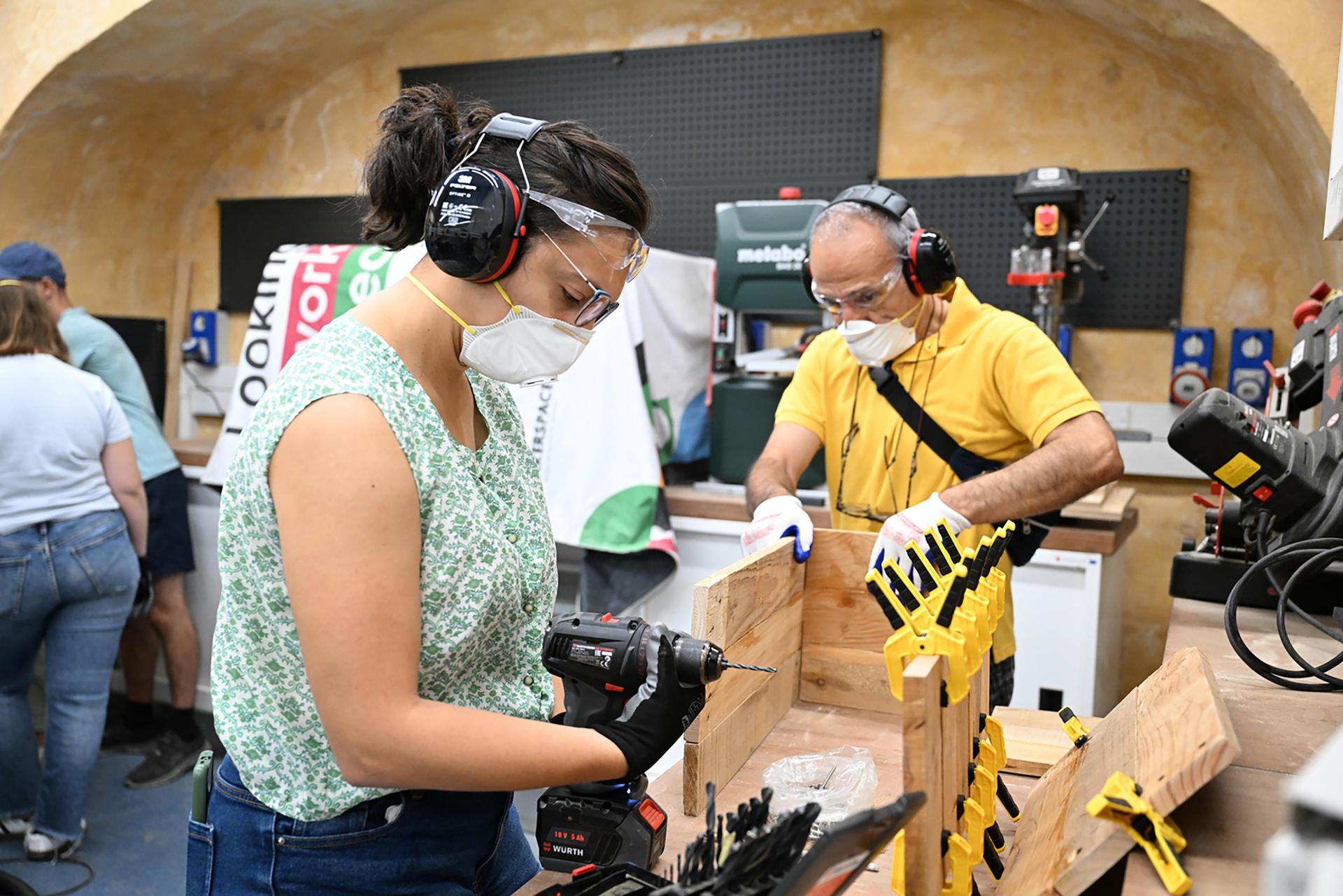 Workshop participants gained practical experience and a deeper appreciation for the vital role of pollinators in maintaining healthy ecosystems.
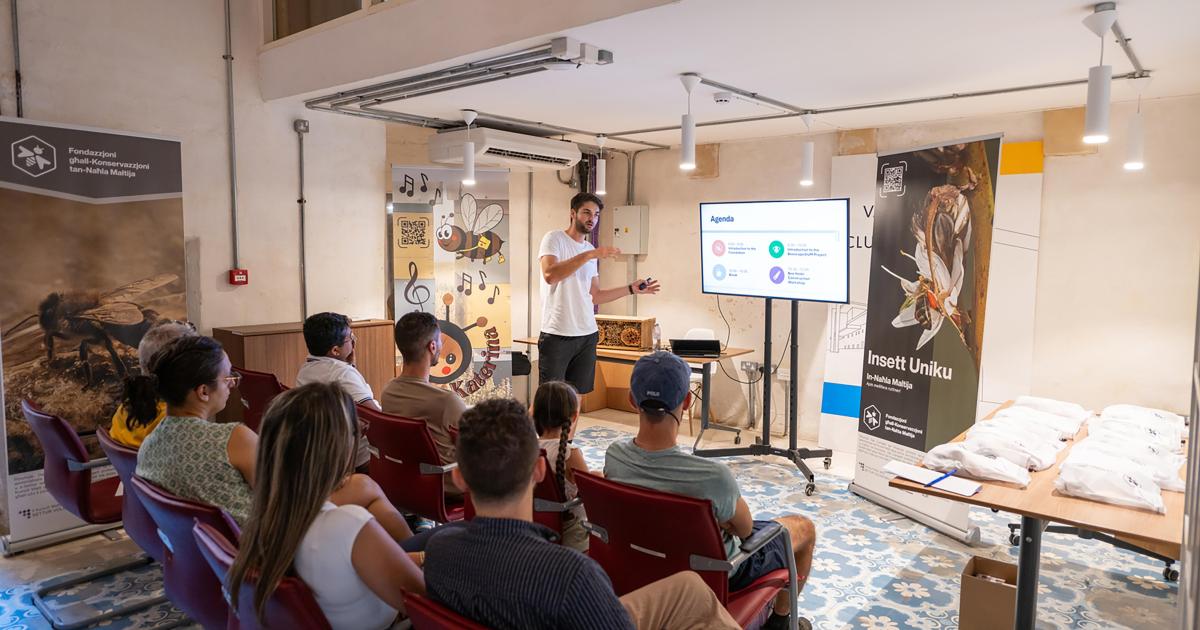
Community participation lies at the heart of BeeScape@UM. A recent bee hotel workshop, held at the Valletta Design Cluster in September, brought together students and members of the public to learn about Malta’s pollinators and build the very hotels that will be used in the research aspect of this project. Participants not only gained practical experience but also a deeper appreciation for the vital role of pollinators in maintaining healthy ecosystems.
Through events, educational outreach, and scientific research, BeeScape@UM seeks to inspire and shed light on biodiversity conservation, with a spotlight on pollinators.
Stay updated on BeeScape@UM’s progress and other initiatives by following the Foundation for the Conservation of the Maltese Honey Bee on social media.
Dylan Farrugia is co-founder and administrator of the Foundation for the Conservation of the Maltese Honey Bee.
Acknowledgements
The Foundation for the Conservation of the Maltese Honey Bee extends its gratitude to Bank of Valletta’s CSR team for their continuous support, Sandro Lanfranco from the Department of Biology at the University of Malta for his invaluable assistance, as well as Project Green for supplying some of the materials used in the bee hotel construction.