
6) The Europe/Russia confrontation rests on a profound asymmetry in the perception of threats and strategic intentions. Europe’s posture is essentially defensive and deterrent, based on respect for international law. While Russia presents itself as a fortress besieged by a hostile West, it simultaneously seeks to reaffirm its domination over its former sphere of influence and build a new European security architecture.
7) While not excluding the possibility of a large-scale offensive against NATO, Russia has adopted an expanded conception of warfare. When indirect measures fail to subdue its opponents, they are intended to prepare the ground for an open military campaign, designed to be brief, intense and decisive. The Russian strategy, which is permanent, cross-domain and coercive, aims to influence the West’s risk assessment and paralyze its decision-making by instilling the fear of escalation. Up to now, two major factors have contributed to deterring Russia from open military aggression against the Euro-Atlantic area: first, NATO cohesion, in which Washington’s commitment is a key factor, and secondly, the continued resistance of Ukraine, which is mobilizing the major part of Russian military power. Should either of these two factors weaken, the risk of an open armed confrontation between Russia and Europe, whatever the scale, would increase considerably.
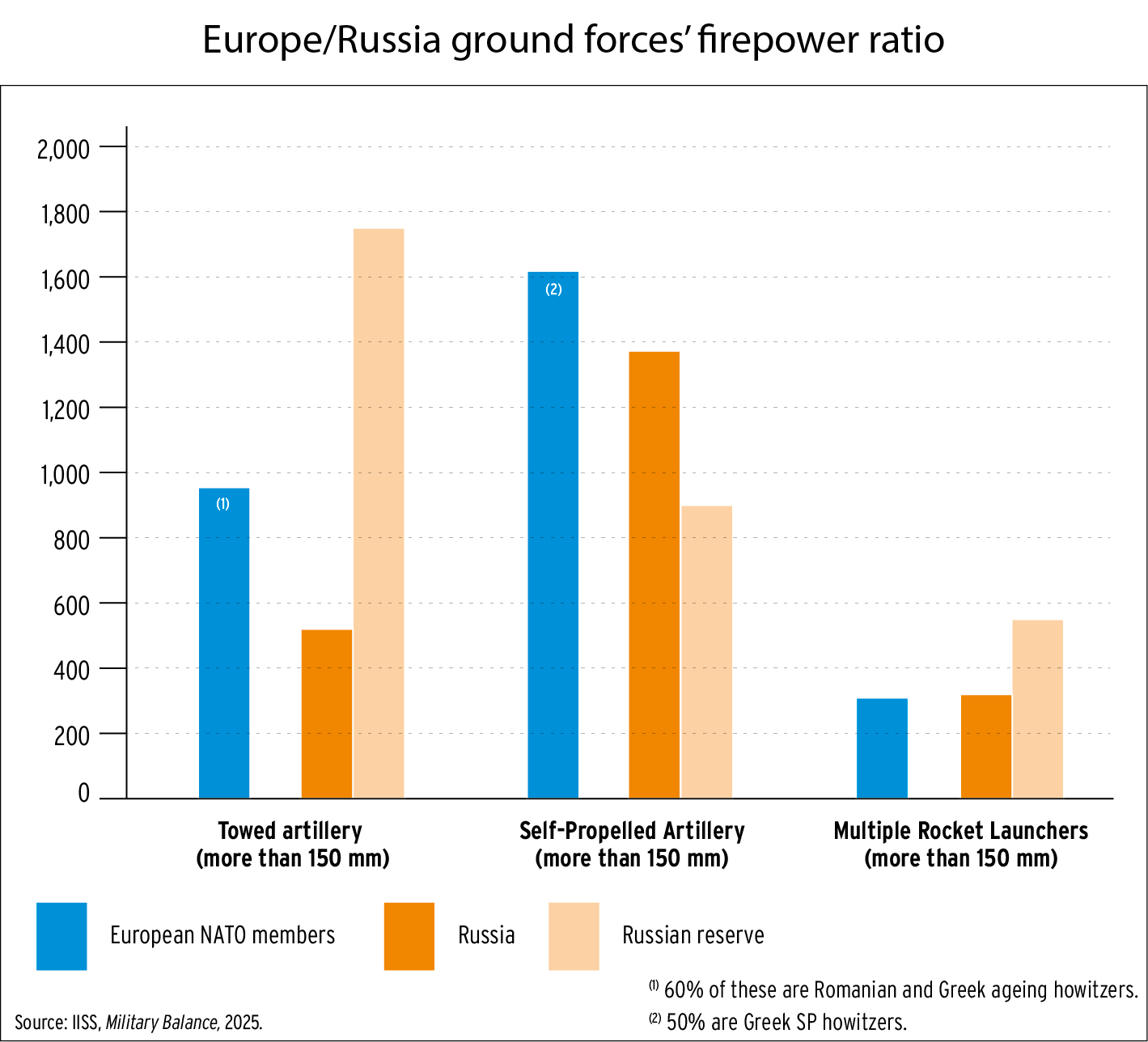
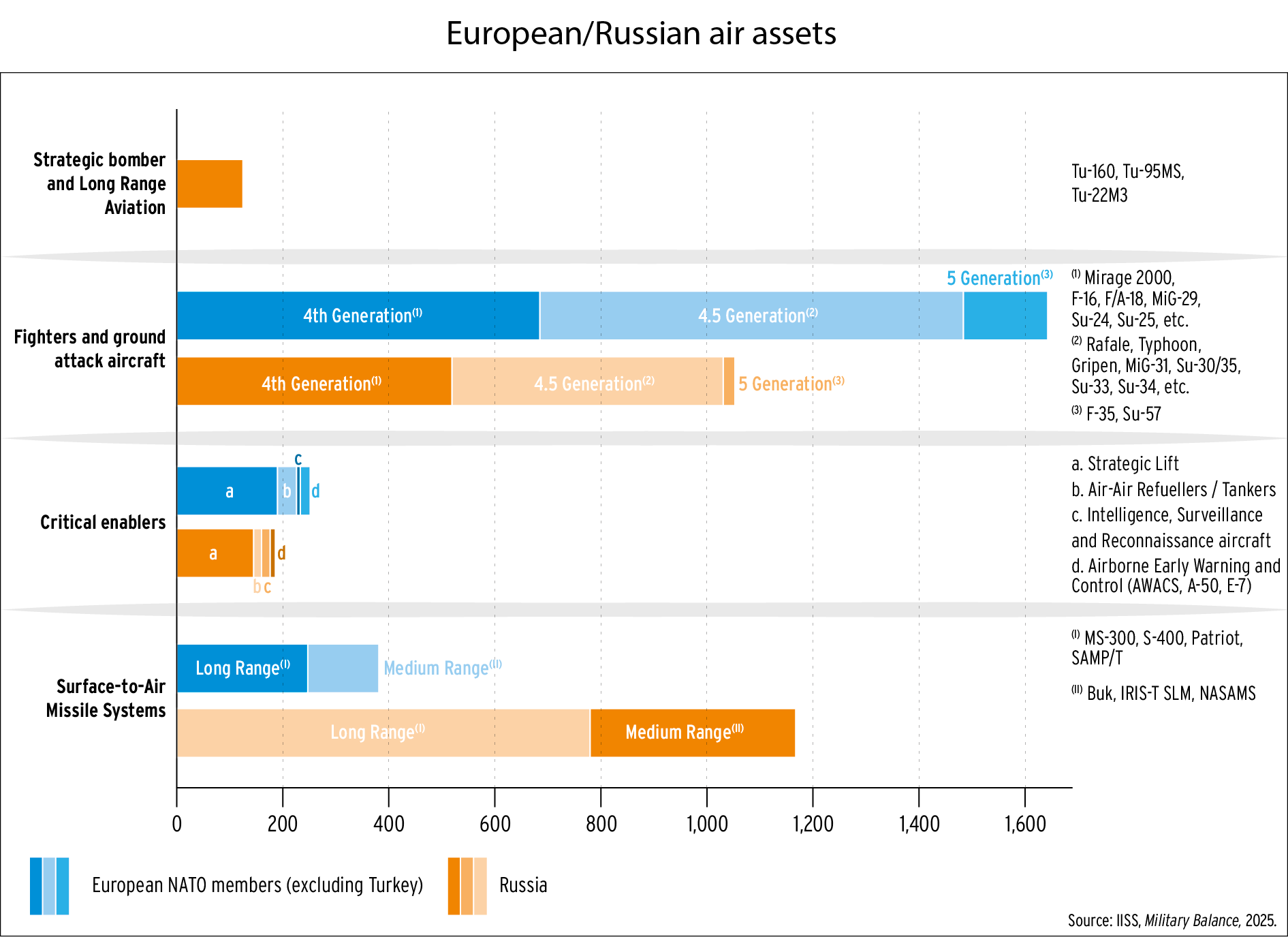
8) Analysis of the balance of power shows that the land domain remains Europe’s weak point. Even though Europe maintains a qualitative advantage in training, command and combined arms tactics, Russia has a decisive advantage in terms of mass, firepower, mobilization capacity and tolerance for attrition. In the air domain, Europe benefits from a clear quantitative and qualitative superiority. However, without massive support from the United States, maintaining European air superiority would require addressing deficits in terms of stocks, integrated air and missile defense, and capabilities to neutralize enemy air defenses. At sea, in space and in cyberspace, Europe also holds the advantage, provided it exploits this by shifting the confrontation into these domains, where Russia’s ability to deny or obscure its actions is more limited.
9) The nuclear factor remains central to Moscow’s escalation strategy. Faced with various failures since the beginning of the war in Ukraine, Russia has adapted its posture by supplementing its nuclear rhetoric with more tangible deterrent measures, as demonstrated by the decision to deploy tactical nuclear weapons in Belarus. Furthermore, in its new nuclear doctrine, Russia has reduced the conditions required to justify nuclear use, extending them to conventional conflicts against non-nuclear states – especially when those states are allied with, or supported by, nuclear powers. Currently, the American, French and British deterrent postures have the effect of protecting Europe from Russian nuclear intimidation and blackmail. However, should the credibility of the United States’ extended deterrence be seriously undermined or fail, Europe would suffer from a strategic imbalance with Russia.
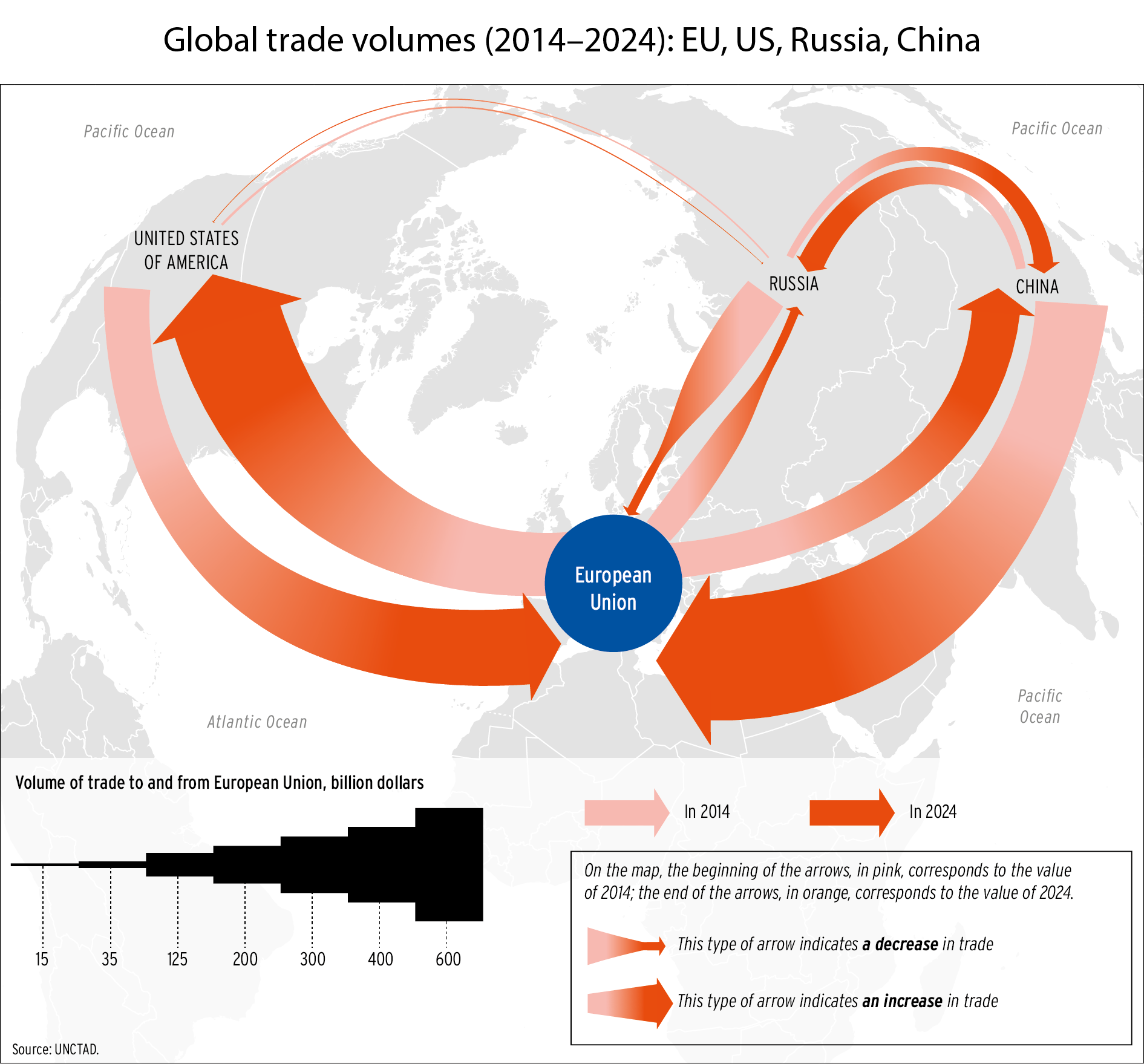
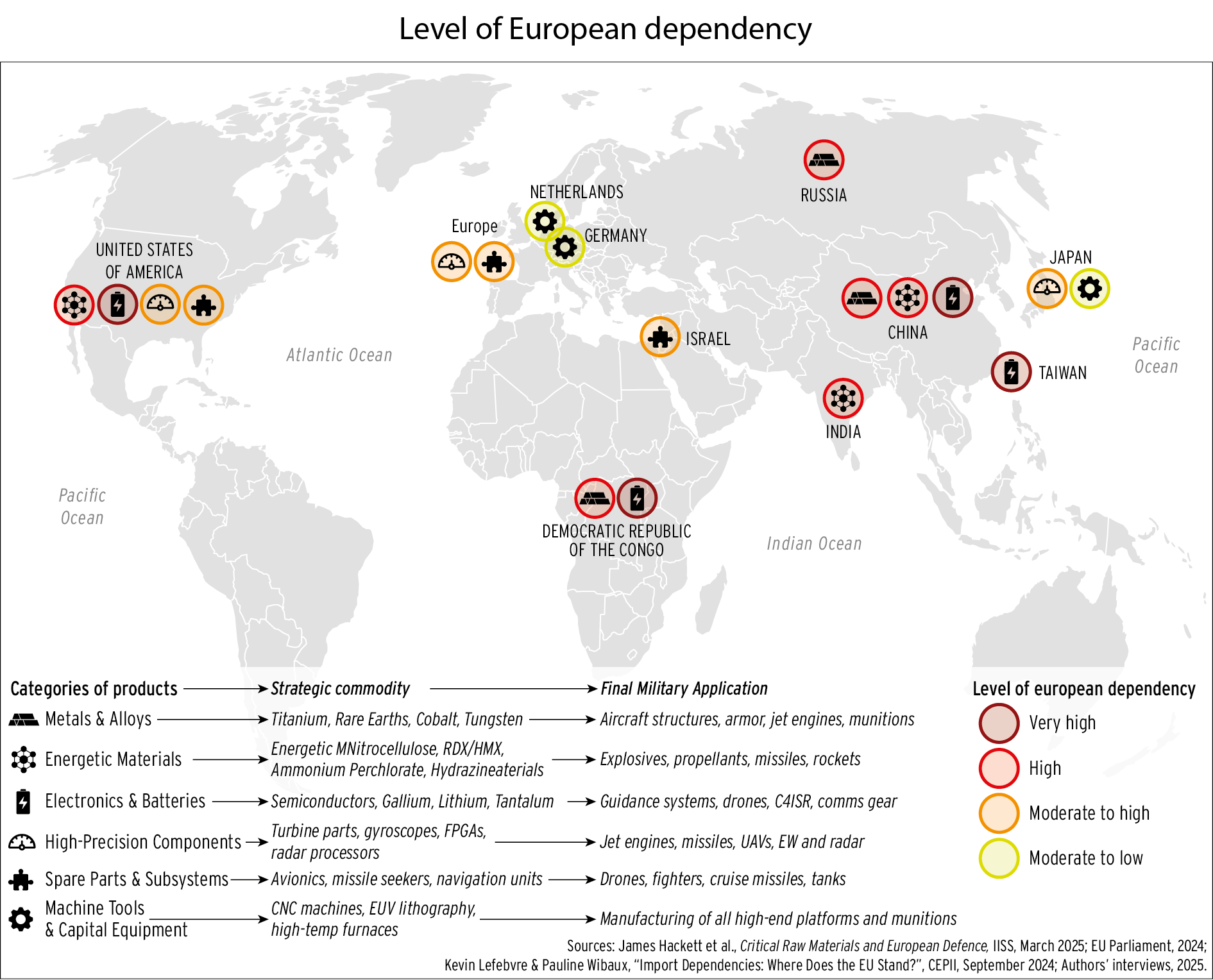
10) Europe is a magnet for all forms of exchange and movement. While its “strategic rear” is highly diversified due to its integration into the global economy, it is also more exposed. Europe depends heavily on supply chains that are vulnerable to geopolitical disruption and on increasingly uncertain transatlantic support. Meanwhile, Russia relies on an anti-Western axis that is rapidly disengaging from networks dominated by the West.
11) While Russian strategists rely on the cumulative effects of indirect actions, the most important role is assigned to the psychological-informational component. Considered potentially comparable to the effects of large-scale troop deployment, the psychological-informational impact is not limited to opportunistic manipulation or disinformation operations but aims to transform individuals and societies over the long term, on both emotional and psychological levels. Although Europe’s responses so far have been defensive and fragmented, there is now a growing recognition of the need to address this psychological and informational front more coherently.