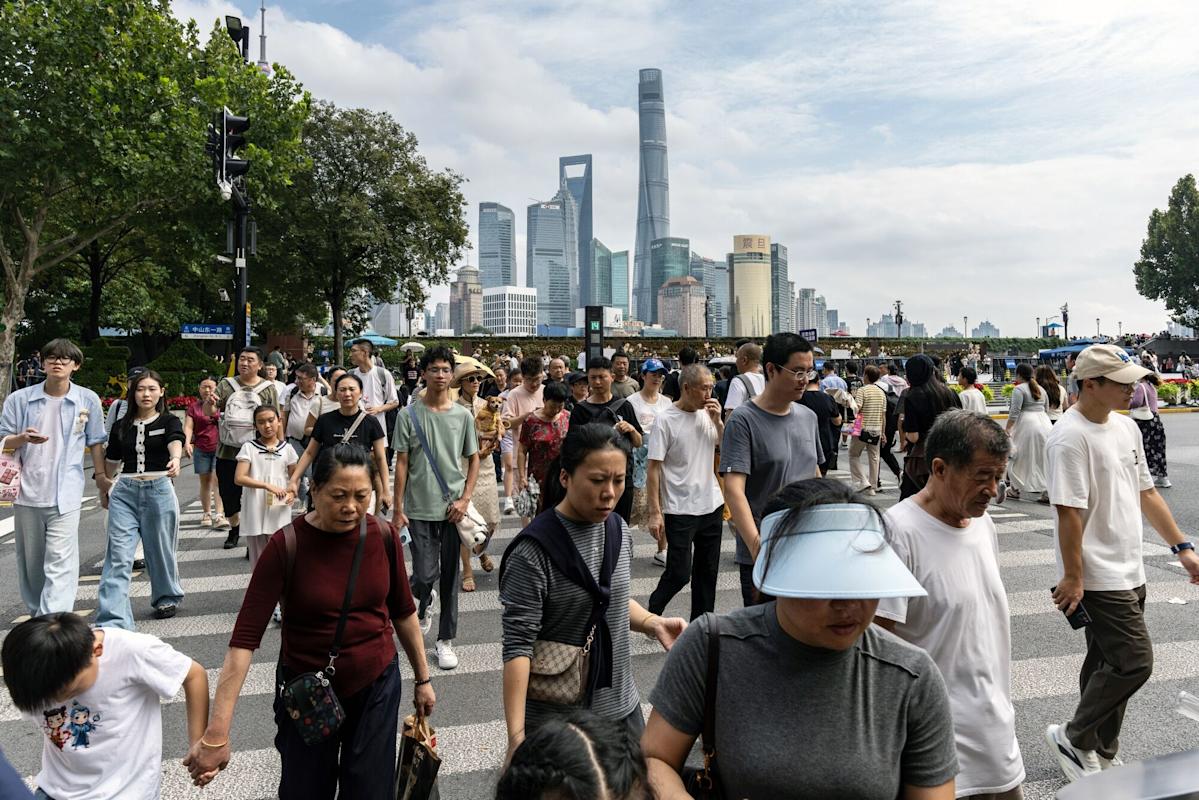

Pedestrians cross a road in the Bund in Shanghai. Photographer: Qilai Shen/Bloomberg
(Bloomberg) — China’s services activity expanded in October even though growth was the weakest in three months, a private survey showed, as holiday spending and travel by households supported the industry during a deepening economic slowdown.
The RatingDog China services purchasing managers’ index slipped to 52.6 from 52.9 in September, according to a statement published Wednesday, extending a growth streak that started after Covid lockdowns in 2022. The median forecast of economists surveyed by Bloomberg was 52.5, with any reading above 50 indicating an expansion.
Most Read from Bloomberg
The services reading adds to a picture of an industry that’s holding up relatively well despite sluggish consumer demand, even as weakness spreads across the world’s second-biggest economy. Official PMIs last week showed the services activity picked up slightly to start the fourth quarter, thanks largely to long autumn holidays and the beginning of a shopping festival in October, while manufacturing and construction both slumped.
“A solid improvement in domestic demand continued to drive the expansion of new orders,” Yao Yu, founder of RatingDog, said in the statement. “The sustained contraction in employment and pressure on profit margins remain the main constraints facing the sector.”
China will likely have to lean more on the strength of domestic spending in the months ahead, even after a deal reached last week between US President Donald Trump and his Chinese counterpart, Xi Jinping, to defuse trade tensions.
As export front-loading wanes and investment slows sharply, services consumption has emerged as a key area of focus for officials because it holds out the potential of unlocking additional demand — especially in areas like tourism and entertainment that don’t fully meet household needs.
In September, the government laid out measures to use its budget to develop the necessary infrastructure and guide banks to lend more to services providers along with consumers.
And last month, policymakers pledged to increase expenditure on public services and work on promoting employment, according to a guiding document on China’s next five-year plan starting in 2026.
The program, however, also doubles down on industrial dominance and tech self-sufficiency, leading JPMorgan Chase & Co. economists to write that development of the services sector will likely remain secondary to manufacturing.