Federal court data shows as of last count, in July, more than 2.3 million asylum applications are pending in the U.S. this year. It’s nearing a historic high from 2024, and attorneys say it comes as legal pathways to stay here get more narrow, and deportations increase.
But, even winning protection in the U.S. doesn’t always mean the end of the story.
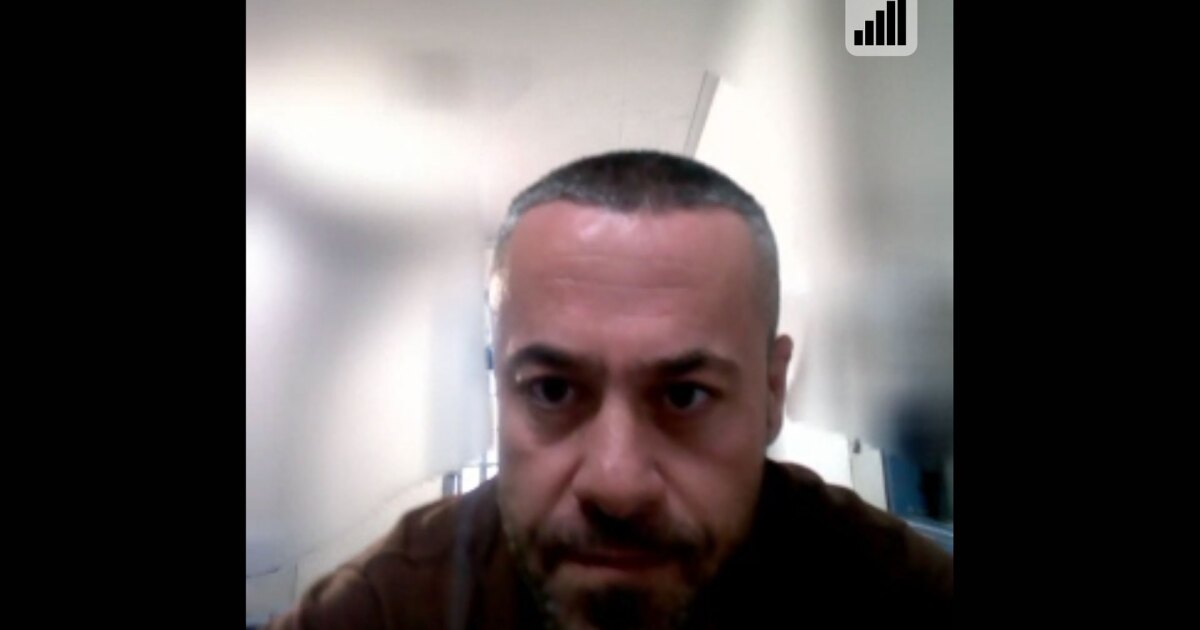
That’s the case for Kamel Maklad. Even though he’s been in the U.S. for more than two years now, he hasn’t actually seen much. That’s because, ever since crossing the border near Lukeville, Arizona, in September of 2023, he’s been in immigration detention.
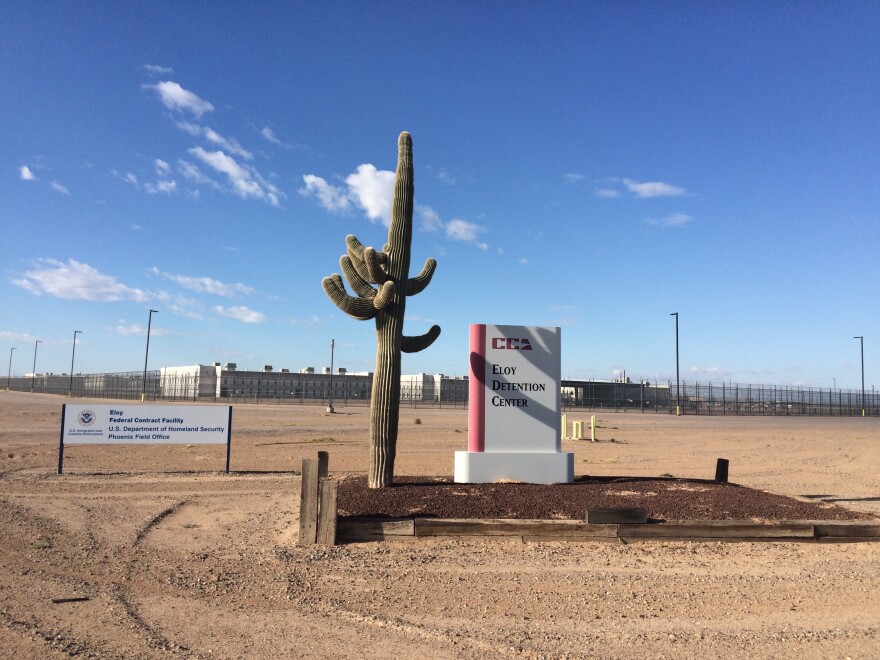
I reached him over a tinny phone line at the Eloy Detention Center — south of Phoenix — where he’s spent most of the last two years.
Maklad fled his home country of Syria more than a decade ago, when civil war was first breaking out there. Maklad is Druze. It’s a religious minority that’s been targeted by other groups in Syria over the years.
He says his Druze community collectively decided to stay out of the war when it began. So when young men were being forced to join Syria’s military, Maklad left for Venezuela, one of the few countries where he says getting a visa was an option as a Syrian back then. That’s how he learned to speak Spanish.
“I bought [my visa], set it up, and I left, just like thousands of my cousins, my relatives, my religious community,” he said in Spanish. “They decided to leave the country rather than hand it over to the army, rather than hand it over to that war,.”
But, he says, by 2023, his work and residency permits had expired. That August, he set out for the U.S. His group passed through seven countries and the rugged Darien Gap jungle to get here.
“Thank god, we made it to Panama,” he said. “From Panama, we went to Costa Rica, from Costa Rica, Nicaragua, Honduras, Guatemala and Mexico.”
Once in Mexico, Maklad says he registered for CBP One. He still has the confirmation number for his application to the the Biden-era smartphone app — which had migrants who were trying to seek asylum in the U.S. vie for a fixed number of appointments at a handful of border ports of entry.
But after almost a month, Maklad says he got robbed and received threats in Mexico. So, he headed for the border near Lukeville and presented himself to Border Patrol agents there instead.
Under the Circumvention of Lawful Pathways rule — another Biden-era border restriction in effect at the time — crossing the border in-between official entry points made Maklad ineligible for U.S. asylum, regardless of his case.
Border restrictions and asylum backlogs
Last year, a federal judge determined Maklad was more likely than not to be tortured if sent back to Syria and granted him what’s called withholding of removal and protection under the UN Convention Against Torture. Kathleen Bush-Joseph, with the Migration Policy Institute, says this lesser form of protection is harder in some ways to win than asylum, but it’s being considered more often over the last few years.
“You have to meet a higher standard of proof, and the burden to do that is on the non-citizen,” she said. “And one of the reasons that we’re seeing more of these now is not only because of the Trump administration’s restrictions on asylum, but also because of the Biden administration’s restrictions.”
Restrictions like the rule that prohibited Maklad from accessing full asylum back in 2023, Bush-Joseph says. Rights groups sued to stop the policy back then and it’s been stuck in litigation. Now, the Trump administration is defending it in court.
“You’re layering restriction on top of restriction,” Bush-Joseph said.
She says those restrictions contribute to the court backlog, too — as some attorneys advise clients to apply for asylum even if they might be found ineligible, because the restrictions are still being litigated and could be struck down.
That’s adding to the asylum caseload at a time when there are fewer immigration judges to adjudicate — just 600 remained on the bench nationwide as last month, according to figures by the judge’s union, after federal firings and buyouts. Federal data shows the number of asylum cases being denied this year is the highest it’s been in at least a decade.
And, as Bush-Joseph notes, immigration enforcement will see a $170 billion boost through the so-called Big Beautiful Bill, but it won’t help the courts.
“There was actually a cap on the number of immigration judges that could be hired, even though analysts have predicted that it would take more than 1000 judges to be working through the backlog over the course of a decade,” she said.
Deportation agreements
Unlike asylum, those that receive protection through a withholding of removal order, like Maklad, can still be removed from the U.S. if a different country accepts them.
Luis Campos, an immigration attorney in Tucson who recently took on Maklad’s case, says that used to be rare. Instead, people were generally released from detention and given a work permit in the U.S. He says things have changed this year.
“None of these changes work in favor of respondents like Kamel,” Campos said.
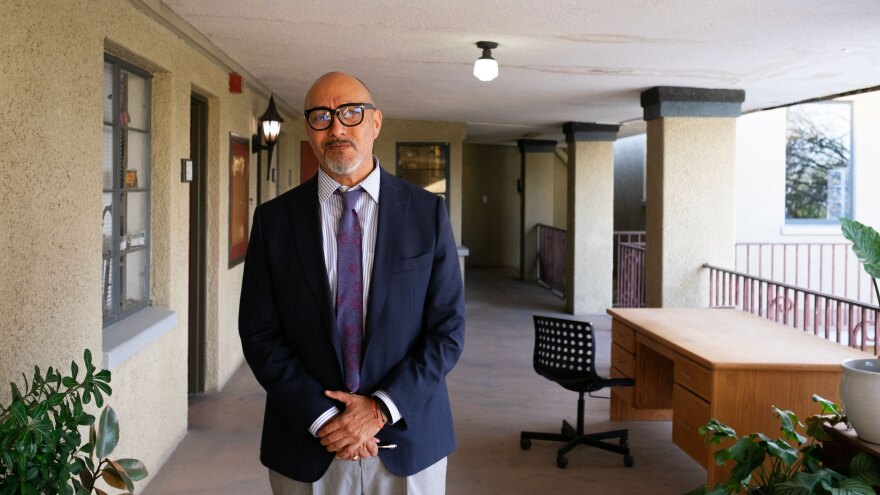
Luis Campos is an immigration attorney in Tucson.
The Trump administration is ramping up efforts to get countries to take deportees from other places. Almost a dozen have agreed to those removals so far, including Uganda, El Salvador and South Sudan.
Venezuela isn’t on that list. Nevertheless, Maklad was boarded onto a deportation flight headed there in September.
He says he’d agreed after ICE assured him he’d be accepted. But once he arrived, Venezuelan officials told him they had no knowledge of his deportation. And sent him back.
After a brief stint in Texas, he was detained at Eloy again, back where he started in 2023.
“I remember falling into a deep sadness,” he said. “I’d been fighting for my freedom for almost two years, doing everything legally.”
DHS did not respond to questions about the Venezuela flight. But in an email, Assistant Secretary Tricia McLaughlin called Maklad a “suspected terrorist” and a “serious threat to the public,” and said he would not be released into the U.S.
Maklad’s name doesn’t appear in any U.S. district court filing. DHS didn’t provide evidence to those claims or answer questions about why they hadn’t come up in Maklad’s previous court hearings or asylum interviews.
Campos says U.S. law would have prohibited Maklad from accessing the type of protection he got if claims of terrorism had been brought back then.
“The optics of this case are terrible, a gentleman won his case in an immigration court, the government refuses to release him,” Campos said. “They’ve tried an illegal rendition to a third country. So how do they fix this? Let’s call him a terrorist.”
‘I’m wasting away’
Campos and other attorneys are trying to file a habeas corpus petition for Maklad, which would force the case before a judge. But for now, he’s stuck in detention.
“I’m wearing myself out,” Maklad says. “I’m wasting away.”
As his U.S. court documents describe, an arrest warrant was eventually issued for him there for failing to enlist in the military during wartime. Another threat came in 2018, when ISIS fighters killed hundreds of people in his hometown of Swaida, including some of his family members.
His younger sister, Shorouq, is still there. She says she worries about Maklad’s health in detention — he suffered a heart attack back in 2018 after the attack in his hometown and required surgery. But, she says, coming back isn’t safe.
“I don’t want Kamel to ever come back to Syria, not even to Swaida, because there’s absolutely no safety there,” she said in a voice memo in Arabic on WhatsApp. “There’s no internet, no electricity and no water, unless we buy it … the situation is very miserable here.”
Maklad knows Syria isn’t safe. But he says he needs to help his family and he doesn’t mind starting over.
“When I arrived in Venezuela, I didn’t speak a word of Spanish — I spent half an hour trying to order an empanada,” he said. “I worked hard to learn Spanish … and it doesn’t bother me, but what I’m looking for is a country where I can find peace. That’s all I’m looking for.”