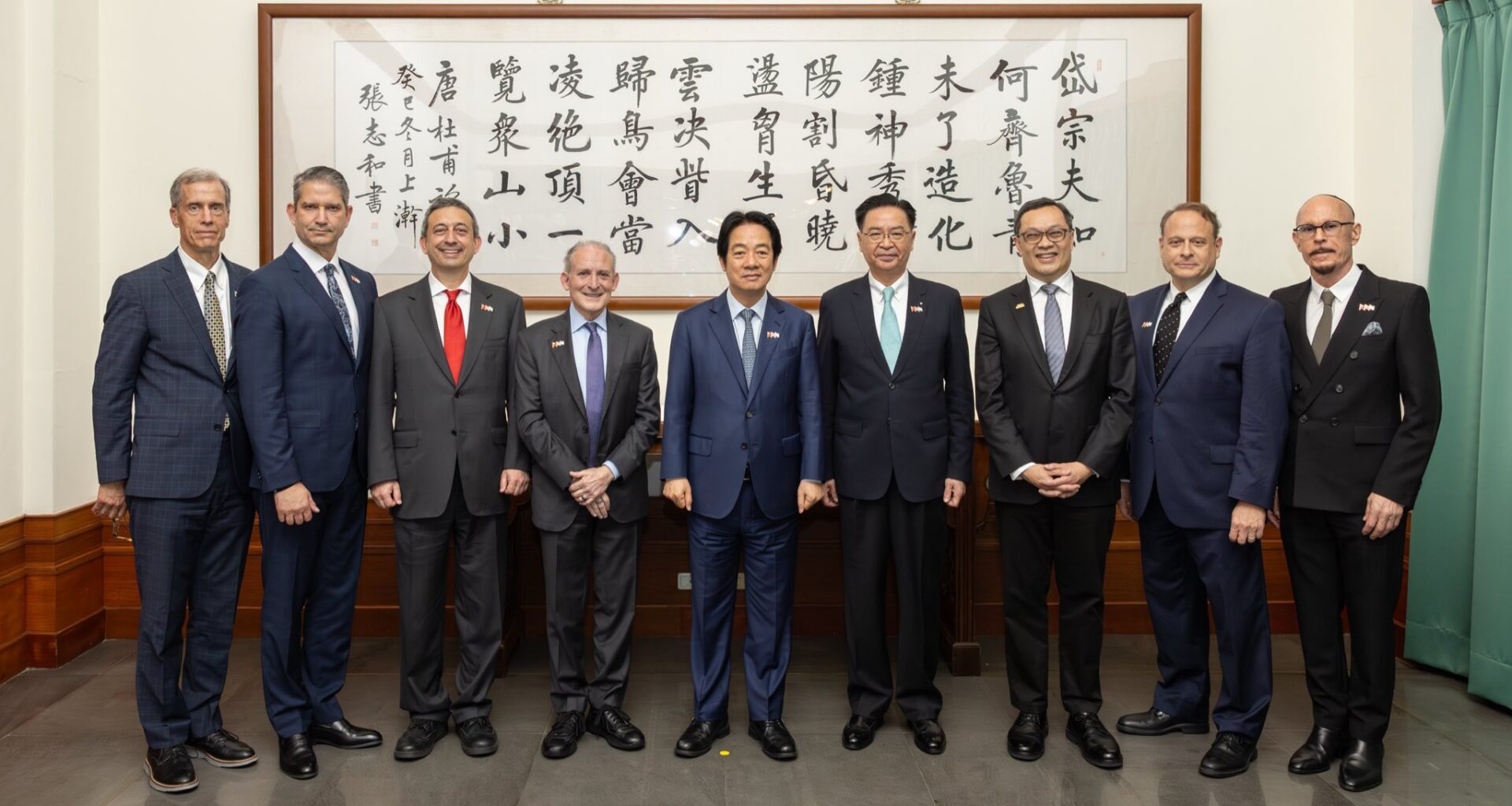
A delegation organized by AIPAC recently completed a nine-day visit to Taiwan, Japan and South Korea, Jewish Insider has learned, as the pro-Israel lobbying group seeks to promote ties with Israel among key U.S. allies.
Over 200 of AIPAC’s largest donors as well as its CEO, Elliot Brandt; board chair, Michael Tuchin; board president, Bernie Kaminetsky; and top professional staff traveled to the region from Oct. 22-30, according to a participant with knowledge of the trip’s background.
Though Israel already has warm relations with all three countries, as both Israel and the U.S. look to increase ties in the Indo-Pacific region, the trip was meant to highlight the Jewish state’s relevance in its defense prowess, relationship to the U.S., shared democratic values, growing relations to the Gulf states — which have historically provided the Asian nations with much of their oil and gas — and acumen in the technology and business sectors, the participant said.
The large group met with high-level leadership in each country, including the Taiwanese president, vice president and secretary-general of its National Security Council, Korean ministers and a Japanese senior diplomat.
Taiwanese President Lai Ching-te told the group that “the Taiwanese people often look to the example of the Jewish people when facing challenges to our international standing and threats to our sovereignty from China,” and that the T-Dome, a missile interceptor project announced by Lai earlier this month, was inspired by Israel’s Iron Dome and President Donald Trump’s “Golden Dome” project.
The Japanese leg of the trip coincided with Trump’s visit to Tokyo, and the Japanese government had just been sworn in — with its first female prime minister, Sanae Takaichi.
Takaichi, known as a national security hawk, was elected within the ruling Liberal Democratic Party on a platform of boosting defense capabilities and reinforcing Japan’s role in the region, largely through prioritizing the country’s alliance with the U.S., which the AIPAC delegation highlighted as areas of success for Israel.
In South Korea, the delegation visited the Korean Demilitarized Zone, its border with North Korea, where participants heard from Mike Chinoy, a veteran CNN correspondent for the region. The conversations with government officials focused on shared concern between Israel and Korea about North Korea’s nuclear capabilities and cooperation with Iran.
The group also met with business leaders throughout the region who, the participant said, see Israel’s “start-up nation” as a compliment to their own “scale-up nations,” not well-known for innovation but able to rapidly scale technological advancements. The delegation emphasized the multilateral possibilities in the “new Middle East” as a result of Israel’s ties with its Abraham Accords partners, something the participant said is not yet well understood in the region.
AIPAC has taken similar delegations to the Gulf, India and Europe. The Asia visit had been planned for 2020 but was postponed due to the outbreak of COVID-19.