Me: Iceland has knitting tours! I think we need to do this.
Mom: I’m in.
That is how it started. Eight days, 14 women, a tour van, a trailer and yarn. Lots and lots of yarn.
Sept. 5
As my mother and I rode the bus from the airport into Reykjavík, my first impression was that the landscape reminded me of lumpy, green pillows. This impression was likely influenced by jet lag. In reality, the landscape is a beautiful melding of past volcanic activity and lush green moss and lichen.
After an easy transfer in town, the shuttle dropped us off next to the Hallgrímskirkja, a Lutheran church on a hilltop in Reykjavík. We walked about a quarter of the way around the church and there was our hotel. The truth of the advice from our tour coordinators about staying in a hotel near the Hallgrímskirkja became abundantly clear after we checked in and then left to explore on foot. As the second tallest building in Iceland, it is easy to see from much of the city and if you get turned around in terms of getting back to your hotel, just look for the church and head that way.
We put in 12,000 steps as we struggled to stay awake until a respectable time to crash into our beds. We saw everything from shops full of kitsch to art galleries to restaurants wafting out delicious aromas.
Sept. 6
The day was surprisingly sunny again, but the stiff wind was a harbinger of an unfavorable change in the weather. The outdoor portion of the Einar Jónsson Sculpture Museum is nicely sheltered from the wind, so we lingered there for an hour or so in the morning. His work has a distinctive look to it and many pieces have a spiritual quality to them. From there we walked down to the pond that is next to city hall and strolled the grounds around the pond for much of the late morning. A portion of the pond had been taken over by Graylag geese on layover as they headed south.
In the afternoon, we hit the Hafnarhús, an art museum in Reykjavík. When we bought our ticket for the Hafnarhús, we found out the ticket gets you into three different art museums, so when we finished up there, we headed to the Kjarvalsstair. It specializes in art by Jóhannes S. Kjarvals and also has lovely grounds outside. There were plenty of locals there enjoying the museum cafe and the lovely weather. We did not start quite early enough to get to Ásmundarsafn before closing, but it was a nice afternoon nonetheless.
Sept. 7
Finally, the first day of the tour. Mom and I slept in and then met everyone for the first time in the hotel lobby for a bit of an orientation meeting before we walked to the National Museum of Iceland to meet one of our Icelandic tour guides, Inga Gujónsdóttir, and get a guided tour of the museum through the lens of textiles through the ages. That evening we had a delicious seafood dinner all together. All being knitters, it didn’t take long for us to bond over things we love about knitting and things we hate about knitting, like weaving in the ends or purling.
Sept. 8
Inga and Bergróse Kjartansdóttir arrived early in the morning with our tour van and trailer. We loaded up and headed for the Handknitting Association of Iceland’s shop. Bergrose, a prolific knitter and designer, has her first book out and we were going to be knitting a shawl from it. We were here to pick out our yarn. Once we had our project yarn, and a few sweaters and knitting kits and other treasures, we hit the road out of Reykjavík.
First stop: the Istex factory, where the yarn we just got had been made. Istex is part co-op and part privately owned. The sheep herders in the co-op can choose to sell all or some of their wool to Istex each year or not. Istex must buy all wool the sheep herders want to sell to them.
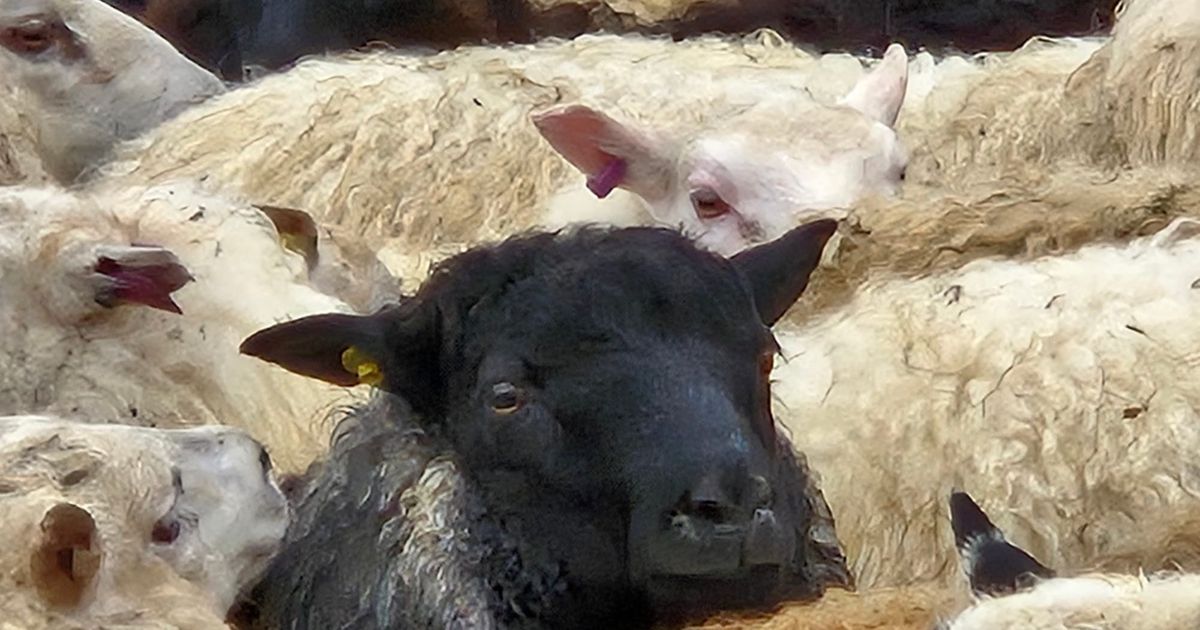
The Icelandic sheep has not changed much in the 1,000 years since the Vikings brought sheep to the island. They have not been crossbred and, as a result, they give us a good idea of what most sheep probably used to look like. Their wool has two parts, an inner insulating layer of short fibers and an outer layer of longer fibers that form a layer resistant to wind, rain and snow. This quality has been substantially bred out of modern sheep and is what makes Icelandic yarn so strong, warm and water resistant.
As we walked through the factory, we were entranced by the bales of wool that were nearly as big as a Fiat 500. Some were dyed and some were in their natural state. All of them were beautiful and none of us could resist the opportunity to touch them. Not all of the wool is suitable for being turned into yarn, but nothing goes to waste. Residual wool is used to make things like wool duvets and mattress pads.
From sorting to dying to carding to spinning and finally winding onto large spools, it was a marvel to all of us. On our way out after seeing how much work goes into making yarn, one of the women in the group quipped, “I’ll never complain about the cost of yarn again.”
It had been raining off and on, so how things would be at our next stop was of concern. We were going to the hot springs at Hvammsvik, which were discovered by the Vikings in 1187. Along the way we stopped to see the lovely Fossarétt Waterfall. At Hvammsvik, we started off with delicious seafood soup in the cafe and then proceeded to relax in the rustic hot springs. There was an opportunity to dip into the ocean, which only the bravest (or craziest) souls of the group opted for. The iffy weather worked to our advantage as we were treated to a rainbow when a light drizzle started.
We reluctantly left the hot spring to head to the Hotel Hamar, our home for the next two nights. After supper, we gathered to learn about our knitting project and Bergrose, one of our fearless leaders. After many years of designing for a large Icelandic yarn company, she has set out on her own and published her first book of designs. It was inspired by many things, including her mother, the poetry of Iceland and the beauty of Iceland. Our first knitting workshop would begin at 9 a.m. the next day.
Sept. 9
It was a beautiful sunny morning and we were indoors. But we did not care. We were here to knit. Some knitters had been smart enough to wind some yarn into smaller balls the night before in anticipation of the double-stranded knitting used to begin our projects. I was not one of those people and spent the first hour contending with a knotty mess. By the time we broke for lunch and then piled into the van, it was raining sideways.
We headed for Rita and Paull’s farm, which was mere minutes from the hotel. Rita and Paull emigrated to Iceland 60 years ago from Denmark and meeting them was a treat. They are in their 80s living on their small but vibrant farm and still making buttons and jewelry from antlers and horns, knitting beautiful items by hand and tending their herb patch, vegetable garden and fruit trees.
On the way to the Agricultural Museum of Iceland in the heart of the Borgarfjörur countryside, we stopped to make friends with some Icelandic ponies. Some were quite friendly and happy to get a scritch on the nose. Although they are small, they are sturdy and can stay outdoors throughout the Icelandic winter. Inga warned us: Do not let the farmers hear you call them ponies; they are Icelandic horses.
Sept. 10
After a morning of knitting, we hit the road again. This time to a goat farm. It was the farm of Jóhanna Bergmann Þorvaldsdóttir and her family. Jóhanna is considered to have saved the Icelandic goat from extinction through breeding and actively promoting conservation of this species. Theirs is the largest goat herd in Iceland, with about 200 goats.
We continued north to a dormant volcano that juts up out of the lush farmland carved out by glaciers in the last ice age. We hiked up in gusty wind so strong it felt like it might blow one of us over the edge and into the caldera. The ensuing ride to Hotel Laugabakki was a warm, snug opportunity for a bit more knitting.
Sept. 11
We headed to Blönduós for a short walk along the coast and then a tour of the Textile Museum after our morning knitting workshop and then some lunch. From an exhibit of modern knit designs and art to tapestries to national costumes, this museum is a treasure trove of beautiful items handmade in Iceland over the centuries like salmon leather shoes with wool inserts. On our way to Inga’s favorite restaurant in Iceland for fish and chips (North West Restaurant & Guesthouse), we stopped at Þrístapar. It is the site of the last public execution in Iceland, which took place on Jan. 12, 1830. Agnes Magnúsdóttir and Friðrik Sigurðsson were beheaded for the murders of Natan Ketilsson and Pétur Jónsson. The gravel path from the parking lot to the execution mound is lined with displays that not only tell the story of the murders, arrests, trials and executions, but also short biographies on the parties involved and what happened in the aftermath of the whole sordid incident.
Sept. 12
We piled into our trusty Ford van right after breakfast for a short trip to Inga’s farmhouse for our knitting workshop and lunch. And it was not just any lunch, Inga served us homemade lamb stew made with meat from one of her own herd and potatoes dug from the garden about an hour before the stew was served. It was a cozy morning together in Inga’s sitting room followed by a lovely lunch in the kitchen. Truly a highlight of the trip. After a beautiful sunny morning, we were treated to an easy hike along the coast in sideways rain. We hiked past the site where the murder of Natan Ketilsson and Pétur Jónsson had taken place as well as many sheep who were mostly indifferent to our presence. Eventually we got to a small cove with about eight harbor seals. One of them seemed as interested in us as we were in them and was showing off for the cameras a bit.
Sept. 13
It was a big day. The réttir was supposed to take place, but we woke to morning fog, so it might be postponed. It is hard to find your sheep on the mountain in the fog. The réttir is the annual fall roundup and sorting of sheep in preparation for overwintering them indoors. As we knitted, Inga made calls to her farmer friends to get updates on the situation. After lunch we went to a yarn and knitwear shop. This was one of many yarn shops that we went to, but what made this one special was that Bergróse’s book was for sale here. Finally the call came: The réttir was on. We scrambled into the van and hot footed it to the hotel to put on our waterproof gear. As we arrived at the corral, there was a moment when we thought the réttir was finished, but we were very lucky that day and it was not.
The réttir corral is round and it has smaller corrals radiating off it like spokes on a wheel. Each smaller corral has a gate between it and the central corral. Using moveable fence pieces, the farmers create a chute that runs parallel to the gates. Inga has friends who are as generous as she is and those of us who wanted to were allowed into the corral to help herd the sheep into the chute for sorting. Inga had warned us that sheep can jump and kick, but holy cow, I never imagined they could jump as high as they sometimes do. It was exciting to get to help and a little sad, the sheep were agitated. About 20 or so sheep are herded into the chute, where farmers checked ear tags and funneled sheep through the appropriate gate.
Once all of the sheep were sorted, it was time to get them loaded and transported to their respective farms. This does not require nearly as many people, so that meant it was also time to pile into the snug little building next to the corral with the locals for hot cocoa, coffee, tea, rhubarb cake and Icelandic waffles with rhubarb jam.
Sept. 14
No time for knitting today. In the van by 8 a.m., we were going to Thingvellir National Park, a UNSECO World Heritage Site where the world’s oldest parliament, the Alþing, was established in 930 A.D. This site is more than just historic, it is also beautiful and geologically unique as the Atlantic Ocean ridge is above sea level here. It is full of hiking trails and you can camp, fish and even snorkel there. After an easy hike in more sideways rain, we headed to Selfoss for a delightful lunch at a food hall. Food halls are gaining popularity in Iceland and for good reason in my opinion. They are kind of like a food court in our malls, but with much better food and no stores.
With full bellies, we headed to Íslenska Ullarvinnslan, Icelandic Wool Works. It is a co-op founded in 1991 where they wash wool, dye wool and yarn, card and felt, hand spin and weave. It also offers workshops and classes as well as presentations/introduction to Icelandic wool processing to keep traditional knowledge alive. Our last stop of the day was at Hespuhúsi. This is the studio of Guðrún Bjarnadóttir and she was kind enough to open on a Sunday and give us a presentation on how she became a full-time dyer and about dying wool with natural dyes. As a knitter, when I think of natural dyes, I think of subdued and earthy colors, but Guðrún is able to achieve amazingly vibrant colors in wool that lasts. She had some of the most beautiful wool we had seen yet and you can bet we left with lighter wallets.
Sept. 15
Everyone except mom and I were heading home. We were back in Reykjavík and had breakfast with the rest of the ladies in the hotel cafe. I went shopping with four of the ladies as they looked for last minute items and Mom stayed in the cafe chatting with others as they gathered to await Inga and the trusty van. As we walked through Reykjavík, people peeled off to go for walks, shop more or get a snack. Eventually we were all back together at the hotel cafe for the last time and before we knew it, it was time to cross the street and walk around the Hallgrímskirkja to the bus stop where the van would pick them up and take them to the airport.
I carried a bag (full of wool of course!) for one of the ladies and helped everyone get their bags into the van. It was surprisingly hard to say goodbye to these women who I had known for a mere eight days.
Mom and I waved the van off and slowly walked back to the hotel. We were glad of a bit more time to rest before the long haul home, but I think we both felt a bit diminished without our knitting comrades and fearless leaders.
So far, we are keeping in touch on our WhatsApp group and all have been diligently posting pictures of their shawls as they finish them. They are all beautiful, just like the women who made them.