Yet Iceland’s allure extends beyond its landscapes. The air is clean, the people are warm and welcoming, and the sense of safety is clear. And now, with Icelandair connecting Miami International Airport to Reykjavík three times a week, this northern wonderland is closer than ever to the sun-soaked beaches of South Florida.
Reykjavík’s Nordic Charm
Reykjavík, Iceland’s capital, sits in the island’s southwest and serves as its cultural heart. The city combines Scandinavian simplicity with creative, youthful energy. Compact and walkable, it offers a “laid-back Nordic vibe” that blends striking architecture with cozy cafés and vibrant street life.
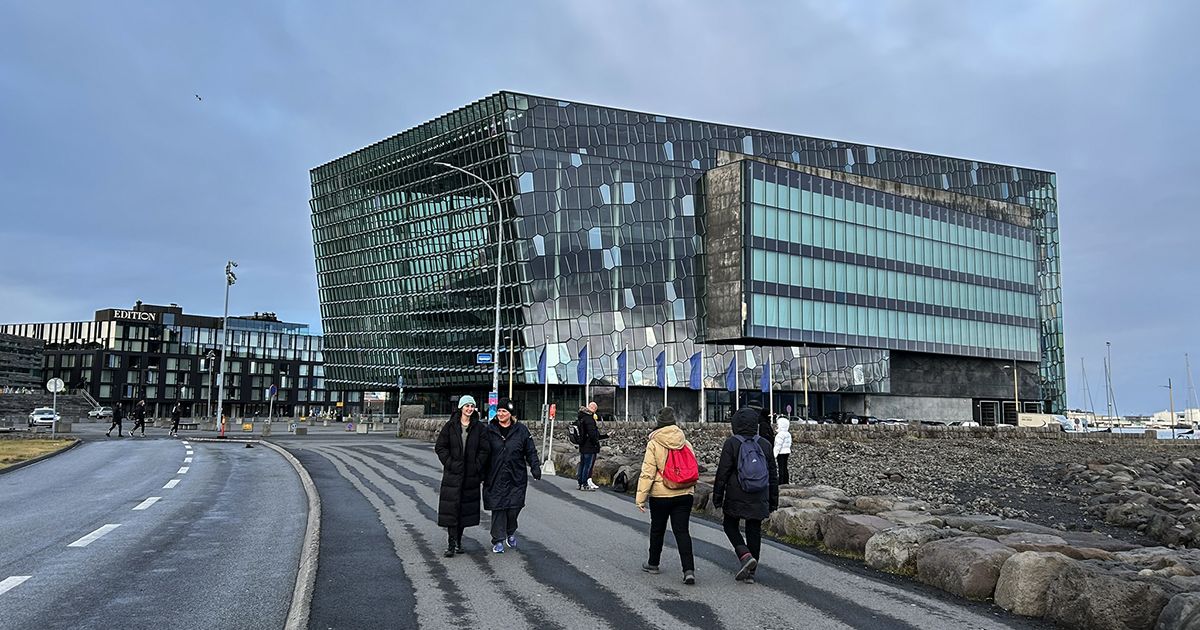
Architectural highlights include Hallgrímskirkja church, its soaring steeple visible from almost anywhere in the city, and the Harpa Concert Hall and Conference Centre, a modern glass marvel reflecting the sea and sky.
At Icelandic Street Food, Edda, a local server, places a steaming bowl of lamb soup on the table. “To Western standards, this is a mid-size city,” she says with a smile, “but we are so happy with it.” And she’s right—Reykjavík feels both intimate and cosmopolitan.
For a dose of nature without leaving town, hikers head west to Mount Esja for sweeping views of the city and coastline. Along the waterfront, the Shore Walk connects the Old Harbor to the gleaming Sun Voyager sculpture and the Grotta Lighthouse, with stunning views of Faxaflói Bay and distant snowcapped peaks.
South of the historic harbor lies Grjótaþorp, Reykjavík’s oldest neighborhood, where Viking settlers from Norway founded the city in the 9th century. Nearby Bankastræti Street has been a cultural hub since the 19th century, lined with shops, cafés, galleries, and lively bars. Stop by local favorites like Saeta Husid for a coffee, Sumac restaurant to try their great dishes, or the iconic rainbow-painted street celebrating diversity and inclusion.
Heading into Nature
Beyond Reykjavík, Iceland’s true spectacle unfolds in its wild terrain. Visitors often describe the country’s scenery as nothing short of cinematic—cascading waterfalls, rugged coastlines, and vast valleys dotted with moss-covered lava.
To experience lava up close, in its liquid state, the Lava Show, in a modern complex, might please you.
Two of Iceland’s most famous driving routes reveal the island’s wonders: the Ring Road (Route 1), which circles the entire island, and the Golden Circle, a day trip from Reykjavík featuring three must-see landmarks. At Thingvellir National Park, you can walk between continents where tectonic plates pull six centimeters apart each year. Nearby, the Geysir geothermal area erupts with plumes of steam and boiling water, and Gullfoss waterfall thunders into a deep canyon in a spectacular display of raw power.
When planning excursions, consider whether to join a group tour or explore on your own. Local companies like Icelandia and Activity Iceland offer expertly guided experiences, while independent travelers can easily rent a car and follow their own pace.
Please watch the Iceland video recap we’ve included here.
Beyond the Golden Circle
As the green valleys stretch between mountain ridges, the Icelandic countryside invites discovery. Stop at Ice Events Horse Farm, a family-run breeding facility offering guided rides, shows, and accommodations surrounded by dozens of Icelandic horses, renowned for their strength and gentle gait.
Further along, the Fridheimar Tomato Farm is a delight for food lovers. Inside a vast greenhouse, the Fridheimar family has cultivated tomatoes year-round since 1995, using geothermal energy, pure Icelandic water, and sustainable growing techniques. Enjoy freshly baked bread and the signature tomato soup seasoned with herbs and a hint of mango chutney, or sample their light tomato beer, a subtle and surprising specialty.
Continue to Haukadalur Valley, where powerful hot springs erupt in bursts of water and steam. Access to the park is free, but don’t miss the nearby shops for local souvenirs. A short drive away, the Bruarhlod Bridge spans a deep volcanic canyon carved by the milky-green Hvítá River—a favorite stop for photographers.
Farther south, near the village of Vík í Mýrdal, black-sand beaches and striking basalt cliffs create one of Iceland’s most photographed sites. Be cautious of the area’s notorious “sneaker waves,” which can surge suddenly from the sea. Not far away lies the Eyjafjallajökull volcano and glacier, whose 2010 eruption halted air traffic across Europe for several days.
Don’t miss Stakkholtsgjá Canyon, where towering cliffs and waterfalls frame a landscape that transports you to another world. Here, nature is not just admired, it’s revered. Icelanders often say that nature is their greatest luxury, and they treat it with deep respect.
Going Back West
North of Selfoss, the newly opened Laugarás Lagoon offers a serene two-story retreat facing the mountains. This modern oasis combines Icelandic design with natural warmth, featuring geothermal pools and peaceful surroundings—perfect for couples, families, or friends seeking rest after a day of exploration.
As night falls, look to the sky for the ethereal Northern Lights. These shimmering curtains of green, blue, and violet appear when charged particles from the sun collide with Earth’s atmosphere near the poles. Strong displays are often visible to the naked eye, while fainter ones reveal their beauty through a camera lens in night mode. Clear skies and solar activity are key to witnessing this unforgettable phenomenon.
Driving back toward Reykjavík on Highway 427 through Grindavík, the landscape transforms again—endless fields of moss-covered lava stretching to the horizon. In Iceland, beauty takes on infinite forms.
Getting There
Icelandair flies from several U.S. cities—including Boston, New York, Chicago, Seattle, Denver, Orlando, Washington, D.C., and now Miami—to Keflavík International Airport (KEF), about 48 minutes from Reykjavík.
Entry
U.S. passport holders can stay up to 90 days without a visa. Travelers from other countries should check with their nearest Icelandic consulate.
When to Visit
Summer (June–August) offers long days, green landscapes, and outdoor adventures. Winter (September–March) brings fewer crowds and the best chance to see the Northern Lights. Spring and autumn provide mild weather and great value.
Language
Icelandic is the official language. It has a strong connection to the Vikings’ Old Norse, but English is widely spoken.
Where to Stay
This European country has a wide array of accommodation options. From five-star hotels to boutique hotels, hostels, and apartments.
The Reykjavik EDITION hotel is a stylish and luxurious city hotel partnered with Marriott International. Amenities include a world-class spa with a hammam and hydrotherapy pool, a vibrant rooftop bar with panoramic views, and multiple dining venues—most notably Tides, the signature restaurant helmed by Michelin-starred chef Gunnar Karl Gíslason, showcasing seasonal Nordic cuisine.
Located east of the town of Hella, on Route 1, Hotel Rangá is a luxury countryside resort and is known for its personalized service, rustic charm, and amenities like fine dining, out-doors hot tubs, jacuzzi baths and excellent Northern Lights.
They even let you know, at your request, when aurora borealis show in the sky.
Chefs at the Rangá Restaurant create unique dishes by using local ingredients. They include succulent portions of cod, lamb, and reindeer served with tasty sauces you will remember.
Currency
The Icelandic króna is the official currency and legal tender of the country. Since some goods and services might be pricey, follow these tips to save money. DO NOT EXCHANGE MONEY, neither before traveling nor at your destination. Most travelers tend to exchange dollars, ignoring the often-excessive fees they are charged.
It’s better to deposit your money in your bank account and use your ATM card as soon as you arrive at your destination. The issuing bank will charge you three or four dollars, but you’ll save the exchange fee and get the best international rate available.
You can also use credit cards in stores, restaurants, and hotels.