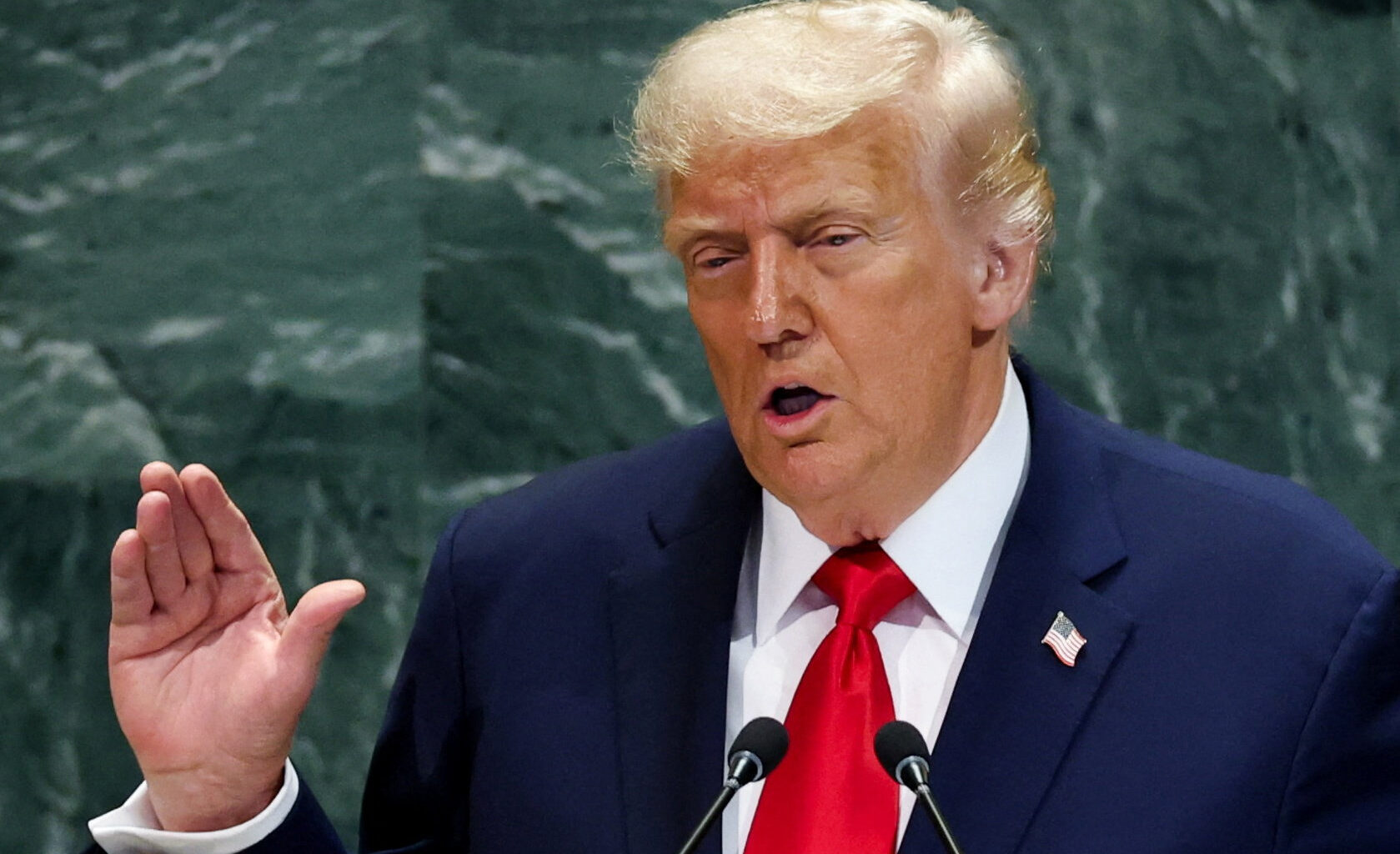
After months of friction over tariffs and sanctions, Donald Trump’s recent remarks praising PM Modi hint at a thaw in Washington’s stance toward India — just as New Delhi accelerates its global free trade outreach from Brussels to Wellington
Our Bureau
New Delhi / Washington, DC / Wellington
United States President Donald Trump’s renewed warmth toward India comes amid a quiet recalibration of his protectionist policies. At a White House press briefing this week, Trump called Prime Minister Narendra Modi “a great man and a friend,” suggesting he might visit India next year. The tone marked a notable departure from the hostility of previous months, when his administration imposed heavy tariffs on Indian goods, citing oil purchases from Russia and alleged trade imbalances.
“Talks with Prime Minister Modi are going great,” Trump said. “He largely stopped buying from Russia. He’s a friend of mine, and he wants me to go there.” The statement, wrapped in praise but pregnant with geopolitical signaling, came just weeks after The New York Times reported that Trump had dropped plans to attend the Quad Summit following his tariff escalation.
Washington insiders now see this as part of a broader recalibration. Having weaponized tariffs to assert U.S. dominance in global trade, Trump appears to be softening his stance toward India — a market too large and strategically vital to alienate, especially as China looms over the Indo-Pacific. Behind the rhetoric, officials from both countries have quietly reopened trade channels.
White House Press Secretary Karoline Leavitt described Trump’s position as “positive and strongly committed to the India-U.S. relationship,” noting that the President even celebrated Diwali with senior Indian-American officials at the Oval Office. The gesture, though symbolic, underlined a pragmatic shift: New Delhi’s economic importance is being recognized not through sanctions, but through inclusion.
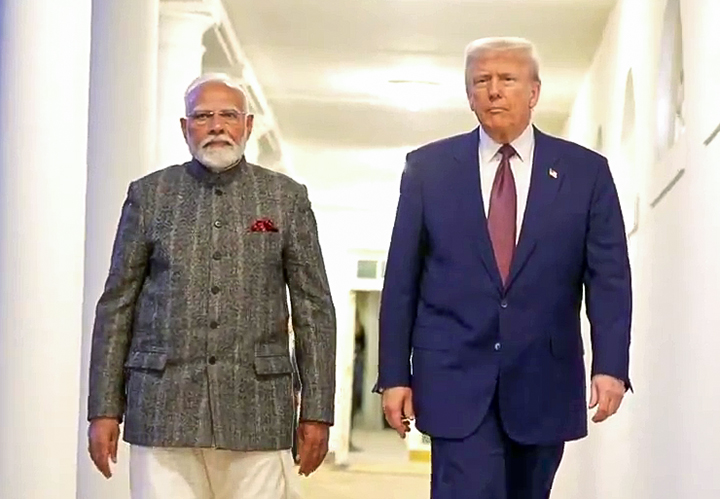 President Donald Trump says he may travel to India next year to meet PM Modi and resolve the trade and tariff issue between the two countries (File photo)
Trump’s earlier decision to impose a 50 percent tariff, including 25 percent additional duties, over India’s Russian oil purchases had soured ties. Yet, India stood firm. The Ministry of External Affairs reiterated that its energy decisions are based on national interest, consumer welfare, and diversification. “It has been our consistent priority to safeguard the interests of the Indian consumer,” said MEA spokesperson Randhir Jaiswal. “Our import policies are guided by this objective.”
The firmness seems to have paid off. Washington, realizing the futility of coercion, is now courting India through dialogue — and possibly, reciprocal trade openings. Trump’s praise for India’s reduced Russian imports was a signal: tariffs may give way to incentives if India aligns with U.S. strategic priorities.
Donald Trump’s long-running tariff war against China has largely failed to produce its intended results. After years of aggressive duties and trade threats, Beijing’s exports remain resilient while U.S. manufacturers continue to absorb higher costs. At his recent meeting with Chinese President Xi Jinping, Trump appeared to roll back much of his earlier rhetoric—offering concessions on technology imports and signaling openness to new semiconductor supply talks. Analysts noted that these gestures, couched as “strategic pragmatism,” marked a quiet retreat from his once-uncompromising tariff stance, underscoring the limited leverage Washington gained from years of economic confrontation.
Despite Trump’s self-congratulatory tone, his recent Asia visit failed to deliver substantive outcomes. He touted “major wins” in trade and security, but regional partners remained cautious, wary of his transactional diplomacy and erratic tariff policy. In Tokyo and Seoul, allies offered symbolic gestures but little binding commitment. Southeast Asian nations, meanwhile, deepened ties with Beijing amid doubts about U.S. reliability. Even his outreach to India was overshadowed by skepticism about his trade record. Behind the optics of photo-ops and lofty promises, Trump’s Asia trip revealed a leader struggling to convert spectacle into strategic substance.
While Trump rethinks his tariff playbook, India is quietly weaving a global network of free trade partnerships — signaling confidence and diversification. Commerce and Industry Minister Piyush Goyal’s recent trip to New Zealand reaffirmed this new approach. Both sides are working toward an early conclusion of a “balanced, comprehensive and mutually beneficial” FTA that spans goods, services, investment, and technology.
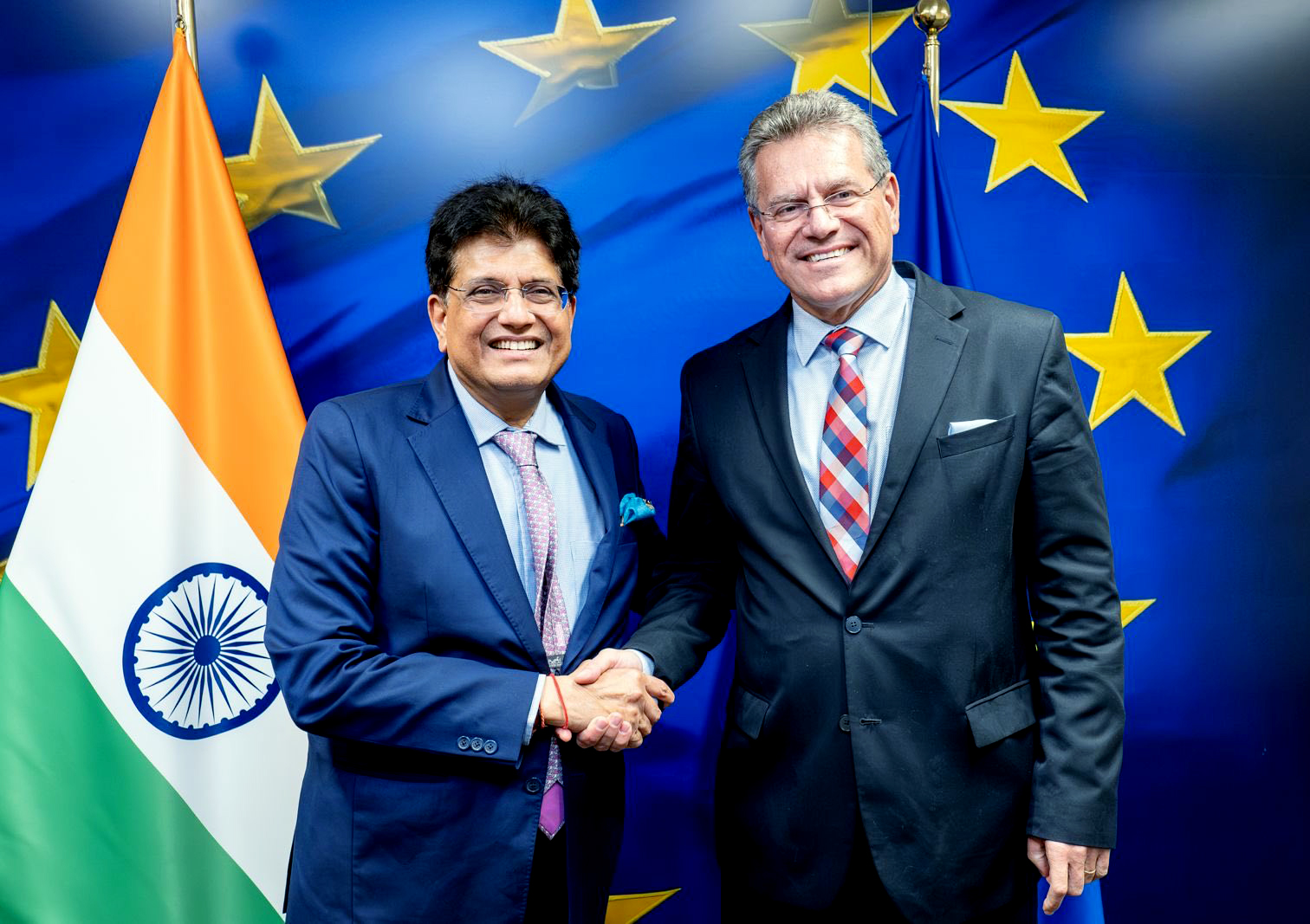 Union Minister of Commerce and Industry Piyush Goyal meets EU Commissioner for Trade and Economic Security Maros Sefcovic, in Brussels last month (@PiyushGoyal X/ANI Photo)
The India–New Zealand Business Forum in Auckland brought together government and private sector leaders to explore new partnerships in agriculture, education, tourism, and space cooperation. Prime Minister Christopher Luxon lauded the Indian diaspora as a “living bridge” between the two nations. For New Delhi, the deal represents more than just market access — it’s about building resilient trade corridors across the Indo-Pacific.
Goyal’s outreach underscores a wider strategy: India’s trade diversification to counter tariff volatility from the West. After signing pathbreaking agreements with Australia and the UAE, and fast-tracking talks with the UK and the European Union, New Delhi now views the Indo-Pacific as a shared economic theater rather than a geopolitical flashpoint.
In Brussels, Goyal’s meeting with EU Trade Commissioner Maroš Šefčovič signaled major progress toward the long-awaited India–EU FTA. Negotiators from both sides spent the first week of November hammering out unresolved issues on goods, services, and rules of origin. “Both sides are committed to balanced and mutually beneficial outcomes,” the Commerce Ministry noted, emphasizing sustainability, technology, and investment flows as key pillars.
This emerging pact reflects a new maturity in India-EU relations. Over the past year, the EU’s trade delegation to India has expanded, with senior officials from Belgium, Portugal, and Finland explicitly supporting an early FTA conclusion. In Helsinki, India and Finland reaffirmed their commitment to digitalization, clean technologies, and AI collaboration — areas likely to be integrated into the EU-wide trade architecture. Finland even reiterated its support for India’s permanent seat on the UN Security Council, signaling growing political trust.
Portugal, celebrating 50 years of renewed diplomatic ties with India, echoed the same sentiment. Both nations agreed to fast-track pending bilateral agreements in defense, renewable energy, and education, framing their relationship within the larger EU-India partnership. Belgium, meanwhile, hosted the third round of Foreign Office Consultations, reviewing cooperation in trade, innovation, and renewable energy. Belgian and Indian officials reaffirmed their “joint commitment to advancing a comprehensive, balanced, fair and mutually beneficial India-EU Free Trade Agreement.”
This steady rhythm of high-level consultations reveals a clear pattern: India is no longer waiting for Washington’s tariff mood swings to dictate its global economic agenda. Instead, it is crafting a multi-polar trade network — one that reduces overdependence on any single bloc while expanding its strategic footprint.
For Europe, aligning with India offers a hedge against economic overreliance on China. For India, the FTA framework provides access to advanced markets and technology, while preserving policy space to protect local industries.
Trump’s softened tone thus arrives at an inflection point. His tariff wars with China and the EU have shown the limits of economic coercion. Against this backdrop, India’s confident pursuit of open trade partnerships demonstrates the appeal of calibrated globalization — a model that balances sovereignty with integration.
For New Delhi, the message is clear: trade diplomacy is the new geopolitics. The flurry of negotiations with Europe and Oceania showcases an India that is simultaneously pragmatic and ambitious — willing to negotiate on equal terms, but unwilling to bend under pressure.
In this shifting landscape, Trump’s hints at reconciliation are as much about recognition as they are about repair. India, now a $4-trillion economy and a manufacturing alternative to China, has become indispensable to any credible trade strategy. Tariffs can punish, but they cannot isolate a nation that is fast becoming the anchor of the Global South and a partner of choice for the developed world.
As both sides rediscover the language of friendship, the coming months could see the re-emergence of a more balanced trade framework between India and the United States. Whether through tariff relaxation, technology partnerships, or energy deals, the reset could redefine the economic architecture of the Indo-Pacific.
Trump’s praise for Modi may sound personal, but it reflects something larger — a recognition that India has moved from the margins of global trade to its center. The festival of tariffs may be ending; a new season of pragmatic cooperation seems ready to begin.
Post Views: 156