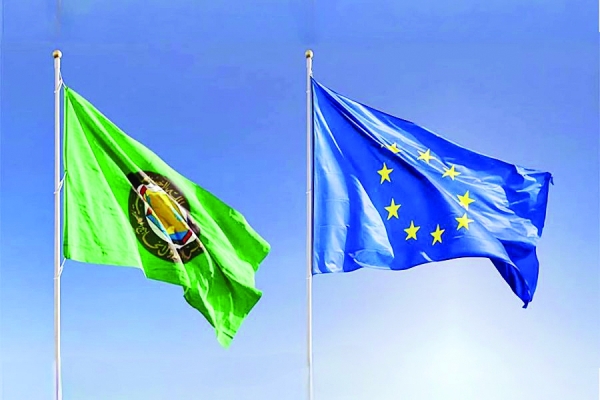
MUSCAT: Trade and economic cooperation between the Gulf Cooperation Council and the European Union (EU) gained clear momentum in 2024, with total bilateral trade climbing to $196.8 billion, according to figures presented in a recent EU–GCC economic overview.
GCC exports to Europe reached $79.3 billion last year. Fuel and related products represented 74.3 percent of the total, underlining the Gulf’s continued role as a central energy supplier for European markets. The remainder consisted of chemicals, metals, plastics and electrical machinery.
Imports from the EU stood at $117.5 billion and were led by machinery, transport equipment, pharmaceuticals, electronics and other industrial goods.
European investment in the region also continued to expand. EU foreign direct investment into GCC economies rose to $54.6 billion in 2023, up from $18.4 billion in 2011. The figures signal Europe’s long-term interest in Gulf markets and their ongoing diversification agendas.
The document highlights priority areas under the Joint Action Plan 2022 to 2027, which shapes cooperation between the two sides. These areas include green hydrogen, renewable energy, industrial decarbonisation, digital transformation, maritime safety, food security and research collaboration. The EU’s Global Gateway initiative, with more than EUR 300 million earmarked for hydrogen and energy infrastructure, is described as a key driver for future projects related to electrolysis, transport networks and new hydrogen corridors.