We write as two former politicians from the diaspora, one from Australia and the other from South Africa – as passionate believers in a united and free Cyprus.
We have come together with a plea. We do so after consultation over many years with politicians in Australia, South Africa, the United States, and other countries from the Diaspora.
We were founding members of the World Hellenic Interparliamentary Association that includes more than 150 politicians of Greek background in the Diaspora. We believe the views expressed here reflect the views of these politicians who want to see a united democratic Cyprus.
To begin with we strongly believe that an opportunity for a resolution to the Cyprus issue has opened with the election of Turfan Erhurman in the North with a margin of 63 per cent. We also think that this is perhaps the final opportunity.
We say final because if this opportunity is frittered away on the altar of prejudice, political expediency, party manoeuvres or sectional interests in the North or the South, then we think the international community will lose patience and the forces of division will prevail.
The stakes are very high.
Failure will maintain a divided Cyprus
Failure will result in the maintenance of a Divided Cyprus, and ongoing Greco Turkish conflict, as well as a failed exploration of Cyprus natural resources. Failure will impeded economic development and ongoing tension on a border that could explode at any time.
The opportunity for unification presents because of the new Turkish Cypriot administration that was convincingly elected on a pro solution, pro unification and pro Europe platform.
As politicians we recognise that the road ahead is perilous and must be manoeuvred with skill and determination.
President Christodoulidis has before him an opportunity. He will go down in history as the President who reunited Cyprus or as the President who, like many of his predecessors, breaks the hearts of Cypriots all over the world with another failure.
President Christodoulidis should adopt a strategy that contains the following 10 points:
1. Prepare to deploy political capital.
The President must be prepared to spend a large amount of his own political capital in leading the Cypriot people to a historic resolution. He must accept this “use of personal capital” as he embarks on this journey and his whole Cabinet must sit behind him in doing so. He cannot allow himself to succumb to populist or align to resistance proposals. This is a precondition for success and the President should publicly adopt it. We can assure him that from the point of view of Cypriots in the diaspora we will stand behind him against forces seeking to stop a settlement.
2. Abandon the idea that all-parties and factions agreement.
This was the modus operandi of some previous presidents who would not move unless all Political Parties and factions agreed on the proposals. He must not fall into this unachievable consensus trap. This is a road to failure. Yes, he must consult, but he must not just agree to put up proposals that are clearly unacceptable to the North and designed to bring about failure just because some group insists on them with the underlying intention of scuttling the talks.
3. Consider compromise as necessary.
The negotiators must understand at the very beginning that compromise will be necessary on both sides to move forward. That neither side will get everything they want and that the political parties and factions may also not get everything they want. This is the ultimate test of leadership, to get the best possible deal possible, put it to the people and fight for it.
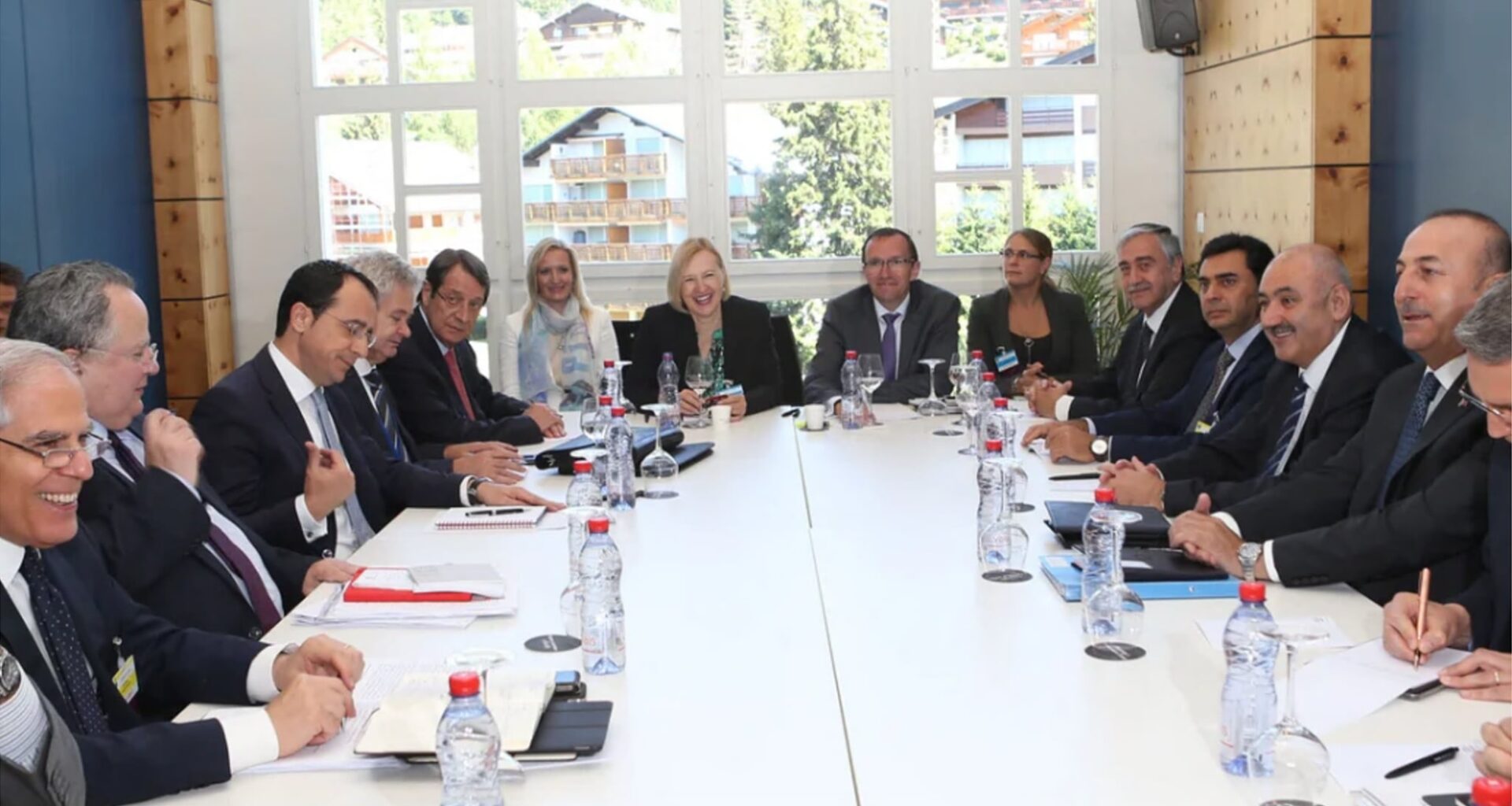
4. Start where Crans Montana ended, and develop confidence building measures
Greek and Turkish Cypriots came tantalisingly close to an agreement in 2017. There is no reason to reinvent this wheel. The Greek side has in the past suggested recommencing negotiations from the point they ended in Crans Montana. The new Turkish leadership has suggested that they are willing to consider this. They have also suggested that they are willing to discuss confidence building measures. But if some of these confidence building measures cannot be agreed upon they should not be allowed to impede the negotiations for a total settlement.
5. Avoid inflexible and fixed rules.
Rules like “nothing is agreed until everything is agreed” and “no time lines” should be set aside. These rules have impeded previous discussions. There is nothing wrong with announcing points of agreement and points for discussion. It helps build confidence and is a normal part of negotiation. The same is true of timelines that can serve to motivate the two sides to reach a settlement on key issues. Indeed for the most difficult issues that remain to be agreed upon even arbitration may need to be considered. Such arbitration can break the very final roadblock to an agreed proposal to put to the people.
6. Stop those powers opposed to a resolution from controlling the agenda. Negotiators will come under pressure from centres of institutional power opposed to a settlement such as the Orthodox Church, the army, sections of business and some property owners and developers. These interests can be listened to but should not be allowed to dictate. From the point of view of the Diaspora we can say that we will strongly support the President if he is placed under pressure from these groups or others who simply do not want a settlement.
7. Leaders have a responsibility to thrash out a settlement for the people
For the leaders the road ahead cannot be a desire to see all of their wishes granted by the other side. The task of our President is to thrash out the best possible proposal which will include compromises to put to the people for them to decide if they will support it. This is a difficult, serious, and important national moral imperative. It must be achieved even against formidable odds. Once a proposal to put to the people is agreed, to have any chance of success the consequences of rejection must also be clearly communicated. The consequences of rejection must be honestly made very clear. For the Turkish North it would be ongoing isolation as a pariah state. For the Greek South rejection would mean that the World would probably move to international recognition of the North. The stakes for everyone are therefore incredibly high and must be seen to be high when a proposal is put. But equally, and most importantly, the leaders must understand that if they fail to reach an agreed proposal to put to their peoples it is likely that the world will give up on Cyprus. All that will be left is the well-known blame game as each side blames the other for failure. But the Greek side has more to lose in such a scenario as the temptation to move to a two country solution will be overwhelming.
8. Enlist U.S. President Donald Trump, and the Europeans
The Trump administration is capable of placing pressure on Turkey to cooperate in a fair resolution. The Europeans and Trump must be enlisted to point out to Turkey the benefits to the whole region and to Turkey of a settlement and the costs to Turkey if it is obstructionist and this leads to failure. We are working with like-minded legislators who are connected to the WHIA in the US and Europe as well as Africa and Australia to try to influence the Trump administration in bringing peace to an intractable conflict of more than 50 years. Peace in Cyprus and the flow on effects for peace in the whole region would really be a strong argument for Trump himself to claim a Nobel prize.
9. Confront and fight those that stand in the way of resolution
Some political parties, factions and political lobby groups, and even some media will never agree, will exaggerate the reasons for saying no and will seek to frighten citizens as they successfully did during the Anan plan debate. They will become very vocal, even threatening. Its important to not give in to them while of course listening to them and managing them.
10. Enlist the help of the Diaspora.
The diaspora stands ready to support a resumption of discussions and a proposal in line with UN resolutions to unite Cyprus. This includes the many Cypriot and Greek Community Organisations around the world. It also includes the WHIA and the authors of this article. This includes supporting the Government and opposing those centres of Institutional Power and Political parties who are opposed to a resolution.
Finally – let’s do it
We see the opportunity that has opened up by the elections in the North as possibly Cyprus last chance to find a resolution, and put it to the Cypriot people to decide. The very future of Cyprus and the broader peace in the region is at stake.
Cyprus has received significant support from many countries to reach a resolution and unite countries. Countries such as Israel are prepared to assist militarily in defending Cyprus in the event that Turkey decides to oppose a settlement and ongoing tensions become the norm.
Yet, it seems all countries would prefer a settlement and the complete demilitarisation of Cyprus and a peaceful prosperous area including with the exploration of natural resources surrounding Cyprus.
The Diaspora and we as former and many current politicians of Greek or Cypriot background stand ready to advise and to assist.
* Theo Theophanous, is a former MP and Minister of the Victorian State Government, Melbourne, Australia and the current President of the Cyprus Community of Melbourne and Victoria. Takis Christodoulou, is a former MP, Johannesburg, South Africa. The above opinion, or a version of it was also published in the Cyprus Mail.