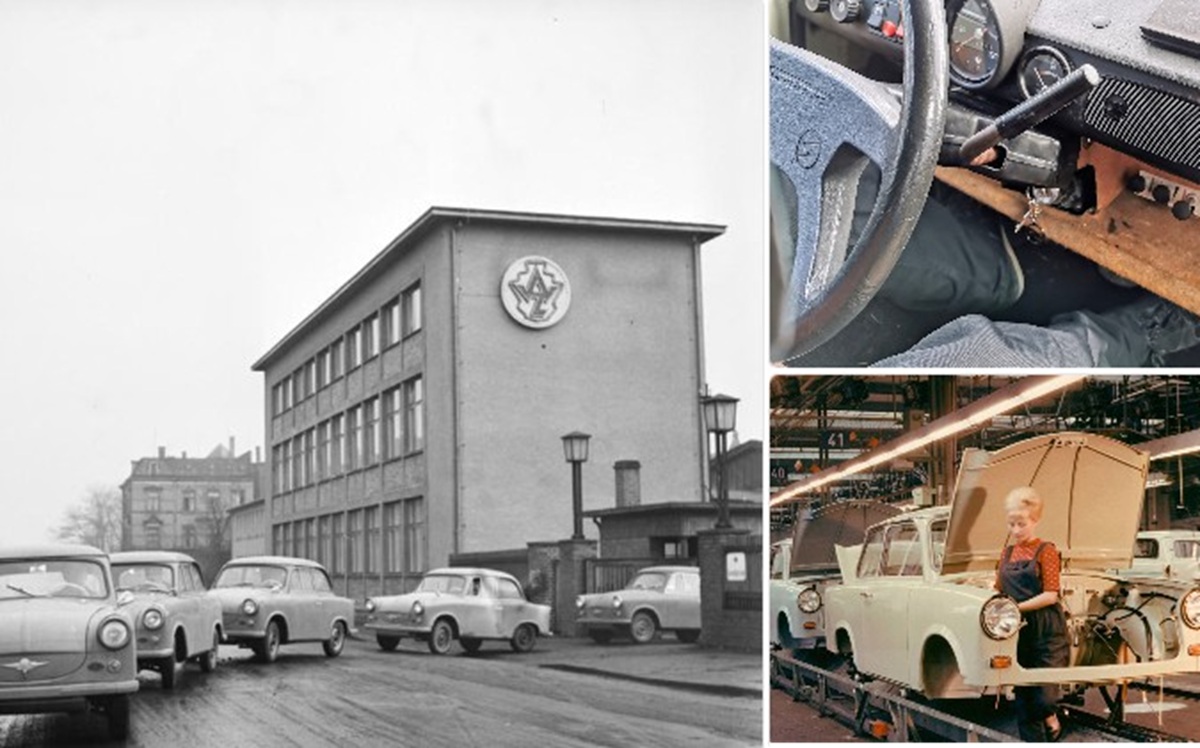
The Trabant, a striking symbol of the former East Germany, maintains its presence even decades after the end of the war. German Democratic Republic.
Known for its simple design, compact interior, and bluish smoke emanating from its exhaust, it was the target of criticism and jokes, but also gained a loyal following.
As Germany celebrates the 35th anniversary of its reunification, the number of these vehicles on the roads is growing, reinforcing the emotional value that many still place on this small car.
See also other features
5 automatic cars under R$40 that are still worth every penny and deliver comfort, economy, and reliability in 2025.
5 used mid-size pickup trucks that are ‘worth their weight in gold’ in 2025: Frontier, L200, S10, Hilux, and Ranger deliver power, comfort, and durability for under R$100 in the Brazilian market.
7 forgotten cars with low prices that deliver luxury and power that the market ignored.
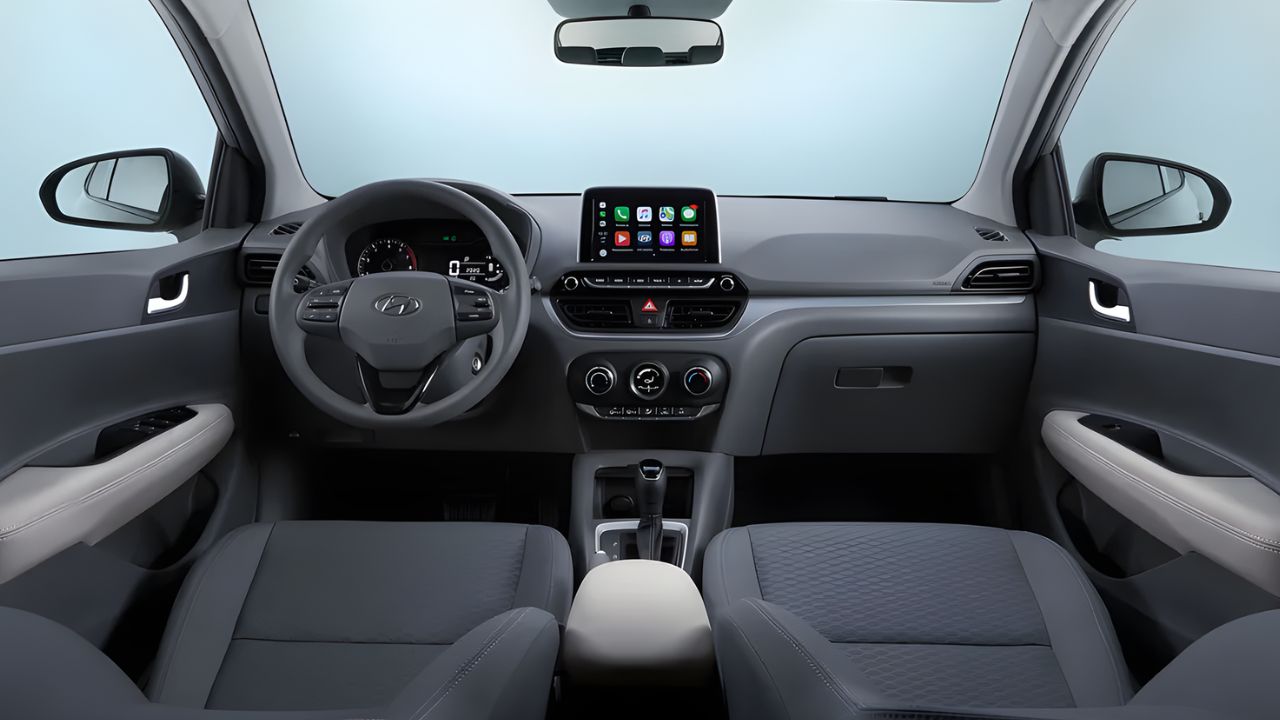
Costing around R$ 70, equipped with a 1.0 naturally aspirated engine and manual transmission, the 2021 Hyundai HB20S offers comfort, performance, and affordable maintenance, making it a good value among used cars.
An icon that withstands the test of time.
A survey by the Federal Transportation Authority indicates that the country has approximately 40.800 registered Trabants, compared to 33.000 in 2010.
The increase occurs despite the model’s known limitations, such as mechanical failures and frequent exhaust backfires.
This persistence shows that many drivers see the car not only as a means of transportation, but as part of a history that has marked generations.
Among these enthusiasts is Glenn Kuschan, 58, who runs a workshop south of Berlin.
He serves several Trabant owners and keeps a collection of 23 vehicles, including a white model inherited from his father that has already surpassed 500.000 kilometers on the odometer.
According to Kuschan, fans come from all walks of life, from older people who grew up with the vehicle to young people seeking authenticity in the driving experience.
The symbolic power of the Trabant
Kuschan, a resident of Brandenburg, an area of the former GDR, states that the car It became a symbol because of its direct connection to the fall of the Berlin Wall and the reunification process.
This historical connection leads many to keep the vehicle as a way to preserve a collective memory that is intertwined with German identity.
The first Trabant was produced in 1957, three years after the communist government decided to create a people’s car that would allow the country to compete with the West German automotive industry. To overcome the steel shortage, manufacturers developed a body made of plastic mixed with cotton or paper fibers. The interior was not particularly comfortable, and the rear windows did not open, while the two-stroke engine spewed the characteristic gasoline and oil mixture of the model into the air.
Between laughter and a 15-year wait
Because of its noise and limited performance, many people nicknamed the vehicle a “lawnmower with a roof.” With a top speed of 112 km/h, the car contrasted sharply with the technology of BMWs, Mercedes, and Porsches that dominated the roads of the western part of the world.
Despite this, buying a Trabant was no simple task. Citizens of East Germany had to join long waiting lists and could wait up to 15 years to receive the car, produced in Zwickau in only three colors: ivory, sky blue, or mint.
When the Wall fell in 1989, thousands of East Germans drove their Trabants toward the border to see what lay beyond the boundary imposed for decades. This moment became one of the most iconic images of reunification.
Abandonment, museum and guided tours
After reunification, many drivers abandoned their vehicles by the roadside to buy Western cars, and the factories only lasted a short time, ceasing operations in 1991 with the production of a bubblegum-pink model, the last one in history.
Today, the Trabant Museum in Berlin preserves this memory with a collection of 20 Trabant cars. In addition to viewing the models, visitors can drive a Trabant through the streets of former East Berlin, accompanied by a guide.
Thomas Schmidt, 49, works at the museum and drives the cars on tours. He says he grew up in a Trabrick and that the vehicle has become an essential part of his identity. For Schmidt, the car can withstand any challenge and allows the driver to make repairs himself, thanks to its simple mechanics. He even recalls an old saying about the vehicle: with a hammer, pliers, and a piece of wire, you can drive all the way to Leningrad.