A tariff maelstrom emanating from the United States hasn’t managed to throw the world’s emerging markets—including some notable American adversaries—into turmoil. Instead, many have found themselves well-positioned for resilience, according to risk intelligence company Verisk Maplecroft.
The group’s analysis observed 20 global supply chain hubs and their ability to weather the volatility of the modern trade landscape. The criteria analyzes a market’s dependence on the U.S., its current tariff rates (and the state of relations with the current administration in Washington), as well as its economic and political standing, its regulations, its infrastructure and its labor and consumer force.
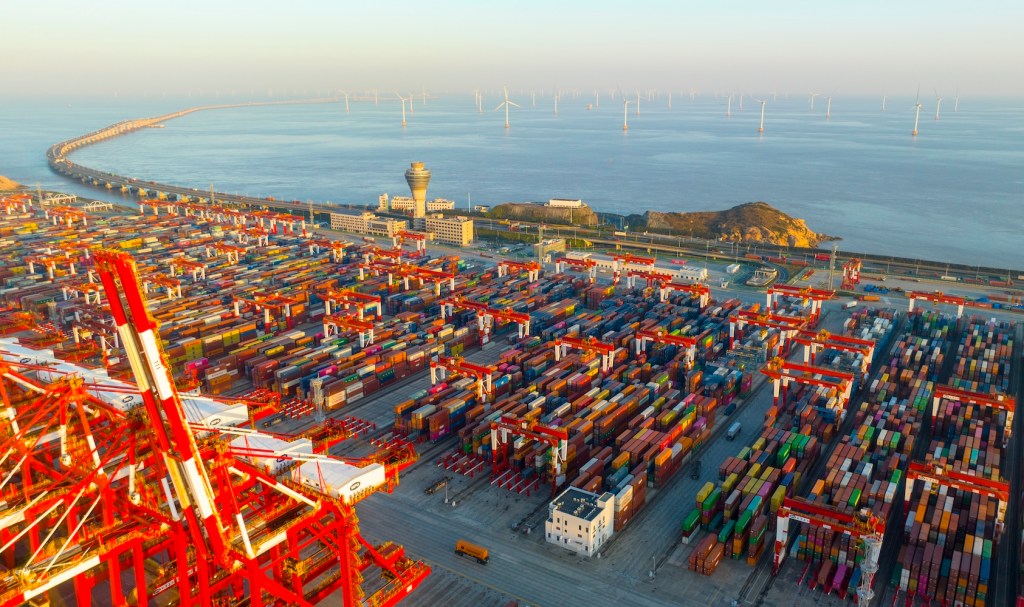
Not surprisingly, China, the second largest economy in the world and the U.S.’ most prominent competitor, was identified as the most resilient of all emerging markets studied, underscoring its long-held title of “The World’s Factory.”
Despite seeing the highest exposure to U.S.-originating geopolitical tensions, the country’s exposure to global trade volatility was assessed as relatively low. In the wake of the ongoing and sometimes tense standoff with the U.S., China has forged stronger trade partnerships with other nations across Asia and deepened ties to the BRICS Alliance, which includes Brazil, Russia, India, South Africa, Egypt, Indonesia, the United Arab Emirates and more.
Other less-expected players also made the list, including fellow BRICS Alliance nation Brazil, along with Poland and Mexico, which followed close behind in the ranking. Countries like South Africa, along with Asian and South Asian nations like the Philippines, Malaysia, Vietnam and India, all ranked moderately high when it comes to resistance to trade volatility, given the strength and maturity of their supply chains and their ability to pivot to other export markets.
Notably, Bangladesh and Egypt were among the outliers in that they saw moderately high risk. For Bangladesh, which was hit with 20 percent tariffs in August (down from the crushing 37 percent announced on “Liberation Day” in April), U.S. duties represent a perilous threat to the ready-made garment sector, which accounts for 80 percent of the country’s total export earnings.
“Economic nationalism and geopolitical competition between the U.S. and China will continue to inject uncertainty into business decision-making over the medium term,” Reema Bhattacharya, head of Asia research at Verisk Maplecroft, said. “Companies must rethink their strategies to maximize supply chains, diversify export destinations, and identify emerging markets that offer the best mix of incentives and low geopolitical exposure.”
According to the risk management firm, geopolitics stand to play a major role moving forward in defining trade opportunities for countries across the world—and influencing the formation of new trade blocs.
For example, the simmering tensions between the U.S. and China are prompting some “mid-tier” emerging markets to try and play both sides, “strengthening ties with the world’s two main geopolitical powers while avoiding overdependence on either,” analysts wrote. While many of those countries are courting President Donald Trump for better trade terms, they’re also attempting to mitigate risk by reducing reliance on American buyers.
Verisk Maplecroft said it projects that this “dual-track approach” will bring about new openings for business, with the BRICS Alliance gaining steam and precipitating some investment across Asia and Latin America, for example. Brazil, China and India—all members of the trade bloc—are in a “strong position,” the group believes.
China’s upsides are evident, but even Brazil and India, which both face tariffs of 50 percent or more from the U.S., show high levels of economic resilience. Meanwhile, Mexico and Vietnam, which came in No. 3 and No. 10, respectively, on the list, face some pressure because of their ties to China when it comes to manufacturing supply chains. Still, their tariff exposure is lower than some other markets.
Balancing geopolitical ties will become an integral part of many firms’ business strategies, Verisk Maplecroft wrote.
For example, India is considered the most (and perhaps only) U.S.-leaning member of the BRICS Alliance, even as it strengthens its ties with China and Russia, both on Washington’s watch list (hello, Russian oil). Losing out on business with the U.S. has forced the country to explore deepening export ties with other big global economies, and it’s chosen allies that leave it vulnerable to continued scrutiny. For this reason, analysts ranked India No. 3 in risk for geopolitical tensions with the U.S. out of 20 markets.
Brazil is also seeing some fraying of trade ties with the U.S. because of the former’s national politics (Trump has lambasted the country’s government for prosecuting its former president, an ally to the American president) and attempts to forge trade bonds that exclude the U.S. It’s been pushing for a ratification of the EU-Mercosur agreement, which would draw down trade barriers and boost investment between Europe and the nations of Argentina, Brazil, Paraguay and Uruguay.
The formations of these alliances, which will result from ample wheeling and dealing in the months to come, are sure to upend the status quo even further when it comes to global trade.
As such, Bhattacharya warned that manufacturers “can no longer rely on the old playbook of optimizing for cost, efficiency, and demand alone.”
“Understanding and monitoring geopolitical relations between countries is now a crucial aspect of risk management and strategy development for supply chains,” she said.