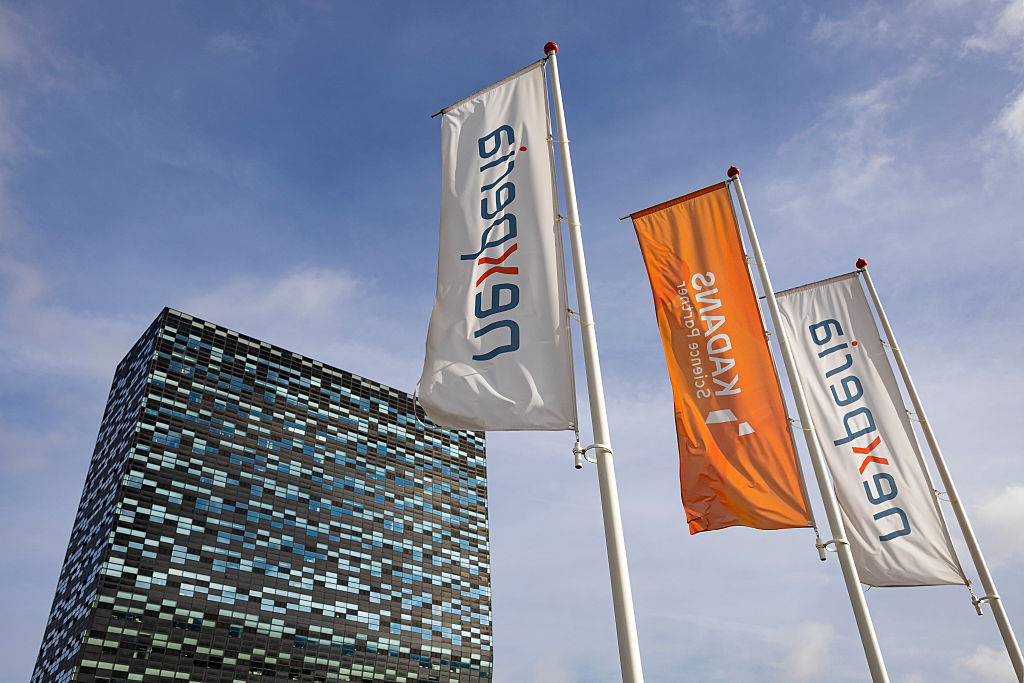
In October 2025, the Dutch government did something unprecedented: It invoked a Cold War-era law (the Goods Availability Act) to take temporary control of Nexperia, one of Europe’s largest semiconductor producers. This was not just a matter of corporate management. It was a decision aimed at countering the influence of corrosive Chinese capital, which poses growing risks to European security.
The move could also strike a blow against Russian sanctions-evasion schemes – if the Dutch government proceeds with a thorough audit of Nexperia’s electronic component supplies that may have reached Russia.
Nexperia is owned by Wingtech Technology, a Chinese group partly controlled by state-linked entities. In 2024, the US placed Wingtech on the Entity List due to the efforts of China to develop their semiconductor industry, which is important for military programs. Washington’s warnings followed soon after: Unless Nexperia changed its leadership structure, it too risked sanctions.
Officials of the Dutch Ministry of Economic Affairs explained they were acting because of “serious governance shortcomings” that could have “far-reaching consequences for the Dutch and European economies.”
But while the public debate has focused on China, the Russian dimension of this story is even more urgent. According to Ukraine’s military-intelligence database War and Sanctions, Nexperia-made microchips have repeatedly been found in Russian weapons systems. In 2024 and 2025, these components appeared in Kh-101 cruise missiles, Shahed-136 and Mohajer-6 drones, and Russian battlefield communication systems.
One Nexperia chip was identified in debris from a Kh-101 missile used during the January 2 2024 mass strike on Kyiv, when Russia launched over 70 cruise missiles, injuring dozens of civilians. Some of the recovered chips were manufactured after 2022, meaning Russia continues to obtain Western-made components despite export controls.
Investigations by journalists and think tanks have documented millions of microchips flowing to Russia via intermediaries in third countries. These loopholes reveal the fragility of Europe’s sanctions enforcement and the limits of corporate compliance systems. Nexperia insisted it complied with all sanctions and was developing AI-based tools to monitor its supply chains. But the continued presence of its components in Russian weapons suggests that its internal controls are insufficient.
By invoking the Goods Availability Act, the Netherlands joined a broader Western effort to tighten control over strategic technologies. Now that the Dutch state has access to the company’s internal data, it might be able to audit Nexperia’s client-screening and export-control procedures.
The EU legislation adopted in 2024 requires all producers of dual-use technologies to apply “best-efforts” due diligence standards, including know-your-customer and end-user verification procedures. The European Commission has clarified that “best efforts” encompass all actions that are necessary and feasible to prevent the circumvention of sanctions. It has even issued a six-step guidance for companies on developing a Sanctions Compliance Programme – a direct response to the growing problem of sanctions evasion through third countries, which had severely undermined the effectiveness of restrictive measures.
While the EU provides the overarching policy framework, the enforcement of sanctions remains the responsibility of member states. In 2025, for instance, German prosecutors accused the machine-building company Spinner of exporting 20 machines to Russia for munitions production. This has become one of the largest sanctions-evasion investigations in the EU.
The Dutch government now has a unique opportunity to investigate potential supply chains of Nexperia products reaching Russia, particularly through Chinese trade routes, and to assess how effectively the EU’s “best-efforts” and Sanctions Compliance Programme recommendations operate in practice.
For Ukraine and its allies, this is not an abstract governance story. Every Western-made technology that ends up in Russian weapons strengthens the machinery of war. This case reflects a new phase in Europe’s tech-security awakening. There are other companies within the EU that were established with Chinese capital, and their products – such as aviation engines manufactured by Austrian company Diamond Aircraft – have also been traced to Russian military systems.
The Dutch intervention demonstrates that European governments have the capacity to apply exceptional instruments to protect strategic sectors from external risks – whether by Beijing or Moscow.
Roman Steblivskyi is Policy Expert of the Economic Security Council of Ukraine. He has investigated the Russian military-industrial complex and Russian oligarchs’ assets in Ukraine, among other issues, since the start of Russia’s full-scale invasion.