The longest government shutdown in US history is over, but during those 43 days, President Trump certainly knew how to keep himself busy. “I renovated the Lincoln Bathroom in the White House,” Trump said in a social media post, along with posting dozens of photos of the renovation. “I did it in black and white polished Statuary marble. This was very appropriate for the time of Abraham Lincoln and, in fact, could be the marble that was originally there!”
Toward the end of the shutdown, Trump also did an interview with Fox News showing off some of his new installments in the White House, like the “Presidential Walk of Fame” and all of the gold he’s added to the Oval Office, which he assured viewers is “not Home Depot stuff.”
But as over-the-top and tacky as the president’s pet project renovations are, they do raise a serious question: Who, exactly, is paying for all of this?
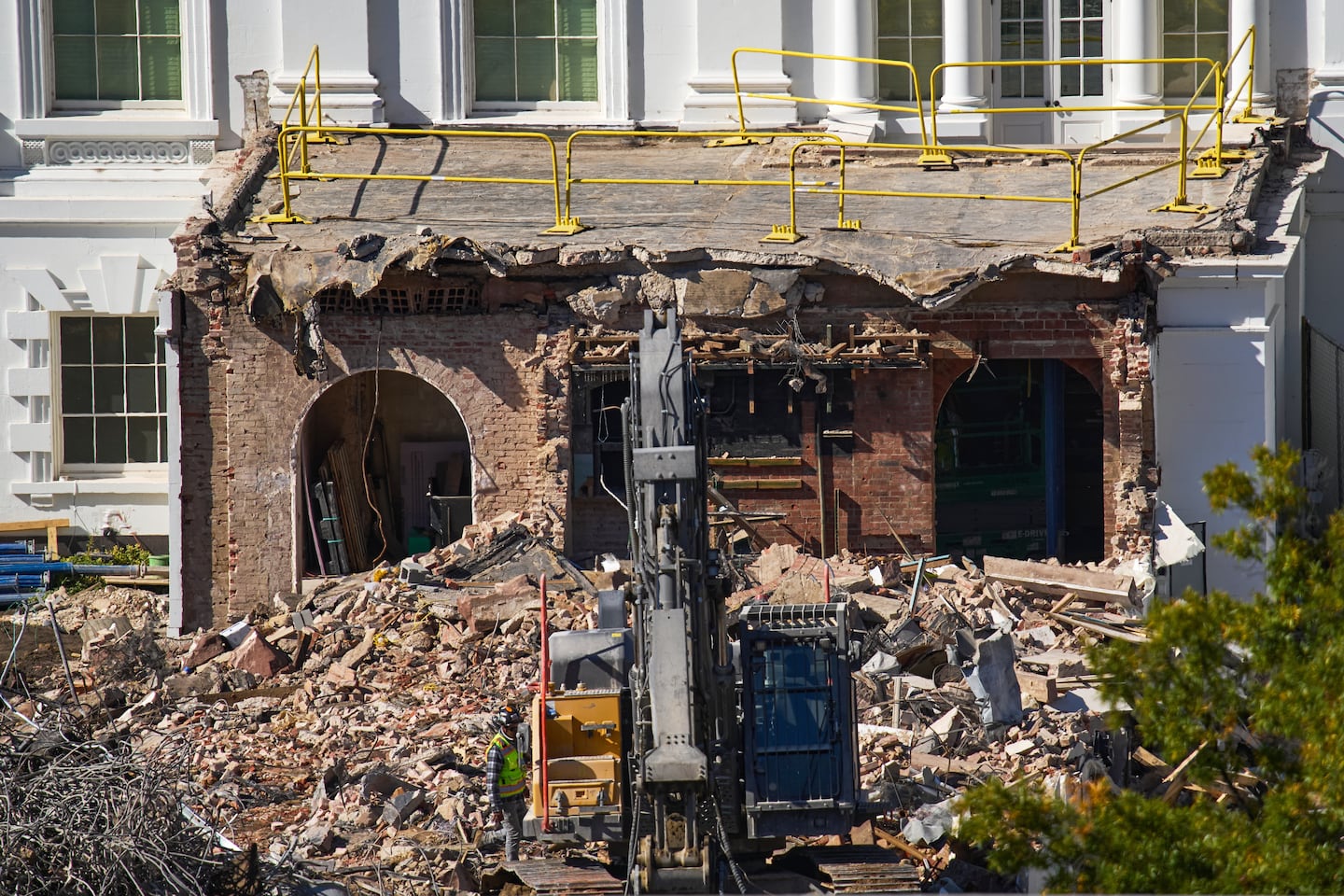
Trump has said that he paid for the gold. But even if that’s true, what about everything else? According to The New York Times, the White House did not say, for example, who paid for the bathroom renovation or which contractors were hired. Most disturbing of all, Trump’s biggest White House project — the $300 million ballroom that will replace the recently demolished East Wing — is being funded by private, deep-pocketed donors.
To be sure, renovating the White House, or any government building, is a legitimate endeavor. (Whether those renovations are always necessary or beautiful is a different story.) But there are some real concerns about how Trump has gone about his White House remodeling, such as how quickly the Trump administration moved to demolish the historic East Wing. But the biggest concern is the ethics (or lack thereof) of privately funding such a major White House expansion.
Trump is touting his private fund-raising as an effort to save taxpayers money. But while renovations can be costly, they should be publicly funded. After all, these are public buildings that belong to the people, not any temporary occupant. Moreover, turning to private funders only creates more conflicts of interest for the Trump administration, as donors who volunteer to contribute could be seen as trying to curry favor with the president.
Last month, the White House released a list of some of the ballroom donors. They include tech giants like Amazon, Meta, and Apple; crypto companies like Coinbase and Ripple; the families of Trump administration officials like Commerce Secretary Howard Lutnick; and defense contractors like Lockheed Martin.
These donations undoubtedly please the president, who is clearly excited about the prospect of leaving a physical footprint on the White House as part of his legacy. And even though, on their own, they don’t necessarily add up to a quid pro quo — where businesses and individuals cough up millions of dollars to get something from the president in return — they certainly increase the risk of corruption. At the end of the day, many of these companies have government contracts and some individuals are even employed by the Trump administration. They also have incentives to try to stay on the president’s good side: In some cases, donors like Google or Meta settled lawsuits with Trump just earlier this year. The crypto donors also stand to benefit from Trump’s relaxed regulations and personal investment in the industry, and some have already seen the Trump administration drop or settle federal lawsuits against them.
So regardless of what you might think of the ballroom — whether it’s nice, ugly, or even necessary — the fact is that its funding is an ethical mess in an administration that is already historically corrupt. At the very least, Trump’s ballroom is setting a dangerous precedent that only further entangles wealthy individuals and powerful corporations with government operations.
At the end of the day, Trump is the president. And if he wants to renovate the White House, he is free to take on that task. But if he’s set on making costly changes, he should make the case for why it’s necessary to taxpayers and he should get lawmakers in Congress to publicly finance his projects. Otherwise, this is yet another story of corruption waiting to happen in the Trump administration.
Editorials represent the views of the Boston Globe Editorial Board. Follow us @GlobeOpinion.