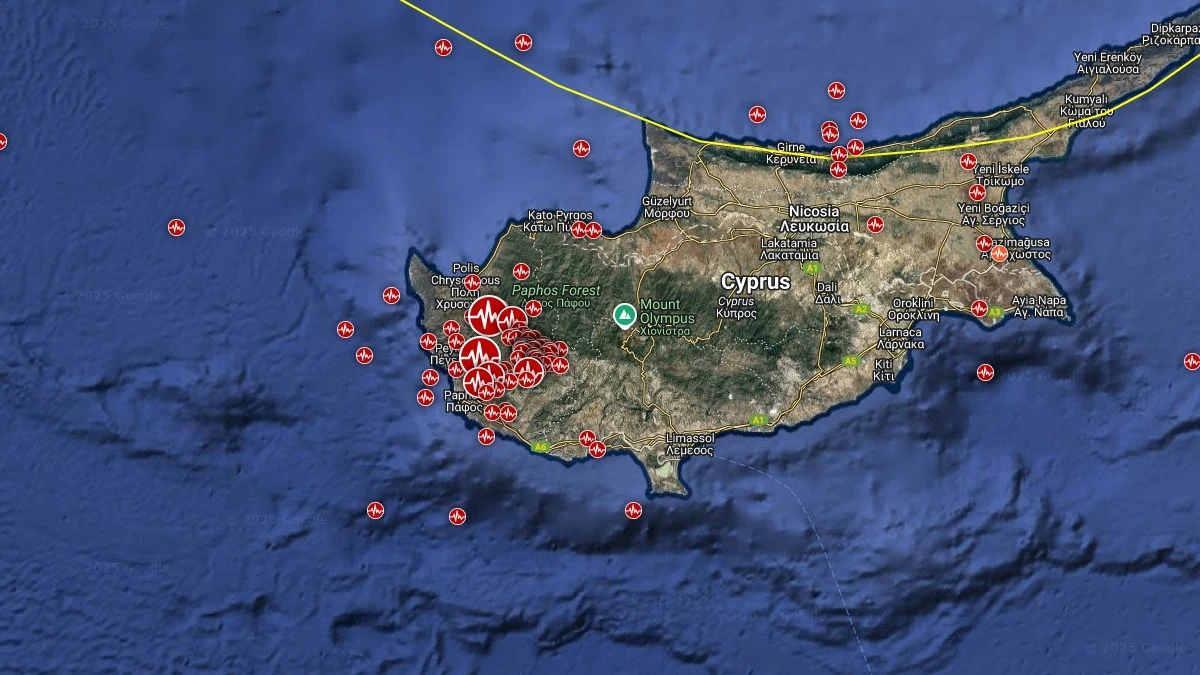
A shallow M5.3 earthquake struck near Paphos, western Cyprus, at 16:23 LT (14:23 UTC) on November 12, at a depth of 9 km (5.6 miles). The epicenter was located approximately 15 km (9.3 miles) north-northeast of Paphos (population ~35 900) and 56 km (35 miles) west-northwest of Limassol (population ~154 000).
Records show the region was already seismically active earlier that day, with an M5.2 event occurring at 09:31 UTC and an M4.7 at 09:41 UTC.
Within minutes of the M5.3 mainshock, the region experienced an unusually dense sequence of aftershocks. An M3.9 occurred five minutes after the main event, followed by an M4.3 at the ten-minute mark.
By 15:00 LT, more than 20 aftershocks had been recorded, and by the morning of November 13, the total number had reached 50. According to the Geological Survey Department of Cyprus (GSD), several of these aftershocks were felt in the wider Paphos district.
GSD reported that the sequence was atypical for Cyprus’ modern instrumental period due to the speed and concentration of early aftershocks.
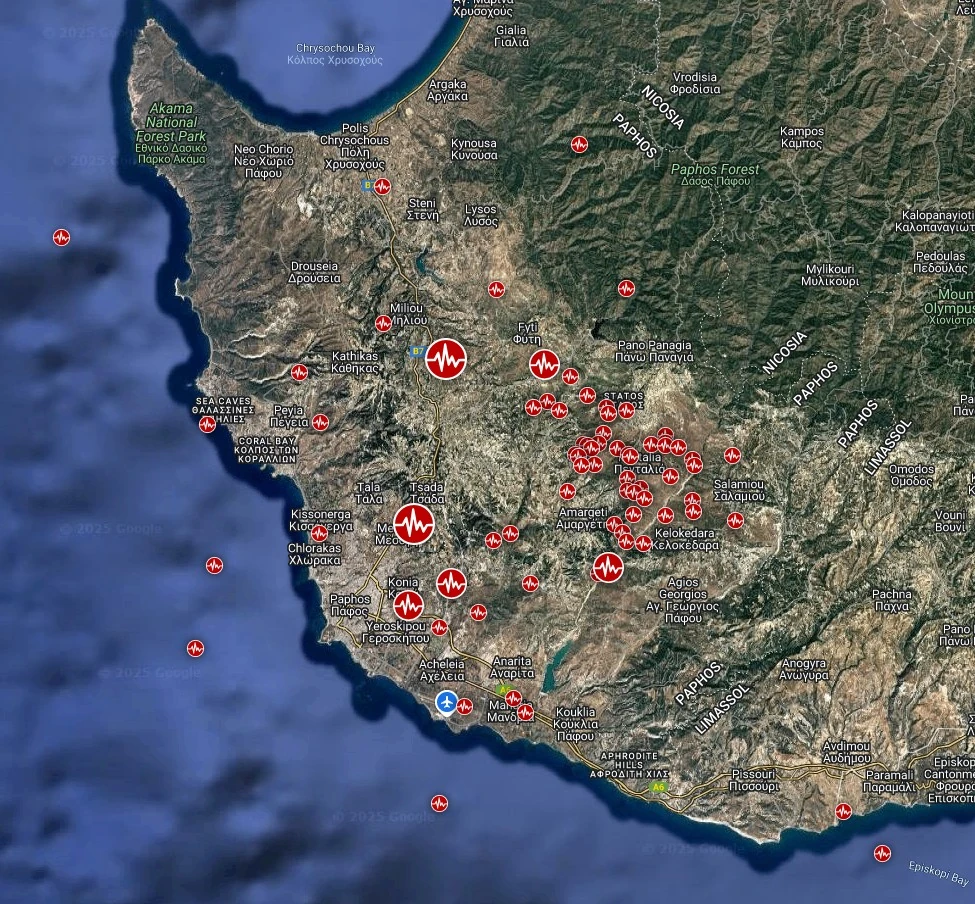 Earthquakes registered by EMSC in Cyprus from November 12 to 14, 2025. Credit: TW/SAM, Google
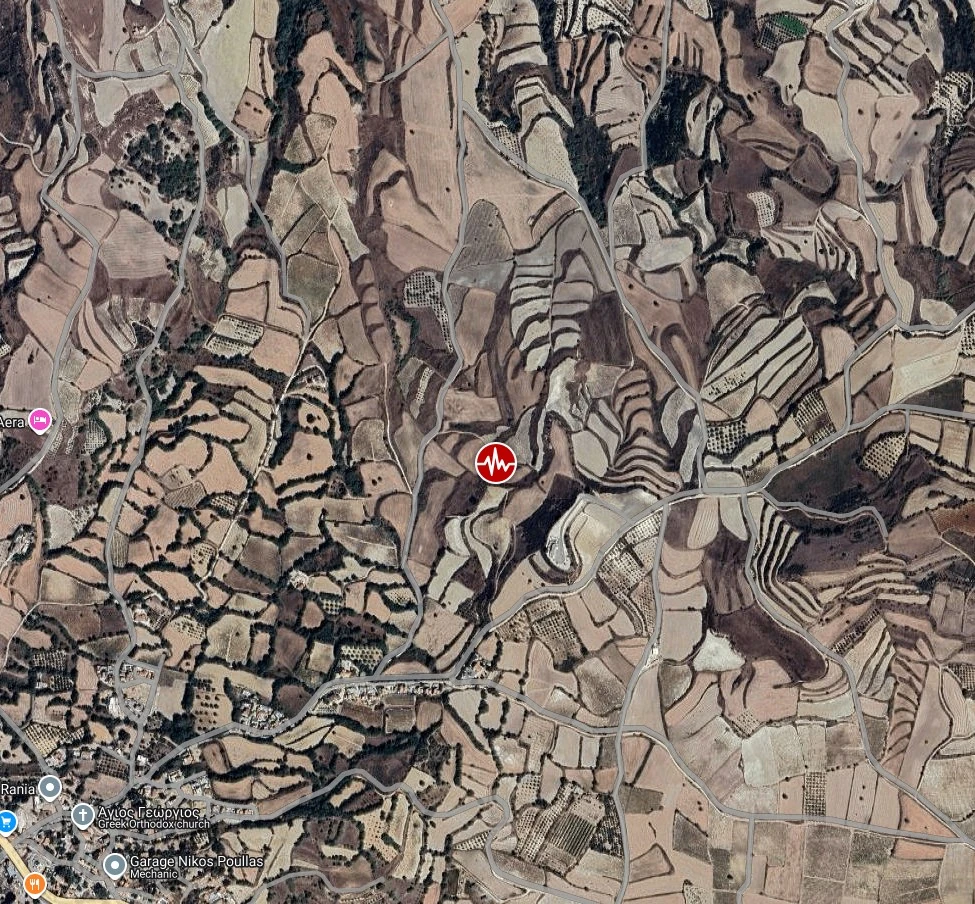 M5.3 earthquake in Cyprus on November 12, 2025. Credit: TW/SAM, Google
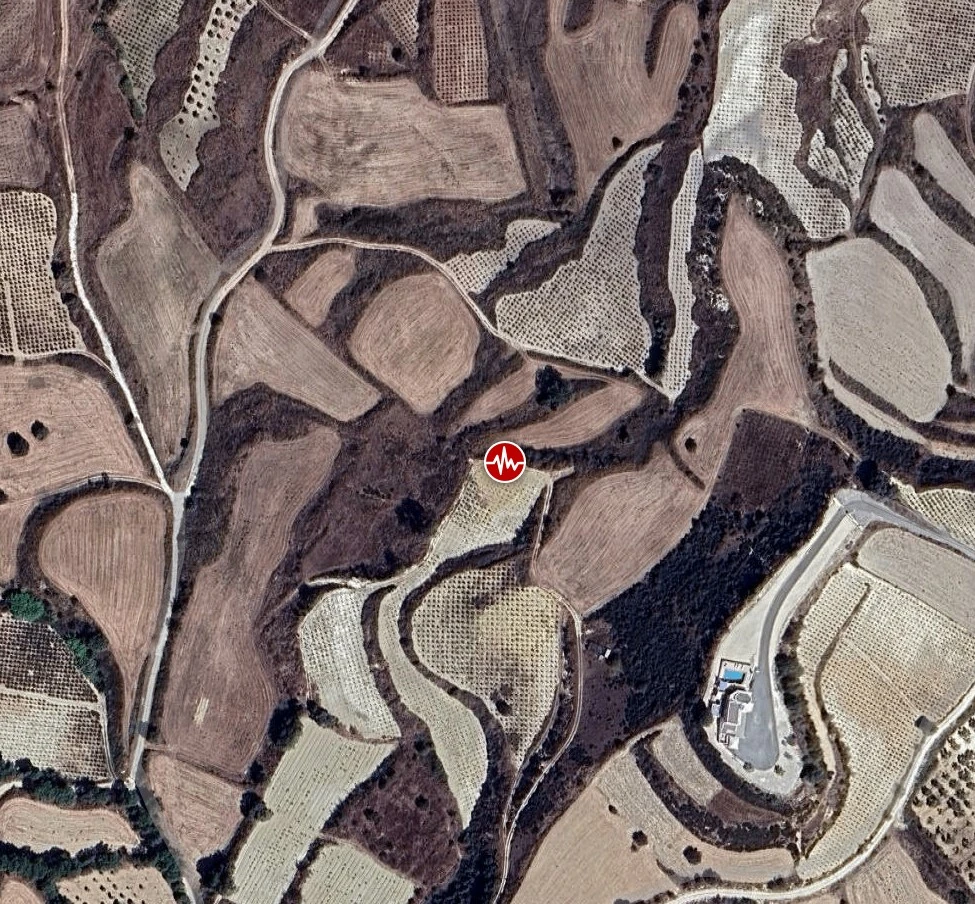 M5.3 earthquake in Cyprus on November 12, 2025. Credit: TW/SAM, Google
The department noted that waveform analysis indicated the presence of two closely spaced earthquakes within the main sequence, complicating the separation of individual events. This behaviour suggests a possible double-event source, in which rupture on one fault segment influences failure on an adjacent segment on short timescales.
The Paphos region is one of the most seismically active areas in Cyprus, located within the diffuse boundary between the African and Anatolian plates. Several active faults in western Cyprus are capable of generating moderate to strong crustal earthquakes, and shallow focal depths commonly result in locally strong shaking.
Historical records include multiple significant earthquakes in the broader region, such as the 1953 M6.5 event that caused extensive damage and fatalities, the 1995 M5.9 and 1996 M6.8 events, and the 2022 M6.6 earthquake.
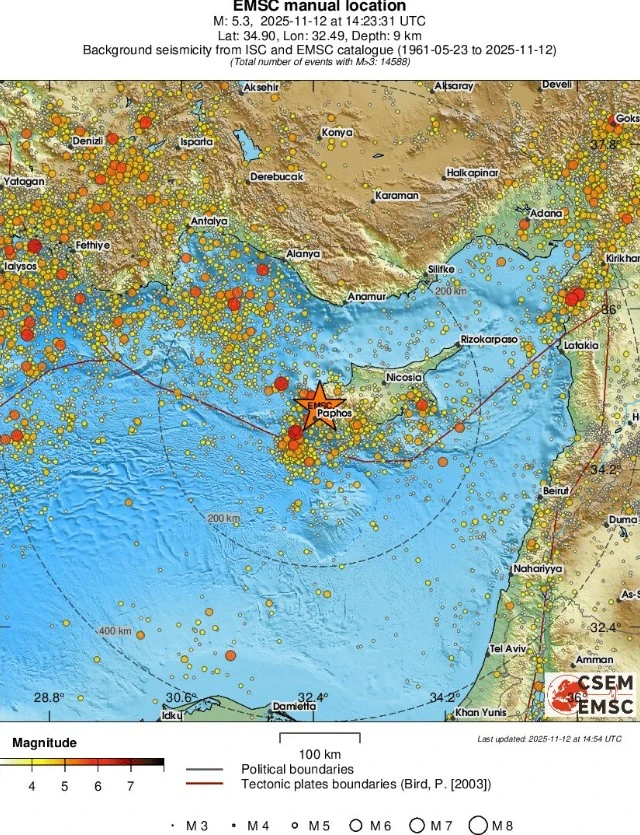 Image credit: EMSC
While multi-event sequences have occurred before, the rapid early clustering observed on November 12 is uncommon in the modern instrumental record.
Early reports show no major structural damage from the November 12 earthquake, though buildings in the Paphos district were temporarily evacuated as a precaution.
GSD stated that the aftershock activity appears to be gradually declining, but short-term forecasts remain uncertain.