It’s quite risky, the American could think he’s in a school and start shooting
“Mashallah” would be more common
Hey Hans, stay in your lane, that’s our thing !
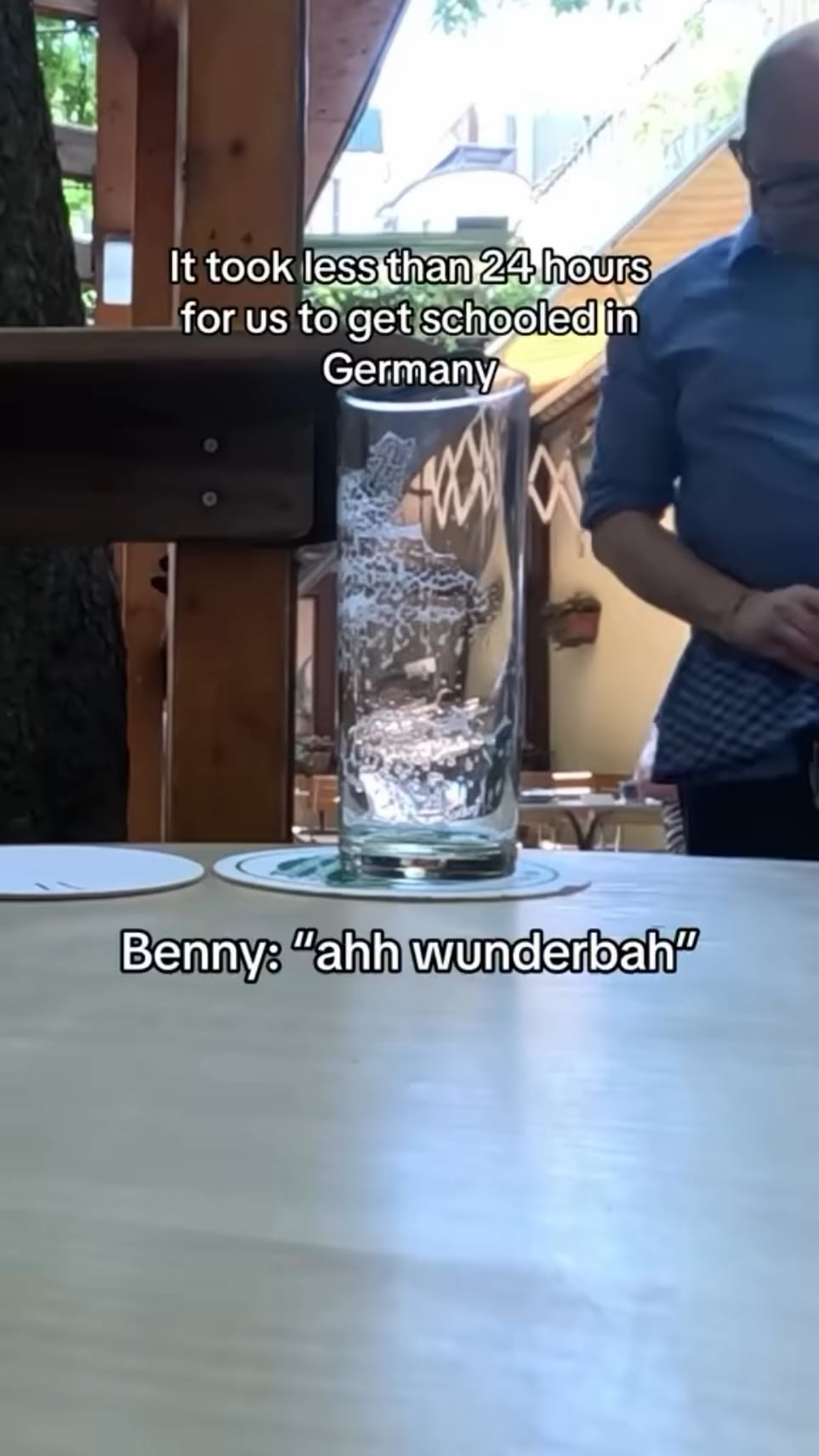
Beer in longdrink glasses?
It’s like на здоровье. Nobody says that except in movies.
Easiest way to recognize murican spy.
The pronouciation of Ausgezeichnet was very aweful. It sounded more like “Ostenscheiße”(east shit). The real pronouciation would be ˈaʊ̯sɡəˌt͡saɪ̯çnət. He pronouced it more like ˈɔsˌtɛnˌʃaɪ̯sə
Also what’s this doing here? Should be in the USvsEU sub.
understandable crashout tbh
Wunderbah just sounds fun tho
Austernscheiße?

I didn’t know this would piss off Germs. Gonna start using Wundabah way more now.
*Wundabaaaaaaah….*
What are all these funny words?
Based
That made me cringe, a lot.

Ausgezeichnet not ausgescheißet…aus like aussie ge like ga in gate zei like sigh ch like absolutly nothing in the English language but you can approximate it with sh net like internet. Ausgezeichnet
Lowkey sounds like an Aussie
Do I have the volume too low or why don’t I get what’s going on? He’s shocked over the beer size, oder was?
They’re Australians
We have the same thing with “top of the morning to ya”
When I worked in hospitality, my soul used to leave my body anytime a morbidly obese “Irish”-American said that followed by a horrific mispronunciation of my name.
I like trolling Germans, put on a heavy accent and say some dumb shit and when they give me the eye or say something I’ll start with the near perfect German.
“Wat fürne Scheiße?”
But school taught us to use Wunderbar 🙁
It sounded like „ach du Scheiße“
Which means what the fuck
Could have been a French waiter. Lmao. How French and Germans can be alike.
You, an uncultured ausländer: wunderbar
Me, an extremely cultured inländer: wunderbärchen
[ Removed by Reddit ]
This is absolutely wunderbar to see
I do say wunderbar regularly…
How much for a full one mate?
Seems I’m that nobody he is talking about.
I like using wunderbar sometimes, its a little old fashioned, but hey…
What about naturalischs ? Do the germans use it often ?
Yay Vundabaaaa! 🥳

Wundabidozi 😁
They sound like Aussies to me.
Whenever the Germans proclaim a word to be antiquated and no longer in common use, it turns out to be but an ordinary term of Austrian German. What are you doing?
Wenn die Deutschen allerweil sagen, ein Wort wär alt und nicht mehr Usus, ist es in Österreich ein ganz ordinäres Wort. Was führt ihr bitte auf?

38 comments
It’s quite risky, the American could think he’s in a school and start shooting
“Mashallah” would be more common
Hey Hans, stay in your lane, that’s our thing !
Beer in longdrink glasses?
It’s like на здоровье. Nobody says that except in movies.
Easiest way to recognize murican spy.
The pronouciation of Ausgezeichnet was very aweful. It sounded more like “Ostenscheiße”(east shit). The real pronouciation would be ˈaʊ̯sɡəˌt͡saɪ̯çnət. He pronouced it more like ˈɔsˌtɛnˌʃaɪ̯sə
Edit: for those who want to check https://ipa-reader.com/
Not convinced the wundabah guy is American…
Austenscheiße
Please stick to wunderbah.
Also what’s this doing here? Should be in the USvsEU sub.
understandable crashout tbh
Wunderbah just sounds fun tho
Austernscheiße?

I didn’t know this would piss off Germs. Gonna start using Wundabah way more now.
*Wundabaaaaaaah….*
What are all these funny words?
Based
That made me cringe, a lot.

Ausgezeichnet not ausgescheißet…aus like aussie ge like ga in gate zei like sigh ch like absolutly nothing in the English language but you can approximate it with sh net like internet. Ausgezeichnet
Lowkey sounds like an Aussie
Do I have the volume too low or why don’t I get what’s going on? He’s shocked over the beer size, oder was?
They’re Australians
We have the same thing with “top of the morning to ya”
When I worked in hospitality, my soul used to leave my body anytime a morbidly obese “Irish”-American said that followed by a horrific mispronunciation of my name.
I like trolling Germans, put on a heavy accent and say some dumb shit and when they give me the eye or say something I’ll start with the near perfect German.
“Wat fürne Scheiße?”
But school taught us to use Wunderbar 🙁
It sounded like „ach du Scheiße“
Which means what the fuck
Could have been a French waiter. Lmao. How French and Germans can be alike.
You, an uncultured ausländer: wunderbar
Me, an extremely cultured inländer: wunderbärchen
[ Removed by Reddit ]
This is absolutely wunderbar to see
I do say wunderbar regularly…
How much for a full one mate?
Seems I’m that nobody he is talking about.
I like using wunderbar sometimes, its a little old fashioned, but hey…
What about naturalischs ? Do the germans use it often ?
Yay Vundabaaaa! 🥳

Wundabidozi 😁
They sound like Aussies to me.
Whenever the Germans proclaim a word to be antiquated and no longer in common use, it turns out to be but an ordinary term of Austrian German. What are you doing?
Wenn die Deutschen allerweil sagen, ein Wort wär alt und nicht mehr Usus, ist es in Österreich ein ganz ordinäres Wort. Was führt ihr bitte auf?
Comments are closed.