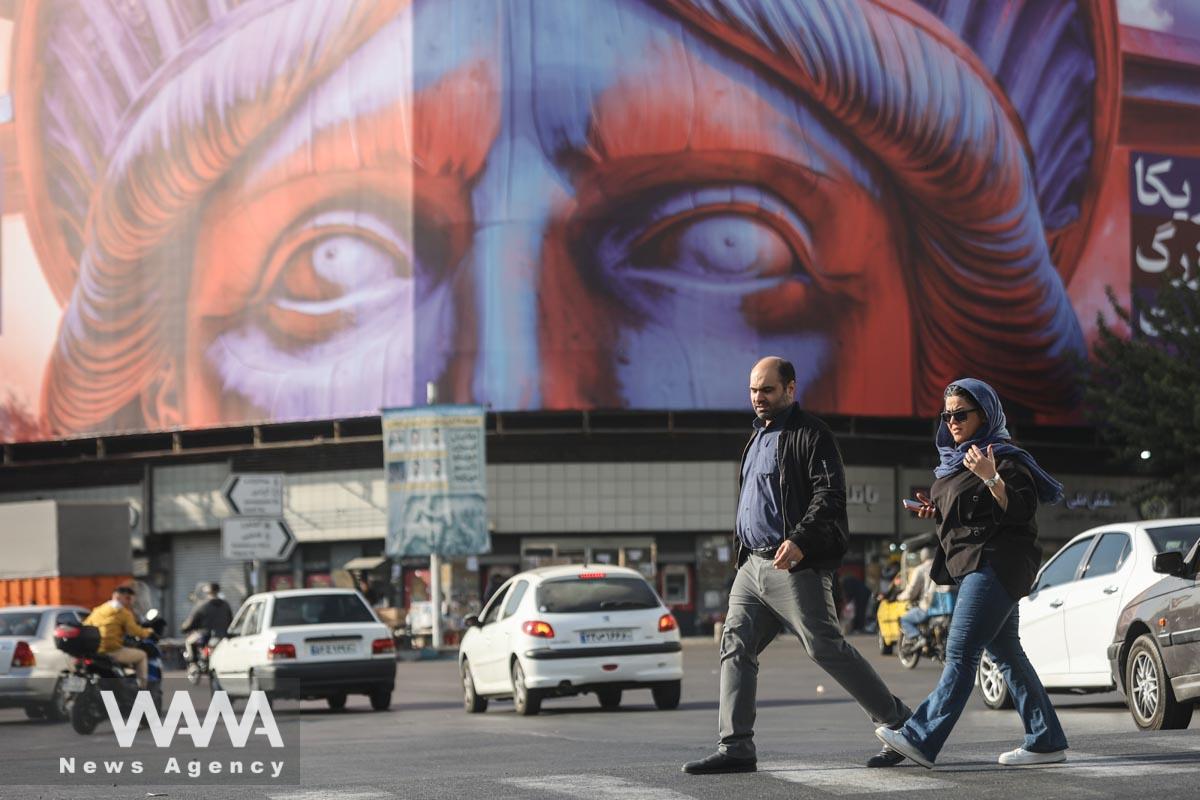
WANA (Nov 15) – In recent weeks, Iran has once again become the subject of narratives that seek to reduce it to a simple binary: “apparent freedoms” versus “hidden repression.” Narratives that rely less on the complexities of an 85-million-person society and more on a familiar formula of selective data extraction.
But what is visible on the streets of Tehran, Mashhad, Shiraz, or Bandar Abbas tells a story far removed from these black-and-white portrayals: a society in transition, an economy under pressure yet adaptive, and a governing structure that mixes security rigidity with gradual reform.
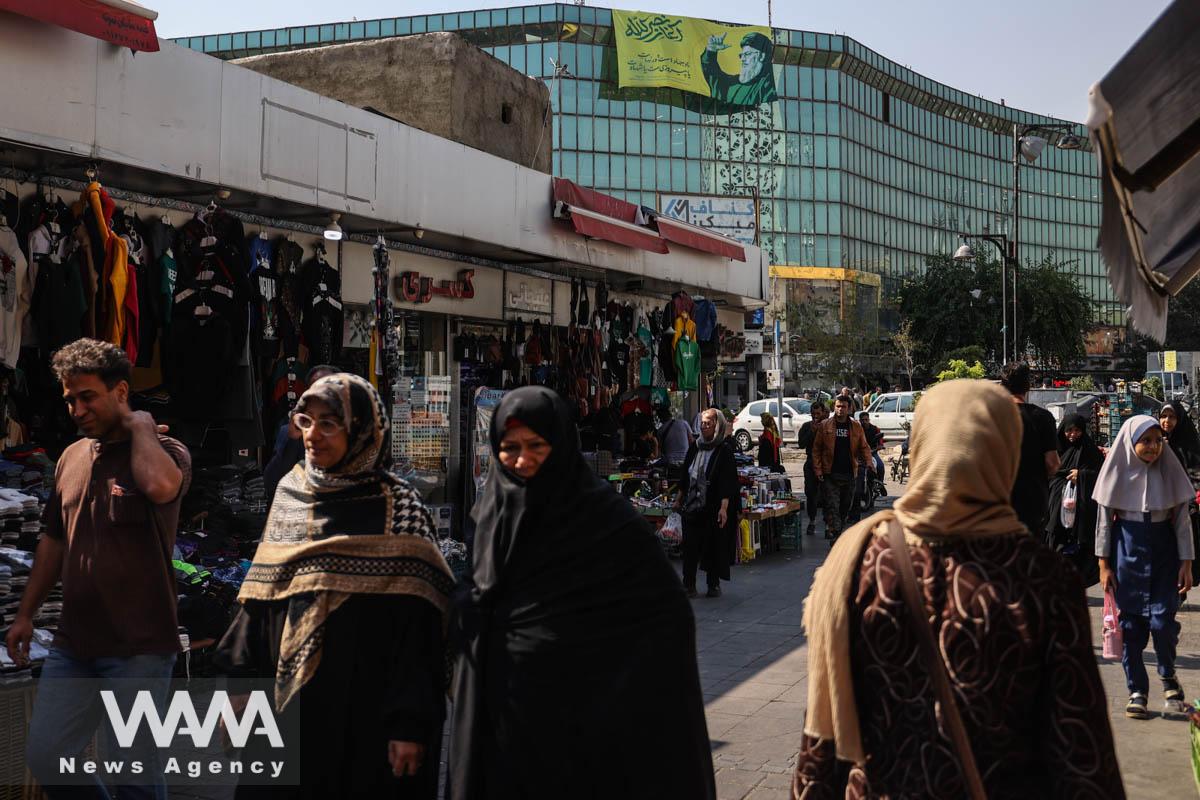
People walk past a billboard with a picture of the late Lebanon’s Hezbollah leader Hassan Nasrallah, in a street in Tehran, Iran October 7, 2024. Majid Asgaripour/WANA (West Asia News Agency)
Streets in Transition
Media narratives often begin with a sweeping phrase: “surface-level freedoms.” Yet a simple walk through Tehran’s Valiasr Square on an ordinary afternoon is enough to show that social change in Iran goes far beyond cosmetic performance.
In cafés, young women appear in a wide range of clothing—some fully veiled, some loosely covered, others unveiled. Families stroll together, and long conversations unfold between generations about lifestyle choices, boundaries, and freedoms.
Law enforcement, unlike a decade ago, is less visible and operates differently. What once took the form of harsh interventions now appears more often as soft warnings, or at most, written notices on walls.
These shifts have been observed not only by foreign media teams but also by independent European reporters who visited Iran between 2022 and 2024. Their travel notes frequently mention that “Iran’s emerging social behavior pattern has noticeably moved away from overt tension.”
This part of reality rarely appears in narratives focused solely on “hidden repression.”
People walk past shops in a street in Tehran, Iran October 7, 2024. Majid Asgaripour/WANA (West Asia News Agency)
Security and Executions: Numbers Without Context
Emphasizing “1,176 executions” is shocking on its own, but removing context creates a distorted picture.
According to UNODC data and reports from European narcotics-control partners, over 65% of these cases are linked to organized drug-trafficking networks—groups with which Iran engages in more border clashes annually than any other country in the world.
The spokesperson for the UN Office on Drugs and Crime reiterated last year: “Iran is the world’s largest natural barrier to drug flows into Europe.”
Yet this statement never makes its way into reports that focus solely on “executions.”
WANA (Oct 04) – Iranian judicial authorities announced that the death sentences of six individuals accused of membership in a separatist armed group and involvement in multiple terrorist operations in Khuzestan Province were carried out at dawn today. According to Iranian state media, the individuals had been charged with carrying out armed attacks and […]
Human-rights advocates in the West have also repeatedly noted that “drug-related crimes” remain classified as “serious offenses” in the legislation of many countries.
Acknowledging this often-omitted context highlights the difference between accurate analysis and political framing.
The Economy: A Sanctioned Country That Still Moves
Reports about Iran’s economy often paint an apocalyptic landscape: high inflation, currency depreciation, energy shortages, water scarcity.
But omitting sanctions from this picture is like reporting on inflation without mentioning money.
Iran has spent more than a decade under some of the toughest financial restrictions ever imposed—sanctions that Western institutions themselves describe as “unprecedented.”
Yet the IMF’s 2024 report projected Iran’s economic growth at around 4%, a rate many fully open neighboring economies did not achieve.
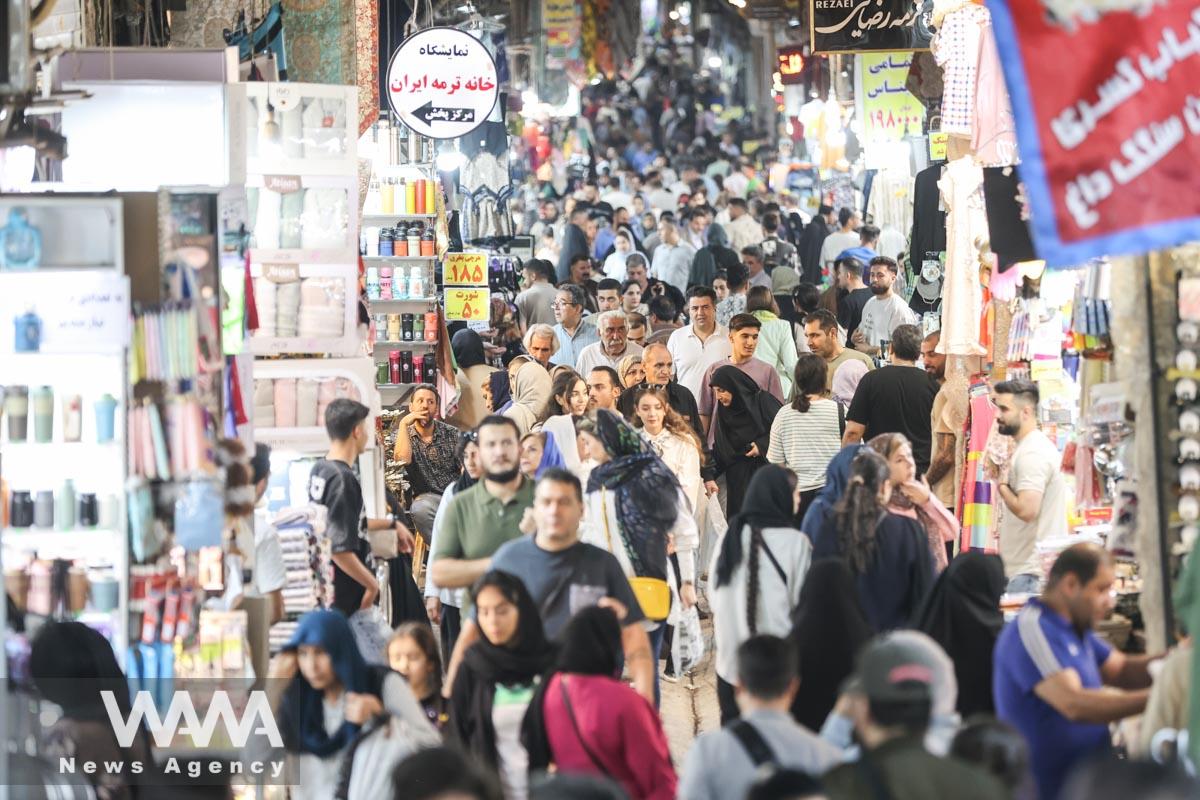
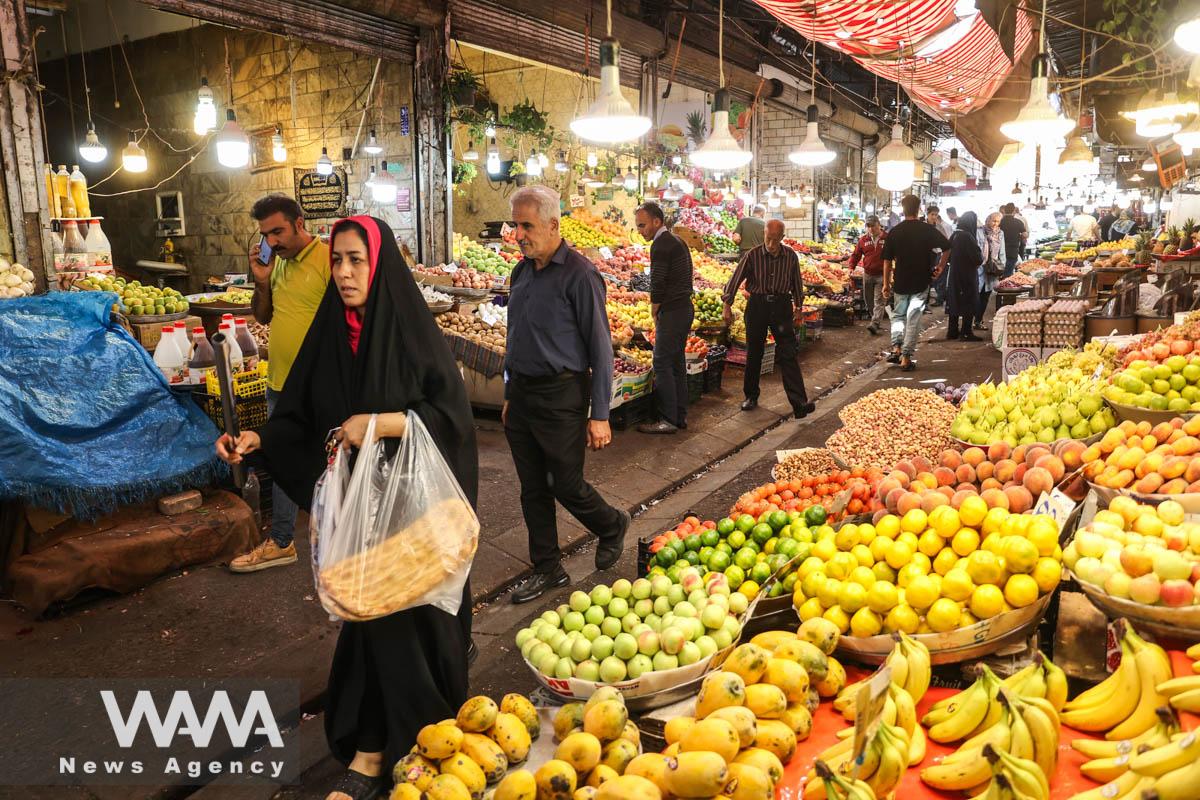
Iranian people walk at the Tehran Bazaar after the approval of the bill to remove four zeros from the national currency, in Tehran, Iran, October 5, 2025. Majid Asgaripour/WANA (West Asia News Agency)
Scenes from Tehran’s bazaars or Shiraz’s shopping centers—from crowded aisles to thriving domestic brands and the gradual return of tourists—show that Iran’s economic reality, though pressured, is far from “collapse.”
Stores selling appliances, electronics, and clothing remain busy, and the middle class—contrary to repeated predictions in Western media—has not disappeared; it has adapted its consumption patterns.
This gap between reality and narrative is where the black-and-white portrait loses its explanatory power.

Iranian women walk at the Tehran Bazaar in Tehran, Iran, September 27, 2025. Majid Asgaripour/WANA (West Asia News Agency)
Post-June Conflict Conditions: Security Tightening or Normal Response?
After the direct confrontation between Iran and Israel—an event think tanks such as Chatham House described as a regional deterrence turning point—security measures increased in Tehran and border regions.
But such intensification is not “an Iranian exception”; it is a global norm after direct threats.
The U.S. after 9/11, France after the 2015 attacks, and the U.K. after the London attacks all followed similar patterns. Why is Iran’s behavior framed as “hidden repression” when other states are not described this way?
Criminalizing “dissemination of false information” also has long precedents worldwide. The European Union passed its strictest disinformation regulations in 2024.
In Iran, security cases involving media actors typically involve allegations of financial or network-based coordination with foreign intelligence services—charges that no state treats lightly.
Yet this crucial distinction disappears in accounts that reduce Iran to political caricatures.
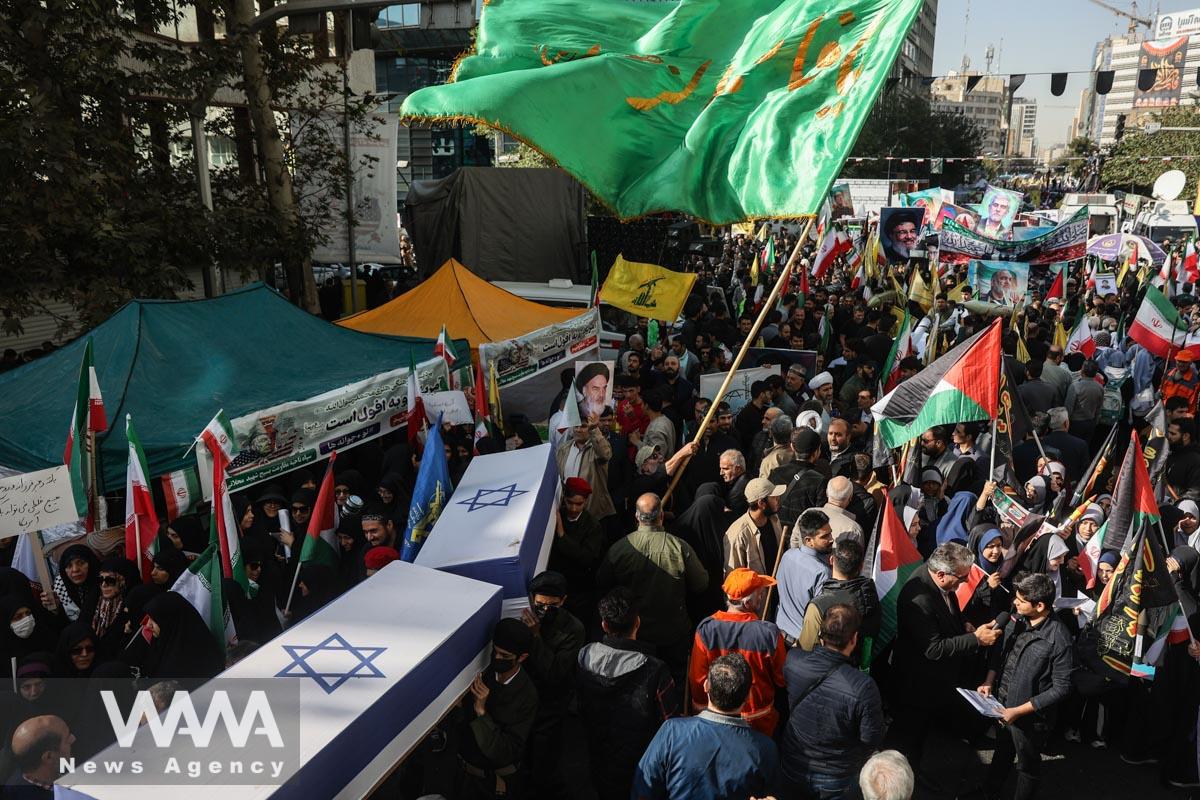
People carry symbolic coffins with Israeli flags during the 46th anniversary of the U.S. expulsion from Iran, in Tehran, Iran, November 4, 2025. Majid Asgaripour/WANA (West Asia News Agency)
Minorities: A Linear Narrative for a Multi-Layered Reality
Media reporting often groups Baha’is, Kurds, Baluchis, and other minorities under a single headline: “targeted communities.”
But the on-the-ground reality is more complicated. In many Baha’i cases, judicial filings cite “organizational networking” or “foreign links”—the same types of allegations pursued in many other countries.
Border regions simultaneously contend with armed groups, traffickers, and separatist networks—an overlap acknowledged even by UN rapporteurs.
At the same time, Iran’s Interior Ministry budget data shows increased development allocations to these regions over the past five years.
Such contradictions, placed side by side, create a more realistic picture.
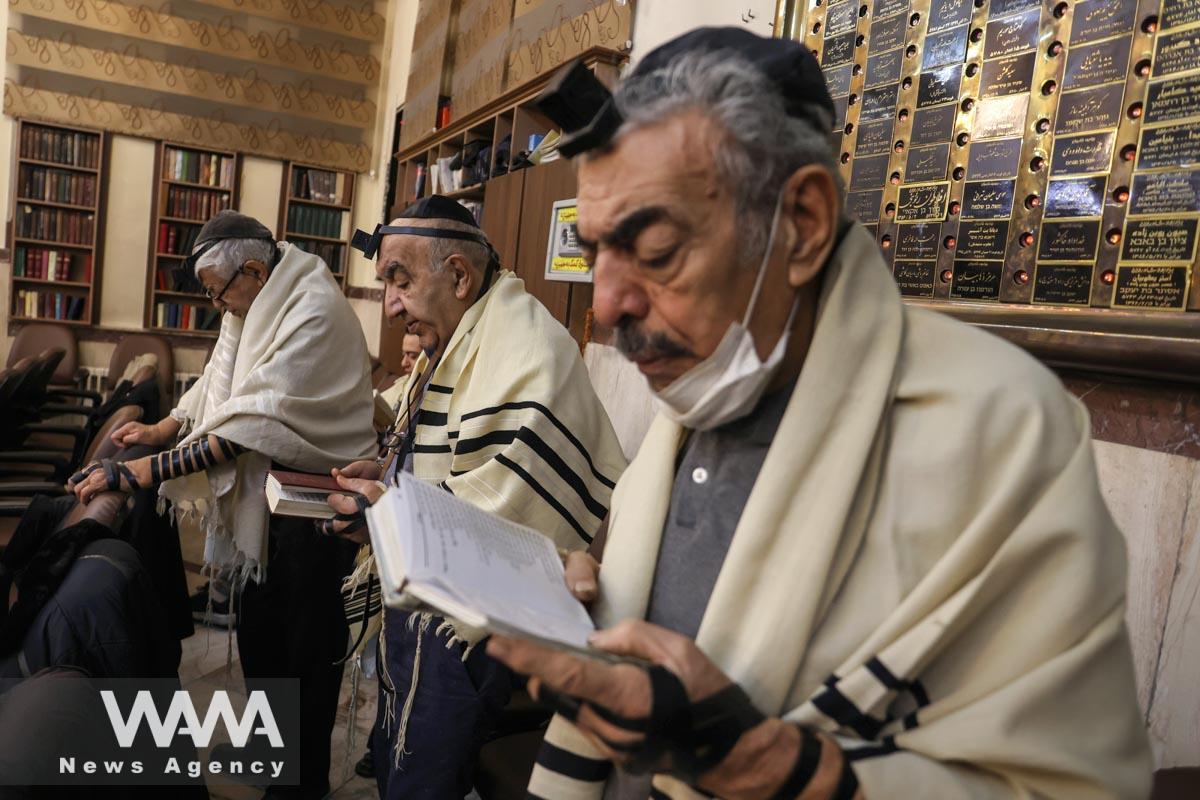
Iranian Jews attend a Jewish worship service in a synagogue in Tehran, Iran, November 30, 2023. Majid Asgaripour/WANA (West Asia News Agency)
Narrating Iran based on a handful of de-contextualized data points is easy: high executions, economic strain, strict security, dissatisfied minorities.
But any reporter who has walked down Tehran’s Jomhouri Street, any analyst who has reviewed IMF and UNODC statistics together, or any researcher who has compared Iran’s social transitions with those of its region knows that this is only half the story.
The other half is a society that is changing; an economy that fights under pressure; and a governing structure that tries—simultaneously—to maintain order, survival, and incremental reform.