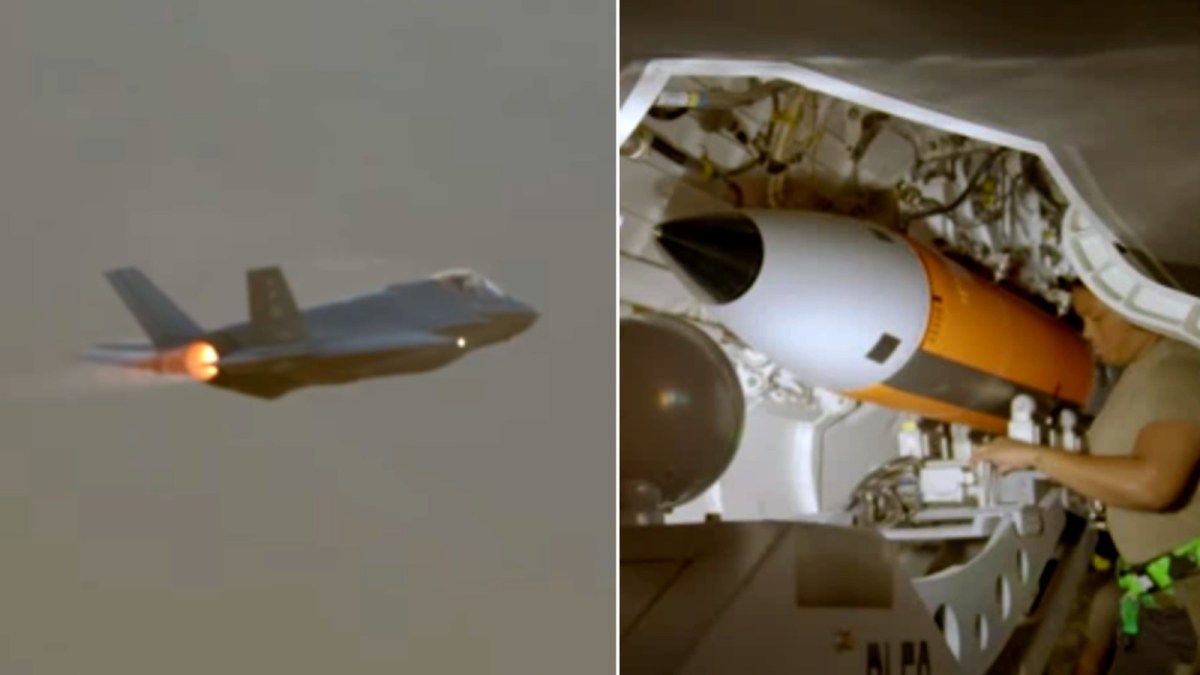
The U.S. successfully tested a tactical thermonuclear gravity bomb using inert warheads in August, according to a research and development arm of the Department of Energy’s (DoE) National Nuclear Security Administration (NNSA).
The exercise was part of a stockpile reliability assessment, according to an official press release.
Conducted August 19–21 at the Tonopah Test Range in Nevada with support from Hill Air Force Base in Utah, it involved fifth-generation F-35A fighter jets carrying and releasing the bombs under operational conditions.
Newsweek contacted the U.S. DoE and the NNSA via email outside of usual working hours for comment.
Why It Matters
Coming just weeks after President Donald Trump suggested the U.S. could resume nuclear tests “on an equal basis” with other nations, the timing of this announcement underscores Washington’s effort to reassure allies and signal readiness amid rising global tensions.
This latest trial signals major progress in the modernization and reliability testing of the United States’ nuclear arsenal.
The disclosure of these recent B61-12 nuclear gravity bomb tests seemingly highlights the U.S. commitment to maintaining a safe, reliable nuclear deterrent without breaking the decades-long ban on explosive nuclear testing.
What To Know
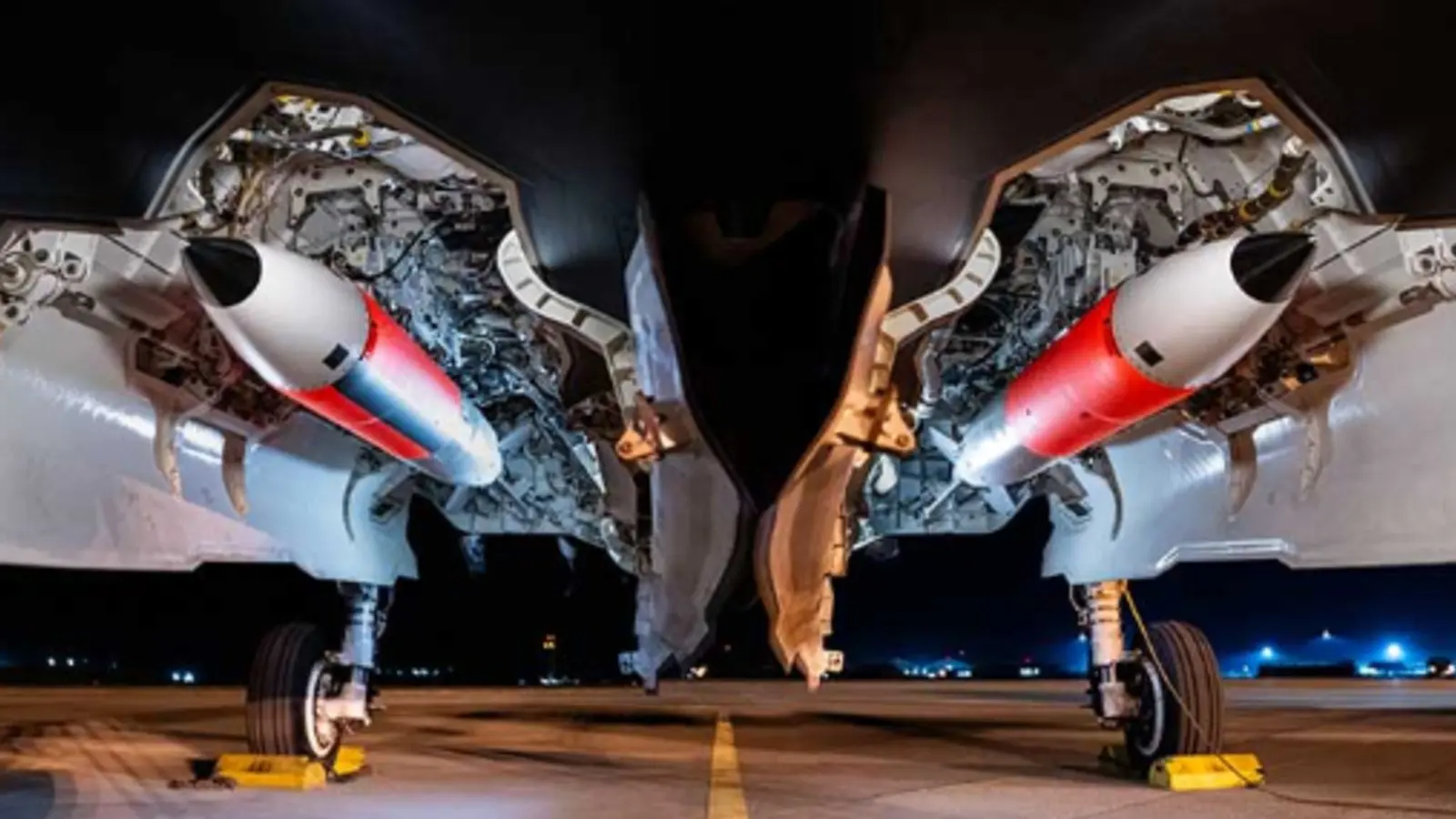
The B61-12 is a modernized version of a Cold War-era bomb, designed to remain in service for at least 20 more years following a life-extension program finalized by the NNSA in late 2024.
These recent trials yielded a “significant milestone in evaluating the weapon’s performance”, according to Sandia National Laboratories, which is operated and managed by National Technology and Engineering Solutions of Sandia, a subsidiary of Honeywell International.
Sandia officials noted that the series included the most comprehensive B61-12 flight testing in a single year and featured a first-of-its-kind thermal preconditioning of the bomb before carriage on the F-35.
These steps ensure the weapon meets environmental and operational requirements under real-world conditions. The effort involved coordination among Sandia, NNSA, the U.S. Air Force, and multiple agencies.
Sandia operates under the DoE and works closely with the NNSA, the agency responsible for maintaining the U.S. nuclear stockpile. Sandia’s role is to design and integrate the non-nuclear components of nuclear weapons and ensure they function safely and reliably.
It acts as the systems integrator, coordinating with other labs and contractors to certify complete weapon systems.
This partnership is central to U.S. nuclear modernization efforts, including programs like the B61-12 Life Extension Program, which extends the service life of aging bombs without explosive nuclear testing.
The B61-12 program is central to modernizing America’s aging arsenal, ensuring compatibility with advanced aircraft like the F-35 while reducing reliance on high-yield weapons—a critical factor in both strategic stability and arms control debates.
It is compatible with a range of U.S. and allied aircraft, including the F-35A, ensuring both continued deterrence and interoperability with NATO partners, per the Aviationist website.
Flight tests of inert nuclear bombs occur periodically as part of routine certification and modernization efforts.
A similar exercise involving an Air Force F-16 fighter jet was conducted in 2017, per Air Force Materiel Command, a Major Command of the United States Air Force.
What People Are Saying
“These B61-12 F-35A stockpile flight tests and captive carry flight test were the capstone accomplishment of a tremendous amount of planning and effort by those who were involved across not only Sandia, but many other agencies,” said Sandia’s Jeffrey Boyd, surveillance lead for the B61-12 and B61-13. “In addition, these B61-12 stockpile flight tests represent the completion of the most B61-12 flight testing surveillance scope in a year to date and the most in a given year for the foreseeable future.”
Tonopah Test Range manager Brian Adkins said: “Expedient coordination by the entire test team resulted in two successful days of testing to evaluate three test assets.”
Daryl Kimball, executive director of the Arms Control Association, raised concerns in response to resuming nuclear testing, telling Newsweek in October: “It’s not militarily, technically, or politically necessary. It would lead to a chain reaction of nuclear tests by other countries, including Russia, probably North Korea, maybe China, and it would undermine U.S. security.”
What Happens Next
Officials say the August tests were the most comprehensive B61-12 flight evaluations in a single year and likely the last of their scale for the foreseeable future.
Data collected will inform annual stockpile assessments and help maintain U.S. nuclear deterrence without explosive testing.
These developments come at a sensitive moment, as Trump signals a possible end to the longstanding U.S. moratorium on live nuclear testing. Russian officials have warned of reciprocal measures if the U.S. resumes such tests.
An upcoming unarmed test of a Minuteman III intercontinental ballistic missile, scheduled following Trump’s remarks, has drawn international scrutiny and could prompt strategic posturing by Russia or China.
Energy Secretary Chris Wright has emphasized that ongoing tests will not include nuclear detonations but will validate new subsystems and ensure readiness.
Whether Trump’s directive leads to more aggressive steps remains unclear, but for now, the administration insists any future tests will stop short of breaking the global norm against nuclear detonations.