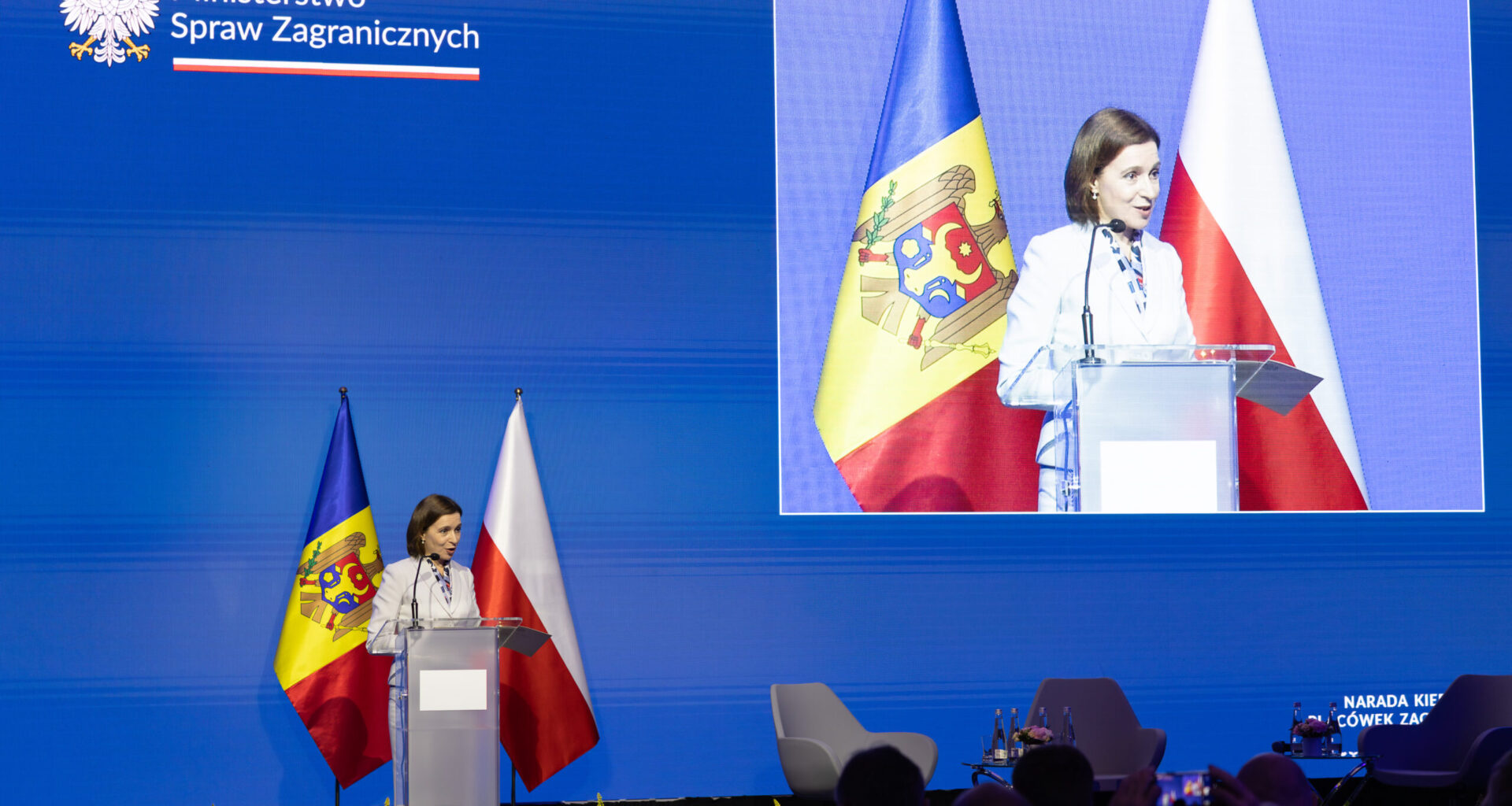
The presence of known Russian interference has made the recent Moldovan parliamentary elections particularly interesting, and indeed extremely tense for EU officials, and advocates of democracy within Moldova. The Russian regime has been accused of spending hundreds of millions of euros in an attempt to subvert the parliamentary elections in Moldova, which took place at the end of September. However, despite the strongest attempts of the Kremlin, the Moldovan public opted instead to support President Maia Sandu’s Party of Action and Solidarity (PAS), who hold a solid pro-EU stance. The failed Russian efforts to interfere in the election of a former Soviet bloc state could well have serious implications for future elections, both in Moldova and elsewhere. The actions taken by the Kremlin demonstrate the lengths to which the Russian state is willing to go in order to further its own interests, despite the risk of drawing large international attention to its methods.
The Kremlin also made attempts to meddle in two important Moldovan votes last year: the presidential election and a referendum on potential EU membership. Moldova, a former member of the Soviet Union, has made significant efforts to democratise in the last number of years, with the government aiming to gain EU membership in 2030. In 2024, pro-Russia Moldovan oligarch Ilan Shor played a central role in spreading misinformation around the votes, and swaying people towards a pro-Russian, anti-EU, vote. Shor notably posted a video to his Telegram channel, openly offering to pay people in exchange for registering to his campaign to support an anti-EU vote, and pro-Russian presidential candidate. Moldovan authorities found that over the course of 2 months Shor transferred around $39 million into the accounts of over 1 million Moldovans. The attempts to sway the votes in 2024 failed, despite the huge amounts of money involved. Pro-EU incumbent candidate Maia Sandu was reelected, and a ‘yes’ vote prevailed for European Union integration. However both of these votes were won by razor thin margins, despite both being predicted to be landslide wins.
While the interference in 2024 centred largely around financial incentives, the Kremlin appeared to change tactics for the 2025 parliamentary elections, and instead focused on propagating a sophisticated misinformation campaign. President Sandu warned the Moldovan public of Russia’s attempts to spread disinformation online in attempts to both sow seeds of fragmentation among the population, and to sway the vote towards the Patriotic Bloc, the leading opposition party which holds staunchly pro-Russian and anti-EU views. It seems that the tactics used by the Kremlin have moved beyond simply vote buying, although this is still certainly a factor. The campaign has focused on recruiting local actors in order to disseminate misinformation on various social media, with a particular focus on TikTok.

This Russian interference comes at a particularly fragile time in Moldovan politics. Similarly to other post Soviet countries, the Russian invasion of Ukraine dramatically altered the political landscape in Moldova. The country’s close proximity to Ukraine has sparked fears that it could be next in Russia’s sights, an idea which has heightened appetites for EU integration among the political elite, even those who would have traditionally been friendly towards Russian interests. Controversially, the Russian military has made use of Moldovan airspace, and has even mistakenly dropped missiles on Moldovan territory. In the recent elections, the Patriot Bloc attempted to win over voters by promising access to cheap Russian gas. They also attempted to sow seeds of EU scepticism among the population, by claiming that if the country became a member of the EU, Moldova would be reduced to becoming merely a puppet for European powers, geographically protecting them from Russian attacks. They also attempted to appeal to the traditional moral values of the public by claiming that membership of the EU would force the country to legalise same-sex marriage.
However, despite the best efforts of the Kremlin, the PAS party won a majority of votes, gaining more than twice as many as the Patriotic Bloc. It would seem that Moldovan public highly value their democratic values, and will not succumb to external pressures. With a majority in parliament, and a presidential term lasting until 2029, President Sandu is in good standing to be able to pass the reforms necessary to join the EU by 2030. In spite of the positive outcome in the Moldovan case, the Russian government’s determination to control the elections of a former Soviet state remains worrying. It seems unlikely that two failed attempts will stop further Russian meddling in foreign elections. Perhaps the cases in Moldova were simply trial runs, testing out different techniques in order to assess which is the most effective. If an election were to be held in Ukraine after a ceasefire agreement has been established, as has been suggested on multiple accounts by US president Donald Trump, interference by the Kremlin would of course be a huge concern. Other, more democratically fragile, former Soviet countries would also be areas of concern. Georgia, for example, have already been victims of Russian interference in their 2024 parliamentary elections, and although the results of that elections remain contested, another election could see a win for pro-Russian forces, despite public opinion consistently favouring pro-Western views.
Currently, the future of elections in post-Soviet Europe remains unclear, and certainly needs to be closely monitored. However, despite the worries for the future, the result in Moldova symbolises the public desire for liberal democracy and freedom, offering a glimmer of hope that perhaps Russia are not the all-powerful force that they are often portrayed as.