Every year researchers at the National Museum of Natural History (Naturmusée) track the various insect species in Luxembourg, to see which local ones are in danger of extinction, and which invasive species are gaining numbers in the country’s unique and varied ecosystems.
Their findings also inform how we manage or treat these changes, not only in terms of protecting endangered species, but also in managing the populations of invasive ones.
Axel Hochkirch, head of conversation biology at the Naturmusée, says species invasion is influenced by many factors including climate change © Photo credit: Axel Hochkirch
Axel Hochkirch is head of conversation biology at the Naturmusée. He joined two-and-a-half years ago as curator of ecology from Trier University, where he was, and still is, a professor of conservation biology.
“We currently survey several insect groups to create an atlas and a red list,” he said, adding that the general trend is towards biotic homogenisation in which species become more and more similar, with fewer variations.
“This is driven by globalisation, not just climate change, because human use of land is becoming more and more homogenous. We grow the same crops or garden plants, use the same fertilizers and pesticides, so environments become similar,” he explained.
Changing agriculture
Agricultural land use has continued its journey of intensification since the 1950s and today farms are larger, use bigger machinery and more fertilisers and pesticides, removing structures such as hedgerows, field margins and ponds.
Farmers also keep more livestock per hectare, Hochkirch said, in fact more than we can feed, so we import fodder made from soybean from South America, which in turn is contributing to the destruction of rainforest.
Intensification also changes the biodiversity of agricultural areas. “The average Luxembourg meadow is mainly grasses, whereas in the past there was a higher plant diversity, and in turn a higher insect diversity,” Hochkirch said.
Smaller farms have all but disappeared, taking with them the insects that relied on smaller agricultural operations. These areas of land are often overgrown with bushes and shrubs now.
Hochkirch is the chair of the International Union for the Conservation of Nature’s invertebrate conservation committee. The IUCN is a global union of many organisations and countries, including Luxembourg, and its commissions draw on the knowledge of some 20,000 experts worldwide. The invertebrate committee is part of the IUCN’s Species Survival Commission, the largest of the organisation’s seven commissions.
Climate change is becoming a prominent influence too, as species originally found in southern Europe can now fulfil their reproductive cycles in Luxembourg, in areas which were cooler in the past.
The common pincer grasshopper was first recorded in Luxembourg in 2022 © Photo credit: Axel Hochkirch
He gave the example of a species of grasshopper that in the past could only survive in Luxembourg’s warmer, drier areas, such as the quarries of the Minett region. “We see them now in Oesling in the north,” he said, “and they can even be found in meadows in southern Luxembourg, because microclimate has less importance today than before.”
Hochkirch and his team undertake their own research, also working with collaborators in the field, and using citizen science from data fed into the iNaturalist app, or ObsIdentify, where an advanced AI tool developed in the Netherlands allows photographs taken by individuals to be recognised and catalogued as specific species.
“We see a strong and extremely fast spread of some species,” he said. “The common pincer grasshopper was first recorded in Luxembourg in 2022. Now it inhabits all of the southern part of the country and there have been recorded sightings near Kiischpelt in the north.”
Wetlands in danger of disappearing
In Luxembourg, a couple of new species have been found in multiple locations. However Hochkirch points out that many don’t replace native species because Luxembourg’s biodiversity is not saturated yet.
“But we see some species disappearing because of a change in land use, forcing them to migrate to nature reserves where they will eventually become extinct. Droughts, such as the one in 2022, have also impacted wetland insect species,” he said.
Heathland began disappearing at the beginning of the 20th century, often being replaced with agricultural land or forest. “We are losing some complete ecosystems such as wetlands, which were drained for agriculture. So we think about removing their drainage to protect those habitats and their species.”
Winners and losers
“There are winners which are those that can adapt to human land use and disperse fast, and losers, but Luxembourg has spent money on biodiversity projects that have been a success,” Hochkirch said.
He cited the increase in the beaver population, and the reintroduction of the European tree frog, as part of a Sicona (Syndicat pour la conservation de la nature) and ANF (Administration de la nature et des fôrets) project which saw the creation of hundreds of ponds.
There are winners which are those that can adapt to human land use and disperse fast, and losers, but Luxembourg has spent money on biodiversity projects that have been a success
Axel Hochkirch
Head of Conversation Biology, Naturmusée
There are also conservation action plans for threatened insects such as wild bee species, which are supported by local stakeholders such as farmers.
“Insects recover quite fast because they have short reproductive cycles,” he said. “The future will be to identify and prioritise species groups that have a higher risk, such as wetland species, and care for those habitats.”
Hochkirch noted that the restoration law in Europe makes it almost mandatory to restore habitats, but conservation efforts are slow. “We are destroying faster than we are restoring,” he said.
Transport of goods and plants brings new insects
Insect species are also transported by humans, or via imported garden plants.
The southern oak bush cricket, native to Italy and southern France, is wingless so it cannot fly to Luxembourg. However it has successfully invaded the country by hiding behind the wing mirrors of cars.
Its spread was first spotted at petrol stations and in cities. Eventually it will replace the native species of oak bush crickets in conurbations, although the local species still survives in forests.
Many other insect species are transported with garden plants from southern Europe. They first appear in garden centres, then in gardens, and finally colonize more natural habitats. The southern sickle bush-cricket is one of these species, which is already found in southern Luxembourg.
The Asian hornet didn’t fly here
The Asian hornet is another invasive species brought by man. It could not fly from East Asia to Luxembourg.
So how did it get here? Alexander Weigand, zoology curator and a fellow specialist in ticks, mosquitoes and the Asian hornet at the Naturmusée, explained.
The Asian hornet most probably arrived in a ship carrying pottery to Bordeaux © Photo credit: Axel Hochkirch
“A single queen was most likely introduced to Bordeaux in France in 2004 via a Chinese/Southeast Asian ship carrying pottery. Since the climate was suitable and it was well served as a honey bee predator, it spread to other parts of Western Europe,” Weigand said.
Here it has no natural predators and an ideal environment to spread quickly. Its impact on honey bees – the number of bee hives and honey production – is noticeable.
Weigand also highlighted that its nests, such as the enormous one found at Neimenster Abbey, can pose a health risk, with the risk of it dropping in high tourist season and producing a swarm of angry hornets ready to sting.
Also read:Asian hornet nest removed from capital’s Neumünster Abbey
Tiger mosquitoes bring disease
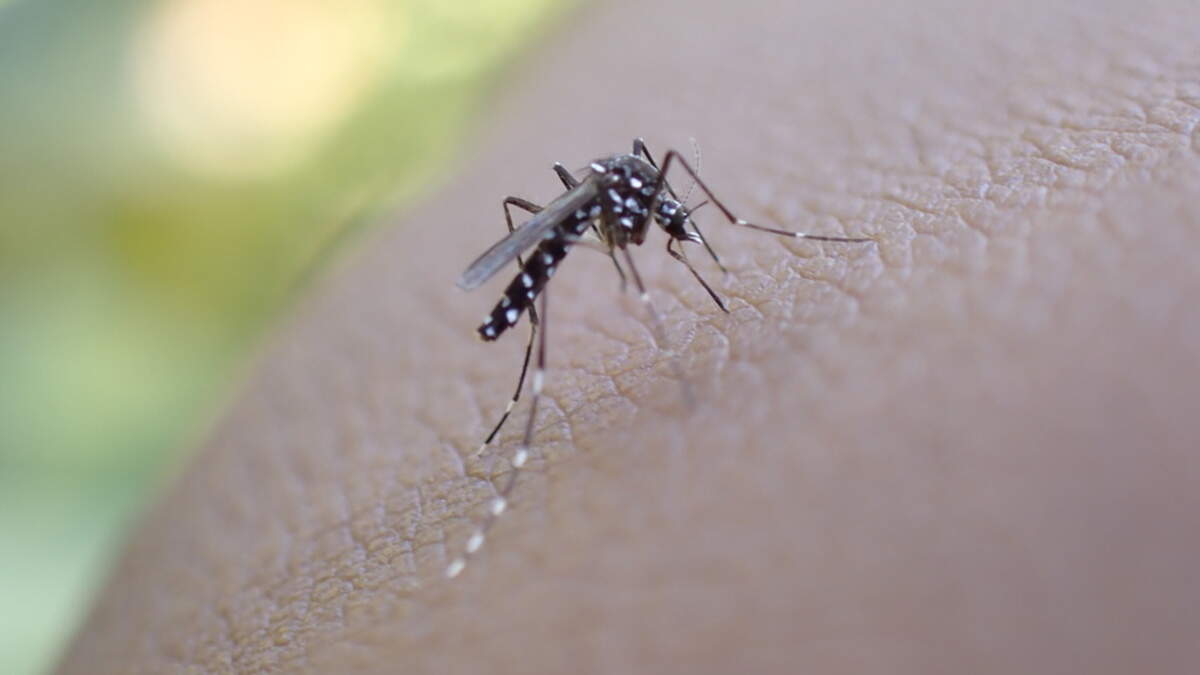
Tiger mosquitoes, with their striped legs, are another new species group that does not occur naturally in Luxembourg.
The Japanese bush mosquito (Aedes japonicus) and the Asian tiger mosquito (Aedes albopictus) have arrived as a result of increased trade in goods, especially cargo transfers, but also plant material and even car tyres.
Alexander Weigand, Zoology curator at the Naturmusée © Photo credit: MNHM
“These species have now become established in Europe, continuing to spread. Climate change further facilitates this as higher temperatures significantly speed up the development cycle from egg to adult, although their arrival can be put down to humans via traded goods and movement,” Weigand explained.
With it, the tiger mosquitoes can bring new diseases such as the Chikungunya, West Nile, Zika and dengue viruses.
Two new tick species
Weigand also monitors ticks and described two new invaders. The winter tick (Dermacentor reticulatus), originally from southern Europe, has migrated along larger rivers like the Rhine and Moselle, and can now also be found in the Minett and Guttland regions.
The Hyalomma tick is carried to Luxembourg by migratory birds © Photo credit: Alex Weigland
Its spread is helped by milder winters, and it is easily transported by humans and in particular dogs. These ticks can transmit tick-borne encephalitis, Borreliosis and rickettsiosis to humans, and dog malaria (babesiosis) to our canine pets.
The other invader, ticks of the genus Hyalomma, originally native to Africa and the Mediterranean, are carried to Luxembourg by migratory birds, where they infest horses in particular. These ticks can carry the deadly Crim-Congo haemorrhagic fever virus.
But is this climate change?
Both Weigand and Hochkirch pointed out that we are currently in a post-glacial phase with many species naturally spreading out their refuge areas following the last ice age. In other words, this migration has been happening for almost 20,000 years.
This post-glacial expansion is supported by the movement of goods and people, and changes in land use, but climate change is also a contributor in their accelerated spread and continued survival. It has allowed species which would not recolonise Europe naturally to survive and thrive, even though their arrival may be due more to global trade rather than climate change.
We can monitor and try to preserve local species, but it would be almost impossible to stop the tide of invaders, both natural or those who arrive because of increasing global trade.