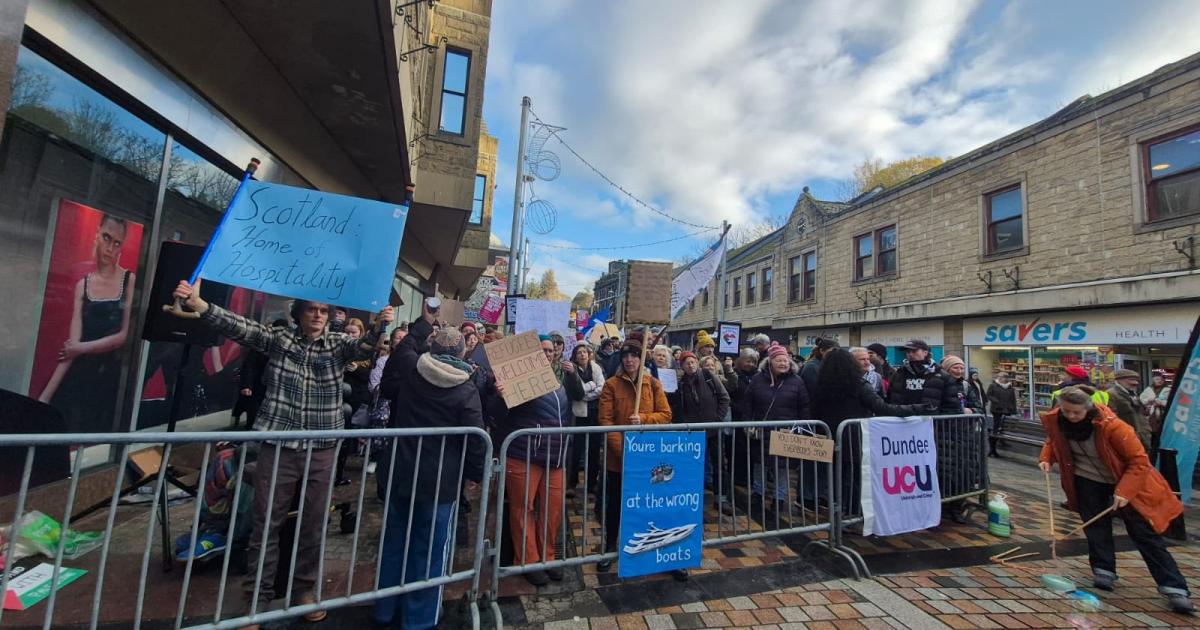
A group called Inverness Against Illegal Migration organised a protest in opposition to the Home Office’s plan, which would see the barracks transformed into temporary asylum seeker accommodation.
Around 180 people attended the demonstration, according to counter-protestors.
Protestors clashed over the use of the barracks. (Image: Supplied)
“A heartfelt thank-you to all who attended today’s gathering in Inverness. We were honoured by the strong turnout and the unity shown.
“We deeply appreciate the continued support from Aberdeen, Glasgow, Falkirk, and all the patriots from Inverness,” a statement on the group’s Facebook page read.
In a digital flyer advertising the demonstration, the group stated: “Join us in protest to stop this mass invasion of illegal migrant men. #stop the boats #we must close our boarders.”
In response, Inverness for All and Stand Up to Racism Scotland organised a counter-demonstration of around 120 people.
SUTR Scotland posted to Facebook: “It is important that the 120 antiracists and antiracists that protested today are joined by many more from across society, trade unions, faith groups and those that wish to defend the right of asylum seekers to seek refuge here.”
Local councillor Isabelle MacKenzie told The Herald: “We need a more joined up approach going forward.
“I feel yesterday we crossed a line. A very divided point in Inverness history. ”
In early November, Highland Council held an emergency meeting to discuss the scheme, which has been roundly criticised by councillors.
Read more:
At the time, council leader Raymond Bremner said: “Despite recent protestations from the Secretary of State, I can assure you that there has been no real engagement and trying to get clarification has been challenging to say the least.
“This is disrespectful. We were not consulted on the proposals. Consultation suggests an exchange of views or a discussion.”
Sarah Atkin, a Highland Independent councillor, said: “We cannot disregard the very real concerns that exist around women and girls.
“There will be 300 men that are not allowed to work and have nothing to do in one place. Without information, that is frightening for a lot of people.”