Both countries now face the challenge of storing and moving energy efficiently, whilst keeping prices stable, as we build the grids of the future. Australia’s success brings complexity. In some states, solar generation is so abundant that wholesale prices fall below zero, forcing generators to curtail production, just as the UK has faced curtailment from Scottish offshore wind unable to reach southern demand due to transmission limits. Working together on solving this will create certainty for investors, positioning Australia as a global leader in energy solutions.

British Consul General NSW Louise Cantillon.
The answer lies in flexibility, both on a technical and policy level. We’ll need fast-acting storage, smarter demand management, and generation that can respond instantly to weather and usage. It is flexibility that will drive lower system costs and ultimately lower bills for consumers. We’ll also need policy tools that provide confidence for large-scale investment.
The UK’s Contract for Difference scheme has underpinned the world’s second-largest offshore wind market. Australia’s Capacity Investment Scheme shows similar foresight, helping smooth revenues and lowering risk for developers and financiers.
Unlocking Australia’s vast potential in large-scale renewables, from gigawatt scale onshore projects to offshore wind in Victoria, will require continued commitment to smart policy.
Sharing innovation in the energy transition
In the UK, our journey has been shaped by innovation. We’ve phased out coal, built massive offshore wind capacity and are harnessing digital technologies to run a more complex grid. Better solar technologies are boosting daytime power, while batteries and demand-side flexibility help balance peak-time loads. Our National Energy System Operator has launched a digitalisation blueprint, turning data into an energy asset.
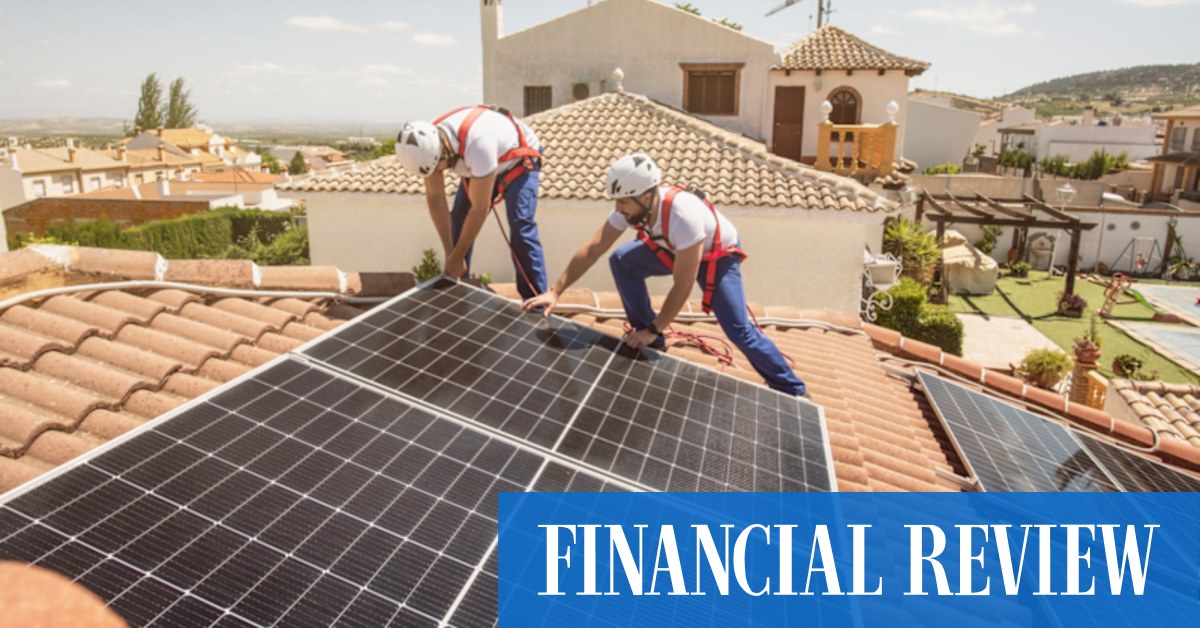
Equally, the UK is learning from Australia. Your rapid uptake of rooftop solar and home batteries is world leading. Regulators, researchers and utilities, from CSIRO to grid-enhancing technology competitions, are generating insights the UK can apply as we manage our own distributed generation and storage growth. This exchange of ideas, technologies and policies is true partnership.
That’s why the Australia-UK Climate and Energy Partnership is so important. It gives us a framework to accelerate deployment, share lessons and connect our ecosystems of investors, innovators and operators. Together we can strengthen the case for cleaner, cheaper and more secure energy.
The next phase of the transition will be defined by digitalisation and collaboration. Sharing data between generators, network operators and consumers will allow both countries to run more flexible systems. Diagnosing risks before outages, optimising transmission routes, and enabling homes to sell power back to the grid – these are no longer futuristic ideas, they’re happening now.
British companies are eager to contribute to Australia’s energy transition, and the UK welcomes Australian investment in engineering, digital systems and renewable integration.
Essentially, we’ve got the same challenge: we want to decarbonise affordably, modernise outdated grids and empower consumers. The UK and Australia can go further and faster together.
I am excited by the solutions we can develop together, forging a path to a cleaner, more secure and competitive economies that power our future.
Louise Cantillon is the British Consul General NSW and Deputy Trade Commissioner Asia Pacific (Australia & New Zealand).