
 Boží Dar ski resort in Czechia. | Image: Boží Dar Facebook
A devastating outbreak of hepatitis A is sweeping across Czechia this year, with more than 2,375 cases and 28 deaths reported, according to Czech health authorities. The capital, Prague, and the Karlovy Vary (Carlsbad) region are among the worst-hit areas, but alarmingly, the virus has also spread to mountain communities—including the ski resort of Boží Dar in the Ore Mountains, near the German border.
The western part of Czechia, bordering Germany, has become a major hotspot for the outbreak. Boží Dar, a well-known ski resort in the Erzgebirge (Ore Mountains), is now urging caution, not only among its seasonal visitors but also day-trippers and shopping tourists who pass through the region. Local officials are calling on everyone to observe strict hygiene rules, warning that the virus can spread rapidly in shared or public spaces. The resort has issued a statement on its Facebook account, advising people to wash hands frequently and thoroughly, using soap and water, use hand disinfectants, especially in shared or public areas, and to be especially mindful of food hygiene and avoid potentially contaminated water or unwashed produce.
“Karlovy Vary Region reports a worsening epidemiological situation due to the spreading jaundice. Encourages people to be more cautious and thorough hygiene.
How to protect yourself against hepatitis A?
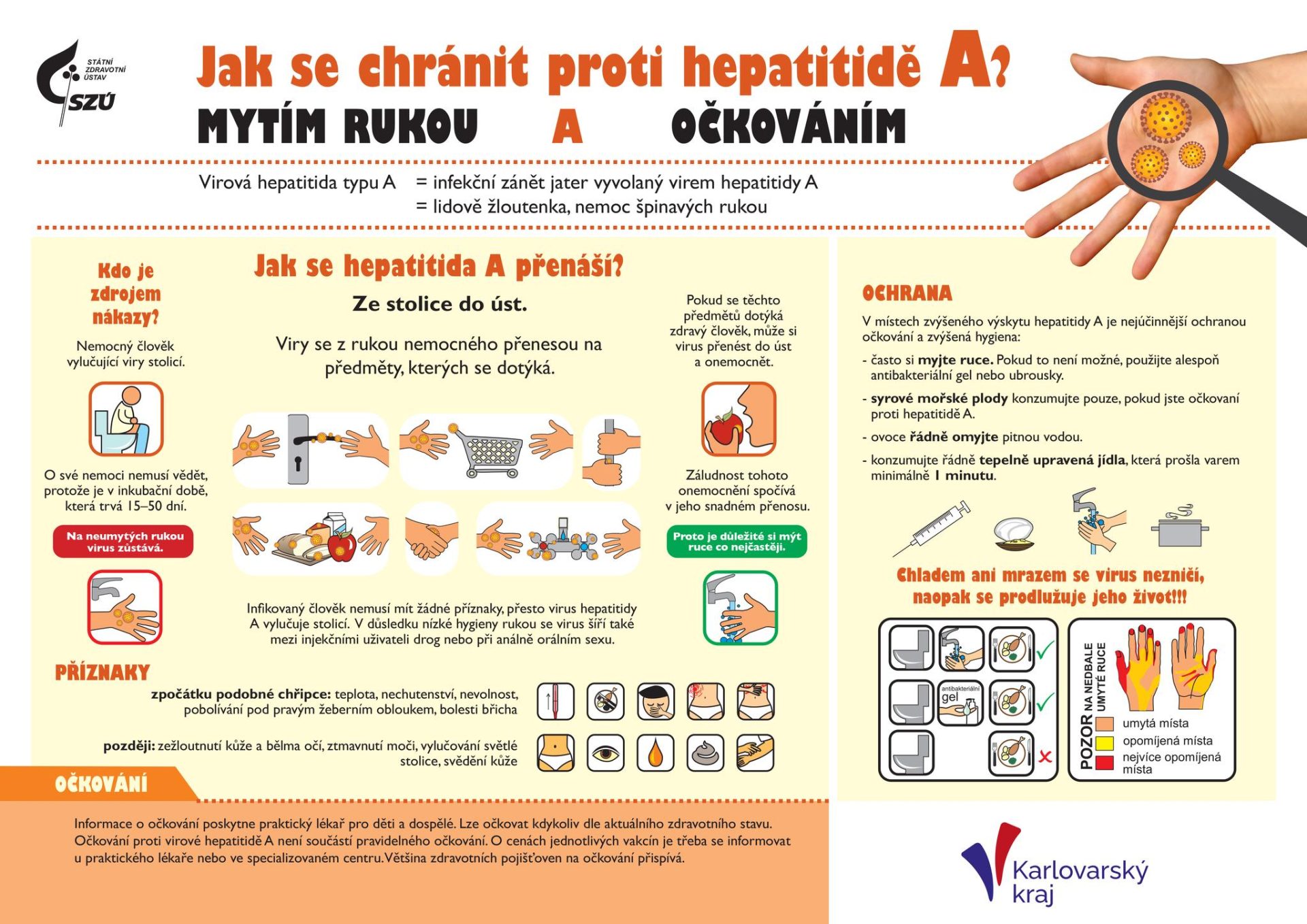 Boží Dar shared health advise on its Facebook account. | Image: Boží Dar Facebook
Hepatitis A is primarily transmitted through the fecal-oral route, meaning contaminated hands, surfaces, food, or water can all play a role. Because the virus can survive on surfaces for long periods, high-traffic communal areas are particularly risky. In Boží Dar, the municipality has ordered public organizations to step up cleaning, and hosts and businesses are being briefed on additional precautions. In addition, public areas, including restaurants, ski lodges, and shared bathrooms, are being disinfected more often to reduce the risk of transmission.
Health experts emphasize that hepatitis A vaccination is available and offers strong protection. Two doses of the vaccine can provide long-term immunity. For travellers planning to visit the affected mountain regions, especially if they will stay in communal or shared accommodations, vaccination is strongly recommended.
The European Centre for Disease Prevention and Control (ECDC) has raised concerns over the outbreak’s potential to spread across borders, due to the high volume of tourist traffic between Czechia and Germany. Genetic analyses suggest that the viral strains in the current outbreak are closely related to those seen in other Central European countries, underlining the need for a coordinated regional response.
 Boží Dar ski resort in Czechia. | Image: Boží Dar Facebook
Local authorities are calling for more intensive hygiene campaigns, targeted vaccination efforts, and better outreach to vulnerable communities. For ski resorts like Boží Dar, which rely heavily on both international tourism and day-visitors, the outbreak represents both a public health crisis and a potential economic risk.
If you’re planning a trip to Boží Dar or any nearby Czech mountain resort, consider the following precautions:
Wash your hands often and thoroughly — especially before eating and after using public facilities.
Use hand sanitizer when soap and water aren’t available.
Stay alert for symptoms of hepatitis A: early signs include fever, nausea, and abdominal discomfort, followed by jaundice (yellowing of the skin or eyes).
Talk to your doctor about getting vaccinated for hepatitis A — particularly if you’ll be staying in shared accommodations or spending time in high-risk areas.
 Boží Dar ski resort in Czechia. | Image: Boží Dar Facebook