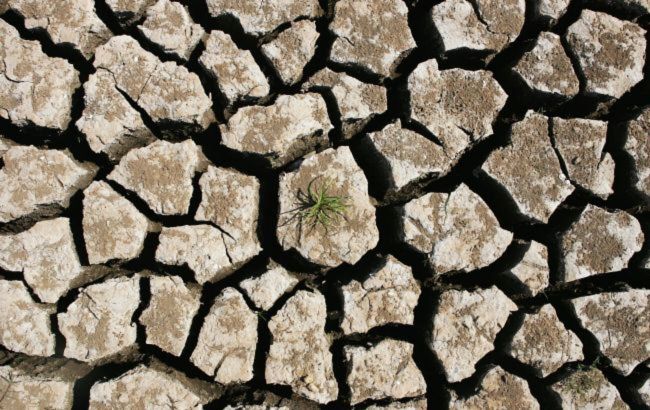
Iran has begun dispersing silver over clouds in an effort to trigger rainfall as the country grapples with its most severe drought in half a century.
Authorities have launched a large-scale cloud-seeding campaign across the Lake Urmia basin, releasing chemical substances from aircraft to encourage precipitation. Lake Urmia, once the largest lake in Iran, has almost entirely dried up, leaving behind an enormous salt plain. Officials say additional cloud-seeding operations are planned for both eastern and western parts of the Azerbaijan province, News.Az reports, citing foreign media.
President Masoud Pezeshkian warned last week that unless rainfall increases soon, the government may be forced to restrict water supply to Tehran. He even raised the possibility that residents in the capital could face temporary evacuation if the situation worsens.
Cloud seeding works by releasing chemicals such as silver iodide or potassium into clouds using aircraft or ground devices. These particles help water vapor condense and form raindrops. The method has been used for decades, including in the United Arab Emirates, which relies heavily on the technology to bolster its water reserves.
Iran’s meteorological agency reports that rainfall this year has dropped by an alarming 89 percent compared to long-term averages, describing this autumn as the driest in 50 years. Officials have announced plans to penalise households and businesses that use excessive amounts of water. Ahmad Vazifeh, head of the country’s climate and drought centre, said water levels in dams across Tehran, East and West Azerbaijan, and Markazi province remain in single digits and are in “critical condition.”
As the crisis deepens, hundreds of residents gathered near a mosque in Tehran on Friday to pray for rain. The following day, meteorologists recorded the first precipitation in the west and northwest of the country, along with the season’s first snowfall at a ski resort north of the capital.
The scale of the drought has forced Iran to consider long-term solutions, including the possibility of relocating the national capital from Tehran to southern regions. Official data shows that total rainfall in 2024 reached just 140 millimetres, far below the annual norm of 260 millimetres.