WANA (Nov 17) – Iran’s Deputy Secretary-General of the Drug Control Headquarters says intensified police measures have made drug smuggling routes through Iran increasingly costly, with over 96% of all narcotics seizures now carried out by Iranian police—a development officials say has reduced drug inflow, street distribution, and the visible presence of homeless addicts.
Speaking at a ceremony marking the destruction of 20 tons of non-usable narcotics in Kahrizak, Mohammad Zarei, the deputy head of the national anti-drug agency, described Iran’s fight against addiction as a symbol of national resolve and a clear example of the state’s commitment to confronting a major social threat.
“Four Decades of Heavy Sacrifice”
Zarei noted that the Islamic Republic has been combating narcotics trafficking “with full force” for more than 40 years, following directives from Iran’s Commander-in-Chief who has labeled addiction the country’s “greatest social harm.” He said this struggle has come at a high cost, with more than 4,000 police officers killed and 12,000 wounded in anti-trafficking operations.
Iran at the Front Line of a Global Crisis
According to Zarei, Iran remains at the forefront of the global fight against drugs, despite the worldwide scale of addiction: more than 300 million people consume some form of narcotics annually, and nearly 500,000 deaths occur each year from drug misuse—figures he said “far exceed the toll of wars or natural disasters.”
While multiple institutions contribute to anti-drug efforts, Zarei stressed that over 96% of all operations and achievements belong to the Iranian police, underscoring their leading role.
Seizures Decreasing Because Traffickers Are Changing Routes
Addressing claims that declining drug seizures in Iran reflect reduced production in neighboring regions, Zarei insisted the drop is largely due to traffickers avoiding Iran: “Crossing Iran and distributing inside the country has become too costly for traffickers,” he said, adding that intensified police action has forced drug cartels to seek alternative routes.
He argued that stricter enforcement has directly contributed to reduced drug inflow, fewer small-scale distributors, and a noticeable decline in visible addicts in public spaces.
Zarei expressed hope that Iran will one day be free of this “great social affliction,” allowing citizens to experience even greater security and stability.
20 Tons of Narcotics Destroyed in Tehran
The ceremony for the destruction of more than 20 tons of narcotics was held today, Monday, at the Soroush rehabilitation camp in the Kahrizak area, Tehran, with the attendance of Brigadier General Ahmadreza Radan, Commander-in-Chief of the Law Enforcement Command of Iran (FARJA), along with police officials and representatives of the Judiciary.
Also present at the ceremony were Brigadier General Iraj Kakavand, Chief of the Anti-Narcotics Police of FARJA; Brigadier General Abbas-Ali Mohammadian, Commander of Tehran’s Police; and Colonel Hossein Babapour, Chief of Tehran’s Anti-Narcotics Police.
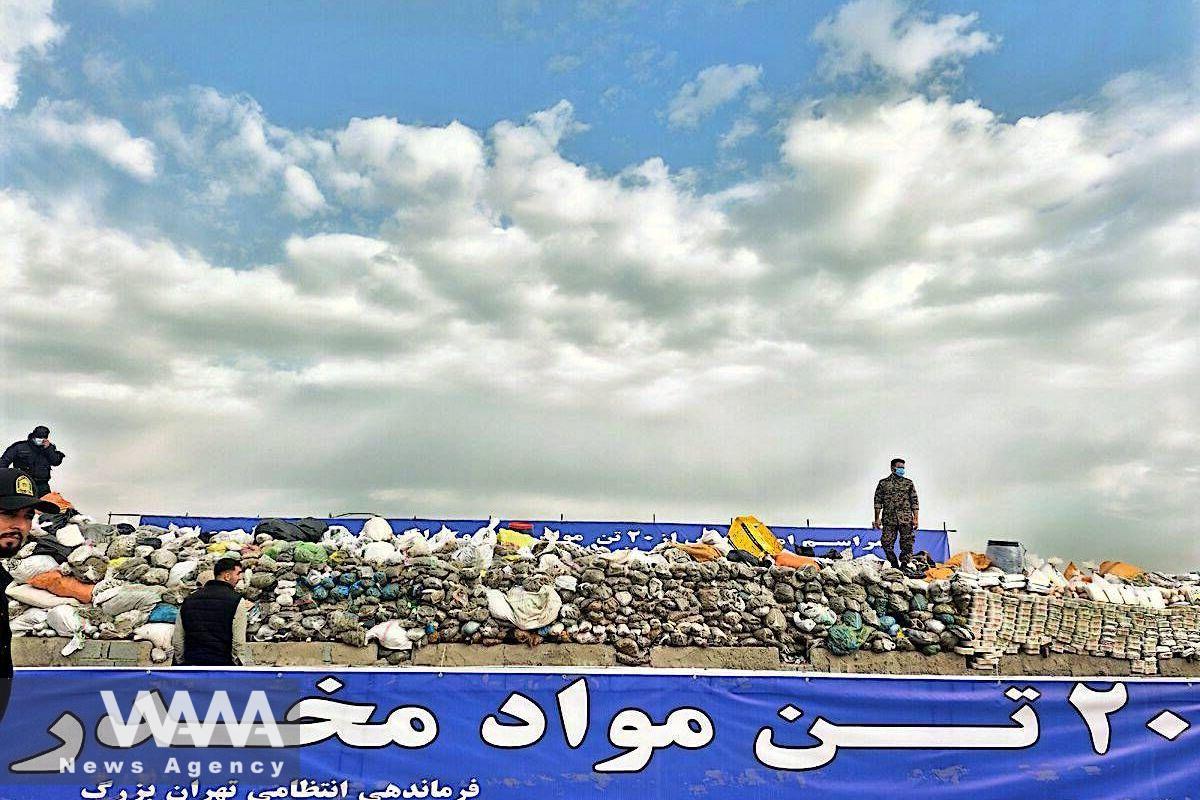
Iran Destroys Over 20 Tons of Narcotics in Tehran. Social media/ WANA News Agency