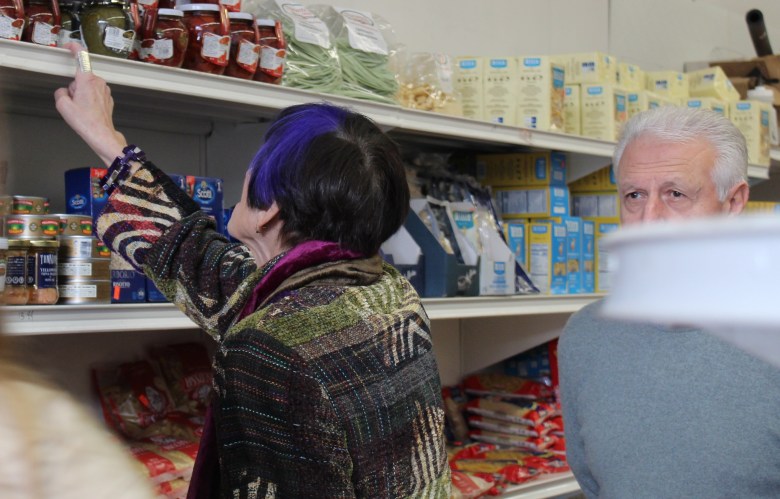
 U.S. Rep. Rosa DeLauro points out one of her favorite items to Mike DiVirgilio, the owner of Vinnie’s Italia Importing Company.
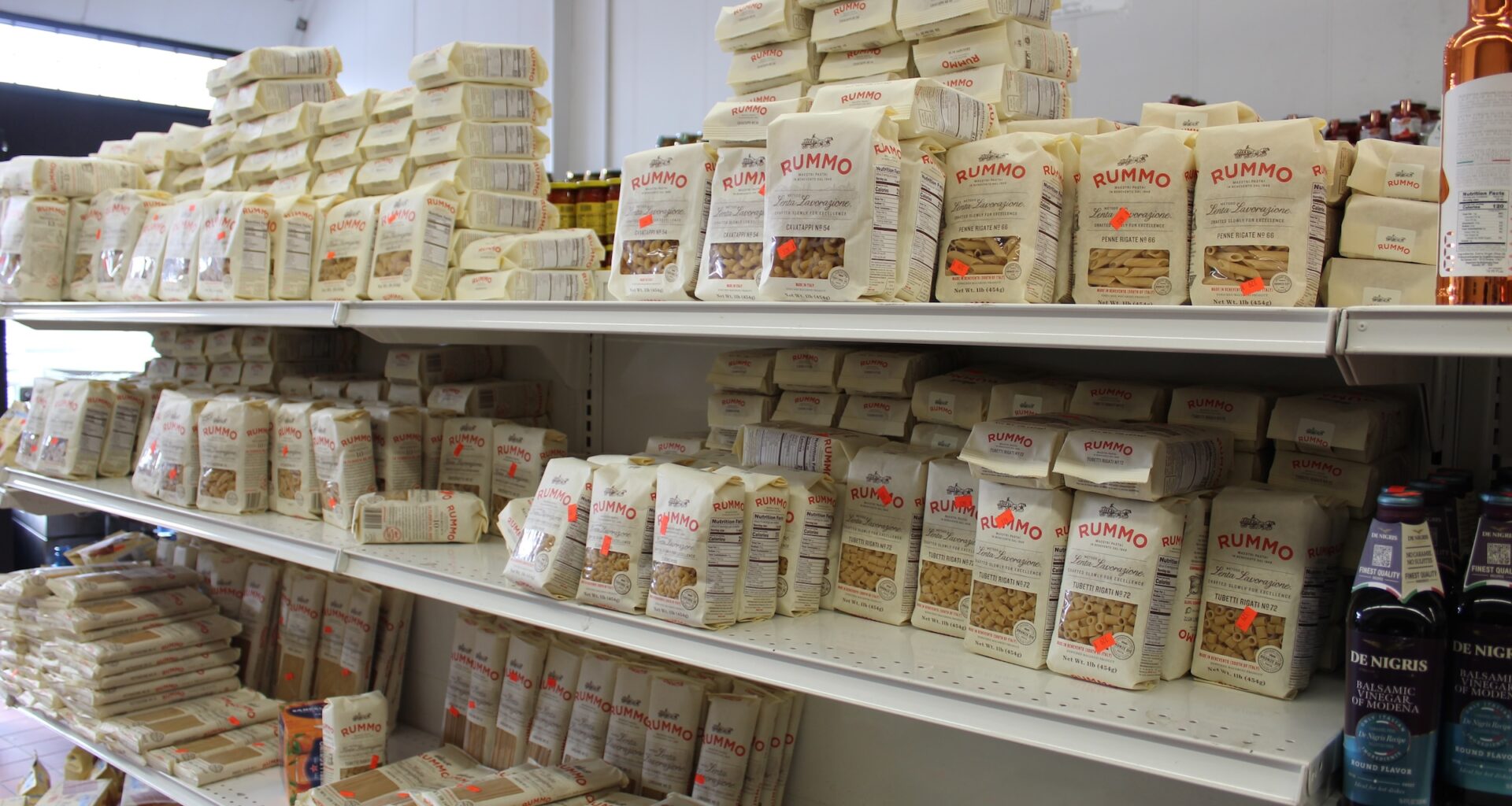
The city’s pastificios are boiling over the Trump administration’s proposal to impose a 107 percent tariff on their favorite Italian imports — including boxes of pasta, which a Wooster Square importer warned would double in price from $3 to $6.
Local importers and U.S. Rep. Rosa DeLauro gathered at Vinnie’s Italia Importing Company on Monday to slam the Trump administration for threatening new duties on Italian imports. DeLauro also announced that the bipartisan Italian American Congressional Delegation will send a letter on Wednesday urging the administration to pause the proposed tariffs.
“It’s crazy,” lamented Mike DiVirgilio, the owner of Vinnie’s. He said he’s already had to raise prices on his customers, which include Adriana’s, Goodfellas, Consiglio’s, Portofino, and 50 other restaurants throughout Southern Connecticut.
The pasta makers affected include Barilla, Rummo, La Molisana, and Garofalo.
Whether pasta is $3 or $6, families “still gotta use” it for dinner, said DiVirgilio. But as tariffs continue to push prices higher, customers have started cutting back on steak and other meats, impairing Vinnie’s economics. According to DiVirgilio, the price of Dutch veal — a popular choice for holiday dinners — has climbed from $9 to $12.50 per pound due to tariffs.
“We’re losing money,” said DiVirgilio. When asked what he would say to the Trump administration, he opted to say nothing, citing fear of being “arrested.”
Francesca Liuzzi Fiorillo and Nadia Liuzzi, part-owners of North Haven’s Liuzzi Gourmet Food Market, said they’ve watched customers “struggling to pay” the higher prices, especially on imported staples like canned tomatoes and olive oil.
We “couldn’t really prepare” for the tariffs, said Liuzzi Fiorillo, since over 90 percent of their goods are imported.
The family chooses to import for the better quality, she added. Pasta from Italy is made without preservatives, chemicals, or dyes, while much of what’s produced in the U.S. contains those additives, Fiorillo said. They manufacture in the U.S. when they can, like with cheese.
For the Liuzzi family, pasta is a centerpiece to family gatherings. “It’s a Sunday thing,” said Liuzzi. “Our grandma and grandpa would make it” for the whole family.
Their favorites are malfaldine — a thin lasagna noodle — and mezzi rigatoni — a short, small version of rigatoni.
“I definitely don’t agree” with Italian-American support for Trump, said Liuzzi Fiorillo, but added that, as a business owner, she prefers to stay mostly “neutral.”
On Monday, DeLauro described the cultural importance of pasta to Italian-American families like her own.
“Pasta is the most important staple in our house,” said DeLauro. She told the Independent that her favorite pasta shapes are linguine and macaroni, and she ate spaghetti with clams last night for dinner.
For her, pasta can be a way to “connect to a broader sense of self and broader history.” And, she said, with food prices having already risen by 25 percent over the last four years, a rising proportion of families living paycheck to paycheck, and the Trump administration dragging their heels on disbursing November’s food stamp payments, the new tariffs will only intensify the affordability crisis for American families.
“This is not like dealing with China,” argued DeLauro. Tariffs as high as what the Trump administration has proposed could stir the pot, impairing the long-standing relationship between U.S. and Italy.
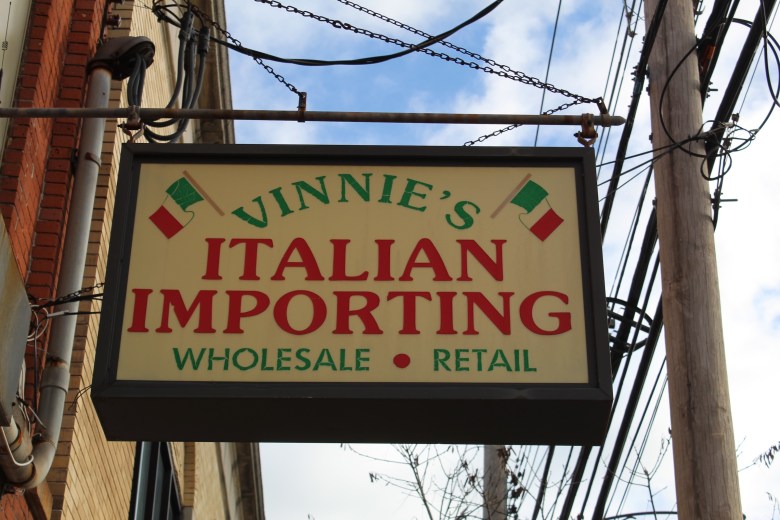 Vinnie’s on Grand Avenue.
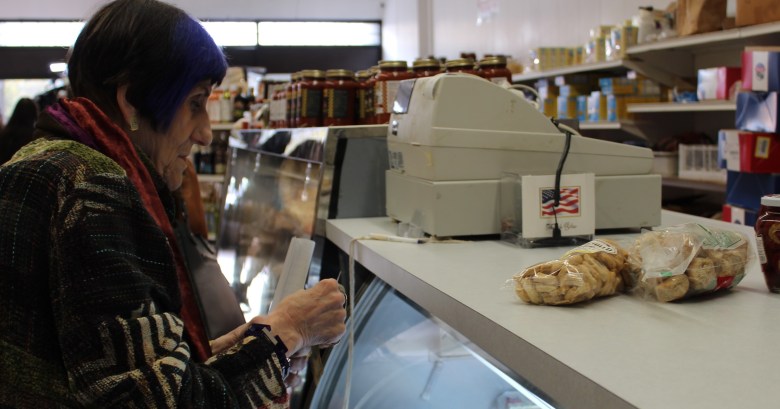 Among other things, DeLauro took home over a pound of chicken cutlets.
Related