By Joseph Lord
Contributing Writer
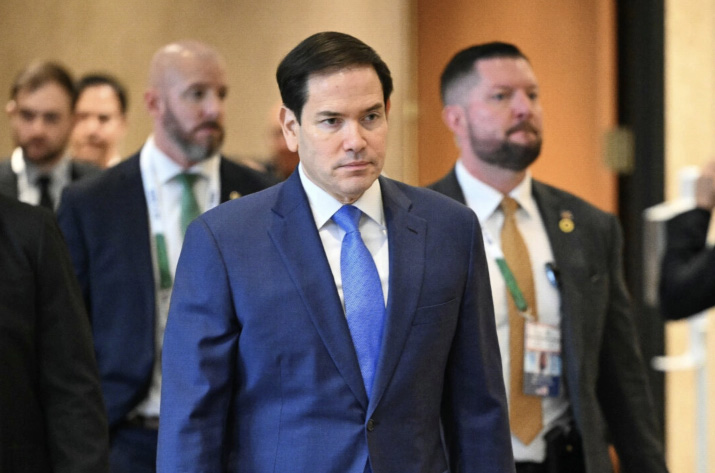
The United States will designate the Venezuelan Cartel de los Soles as a foreign terrorist organization, Secretary of State Marco Rubio announced on Sunday.
The administration has alleged that the Cartel de los Soles, or Cartel of the Suns, is led by Venezuelan President Nicolás Maduro and other high-ranking officials in the Venezuelan government and manages an international cocaine-smuggling operation. Maduro has denied the allegation.
The U.S. State Department will designate the cartel as a foreign terrorist organization effective Nov. 24, Rubio said in a statement published on the department’s website.
The move, which increases federal authorities’ ability to prosecute and pursue the organization, comes amid increasing tensions with Maduro’s socialist regime in Venezuela.
“Based in Venezuela, the Cartel de los Soles is headed by Nicolás Maduro and other high-ranking individuals of the illegitimate Maduro regime who have corrupted Venezuela’s military, intelligence, legislature and judiciary,” Rubio said. “Neither Maduro nor his cronies represent Venezuela’s legitimate government.”
The move comes several months after the U.S. Treasury Department in July labeled the Cartel de los Soles as a “specially designated global terrorist,” which allowed the government to block access to funds or assets controlled by affiliates of the group that are in the United States.
The Treasury Department also reported close ties between the cartel and Maduro.
“Today’s action further exposes the illegitimate Maduro regime’s facilitation of narco-terrorism through terrorist groups like Cartel de los Soles,” Secretary of the Treasury Scott Bessent said. “The Treasury Department will continue to execute on President Trump’s pledge to put America First by cracking down on violent organizations including Tren de Aragua, the Sinaloa Cartel, and their facilitators, like Cartel de los Soles.”
Rubio said that the Cartel de los Soles, alongside other designated FTOs like the Sinaloa Cartel and Tren de Aragua, is “responsible for terrorist violence throughout our hemisphere as well as for trafficking drugs into the United States and Europe.”
“The United States will continue using all available tools to protect our national security interests and deny funding and resources to narco-terrorists,” Rubio wrote.
Under Section 219 of the Immigration and Nationality Act, the secretary of state is authorized to designate foreign groups that engage in terrorist activity and threaten U.S. national security as an FTO.
Such a designation makes it a federal crime for anyone in the United States to assist the organization, and permits federal officials to order financial institutions to freeze access to assets connected to the organization.
Escalating Tensions
The designation comes in the midst of a series of U.S. military airstrikes on boats allegedly trafficking drugs.
U.S. military activity against alleged drug traffickers has been expansive, with the administration beginning the push with strikes in the sea around Venezuela, and since then, extending the activity into the eastern Pacific Ocean near Colombia’s coastline.
U.S. officials accuse Maduro of overseeing an international cocaine-trafficking conspiracy and using violent drug cartels to consolidate his power.
For months, U.S. military presence in the region has been building, prompting rising speculation about the possibility of a more expansive conflict with Venezuela.
In late October, Hegseth directed an aircraft carrier strike group to enter the area of responsibility of the U.S. Southern Command (Southcom) — which oversees the Caribbean, South America and the seas surrounding both — to reinforce the effort.
On Nov. 11, the Navy announced that the USS Gerald R. Ford — the United States’ state-of-the-art nuclear-powered aircraft carrier, the most technologically advanced in the U.S. fleet — and its strike group had arrived in the Southcom region.
The carrier, staffed by more than 4,000 sailors, is equipped with F/A-18 Super Hornet fighter jets and long-range Tomahawk cruise missiles.
On Nov. 14, U.S. President Donald Trump said that he has already decided on his next steps concerning the Maduro regime, signaling that Washington is preparing new military measures as its posture in the Caribbean expands.
“I sort of made up my mind,” the president told reporters aboard Air Force One when asked about recent high-level discussions within his administration regarding Venezuela and the amassing U.S. forces near its shores. He added, “I can’t tell you what it would be.”
War Powers
It’s unclear whether the administration intends to escalate military operations against Maduro’s regime, or whether Congress would sign off on such a move.
Under the War Powers Act of 1973, several regulations are placed on the president’s authority to commit U.S. troops to hostilities, including a requirement that the president report to Congress within 48 hours of deploying troops, and limiting the action to 60 days.
At that point, Congress must provide a formal declaration of war to continue the deployment.
A recent effort in Congress to limit the deployment via a War Powers Resolution failed in a 49-51 vote in the Senate. Two Republicans, Sens. Rand Paul, R-Ky., and Lisa Murkowski, R-Alaska, joined Democrats in backing the measure.
Other Republicans indicated at the time that they weren’t ready to censure the administration’s actions so far, but indicated their position could change if a deployment escalates or drags on.