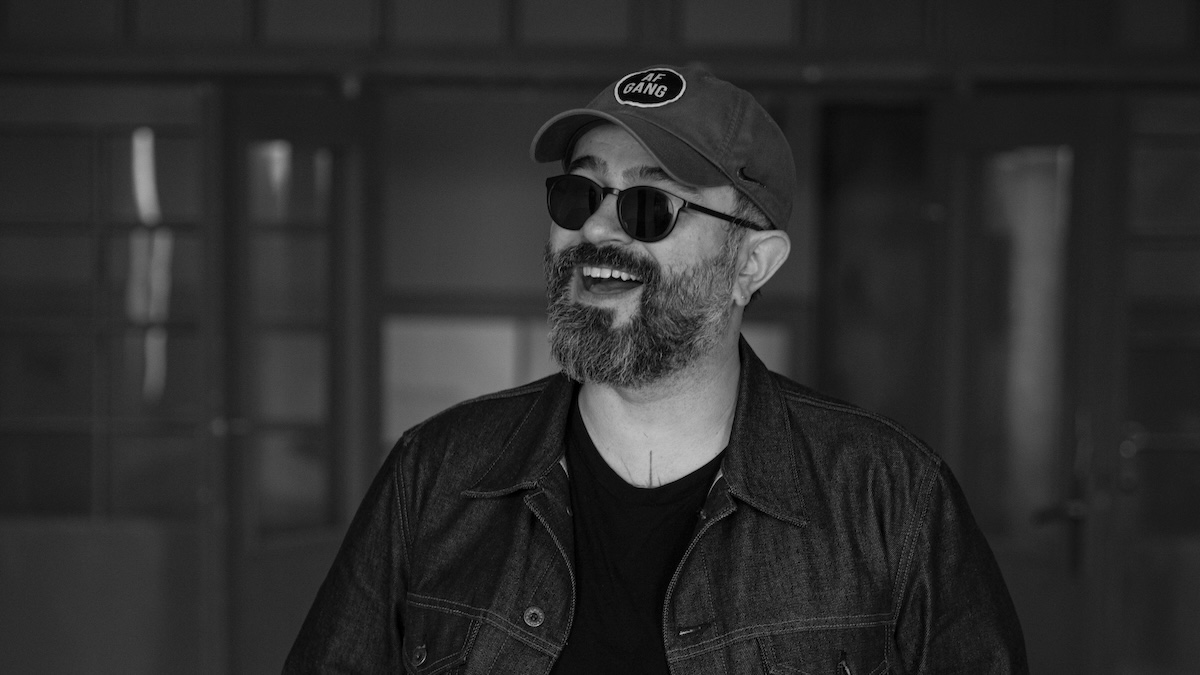
Romania’s alternative music scene is entering one of its most dynamic phases in decades, yet much of its energy still unfolds far from the spotlight. At the center of this quiet revolution stands filmmaker and musician Vlad Ilicevici, co-founder of the indie trio Orkid and the driving force behind Stray Lights, a grassroots community bringing together some of the most innovative post-punk, post-metal, and experimental bands in the country.
As Stray Lights returns in 2025 with renewed ambition, launching new showcases, recording sessions, and a collaborative platform designed to strengthen an often overlooked creative ecosystem, Ilicevici speaks with Business Review about why now is the best moment for Romanian alternative music, what independence truly means today, and how community-led models could redefine the future of the industry.
How do you define Stray Lights today?

We are a community of indie/ alternative/ post-punk/ post-metal bands from all over Romania and our aim is to help each other with everything we can, concerning gigs, touring, recording and so on. And also to raise awareness of the fact that Romania has a relevant, vibrant, up-to-date alternative music scene, which is unfortunately almost totally ignored by the state cultural institutions, private sponsors, festivals, clubs, promoters, and subsequently by the general audience. Romania is probably one of the only places in Europe where alternative music is not considered relevant as a cultural manifestation. And we are definitely trying hard to change that mind set.
It is also very important to define the “alternative music” concept in our view. It refers to the kind of music that is different from what the general audience is used to hear or listen to on the main media channels. It’s the music which constantly includes new things, unexpected experiments, and engages with the audience in a different way than the general audience is used to.

It is also the kind of music that constantly challenges, sometimes changes, and always helps to evolve the music industry itself.
And our history.

And the art.
And at some point of our lives, it helps us define who we are.

What made you decide to bring Stray Lights back in 2025?
There are more and more amazing alternative bands in Romania. Making music that would fit on most alternative stages in the world. Also, there is a young audience slowly building. It could be a melting point, a start, or hopefully a big bang.
The Stray Lights revival started as an idea at the beginning of the year, during some talks with Victor Dădaciu (of Cardinal, one of my favorite bands in the history of music). He is now managing with me almost all aspects of the community. But we are merely starting, as the aim is to get everybody in the community involved in the master plan. Which is to conquer the world, of course.
You’ve said that Stray Lights is about “coagulation, collaboration, and mutual help.” How does this actually manifest, through concerts, shared resources, or simply friendship?
I would say all of the above.
We are working on an extensive program of concerts/ showcases with all the bands in the community. We will also have a website running in a couple of weeks, and last but not least, we will publish live shows from all the bands in the community, to unlock national and international booking for everybody in the group.
But friendship is the key. We are all trying to help each other as humans, by sharing resources, information, and everything else there is to share. We’re all convinced that together we can change our part of the world.
Stray Lights was built around a DIY philosophy. How do you sustain that spirit while still aiming for professionalism and growth?
At the moment, we are running on a huge amount of enthusiasm. But at some point in the near future we will have to form a team and hopefully find some financial resources to move things further. The new Stray Lights Sessions series in Control Club will bring fresh indie acts on stage every two weeks.
What’s the vision behind this format, and how do you choose the line-ups?
We are trying to have all the bands in our community showcased in the next 5 or 6 months, and also have the concerts recorded, filmed, mixed, and published as we do this. Every event will include two or three different bands that share some stylistic or conceptual aspects.
How do you balance creative freedom with the financial challenges of being fully independent? Can community-based models like this ensure sustainability?
It is not a choice. We simply have to. There is no label/ institution/ production company that deals with bands like the ones in our community. The real alternative music in Romania is very far from being sustainable. None of the bands in the alternative music scene in Romania can provide a minimum income for their members. There are some bands that refer to themselves as being alternative, but they are in fact as mainstream as possible, that are maybe fully professional (as in they do not have other jobs), but not many, for sure.
Community based models like Stray Lights are hopefully a step forward towards a real and sustainable alternative music industry in Romania. But at this moment we are very far from it, unfortunately.
As I said, we are still working while being fueled by an enormous amount of enthusiasm, but it will not last forever. Bands are dismantling all the time. Even amazingly good ones.
Spaces like Club Control have become anchors for independent culture. How important are these venues to the ecosystem you’re building? Why?
Control Club was (and continues to be) absolutely essential for what happened locally with the alternative scene in the last 20 years. For the kind of music we love, Control Club is the only venue willing and financially capable of organizing 4 or 5 concerts every week, and the only venue that manages to bring relevant, emerging or even established alternative bands from all over the world. It is probably the cornerstone of our emerging scene.
For an international audience unfamiliar with Romania’s alternative scene, how would you describe its energy right now?
It is relentless. It is unquestionably the best time for alternative music in Romania. I have been actively searching for emerging Romanian alternative bands for more than 30 years now, and from my perspective I am positively sure that we are living the best of times, music-wise.
But for things to really evolve, we need all the support we can get. From the state institutions that deal with culture, from the private sponsors, music venues, and most importantly from the audience. All of us are responsible for the survival and (hopefully) the progress of the music we love.
What does “independent” mean to you in 2025?
For me, personally, it means absolutely nothing. We are all independent in the Romanian alternative music scene. There is no small/ medium/ big label that is interested at all in this kind of music, and even less in telling us what and how to do it.
It might seem like heaven, creatively speaking. But it also means bands struggle to survive constantly. And most of the time, they don’t.