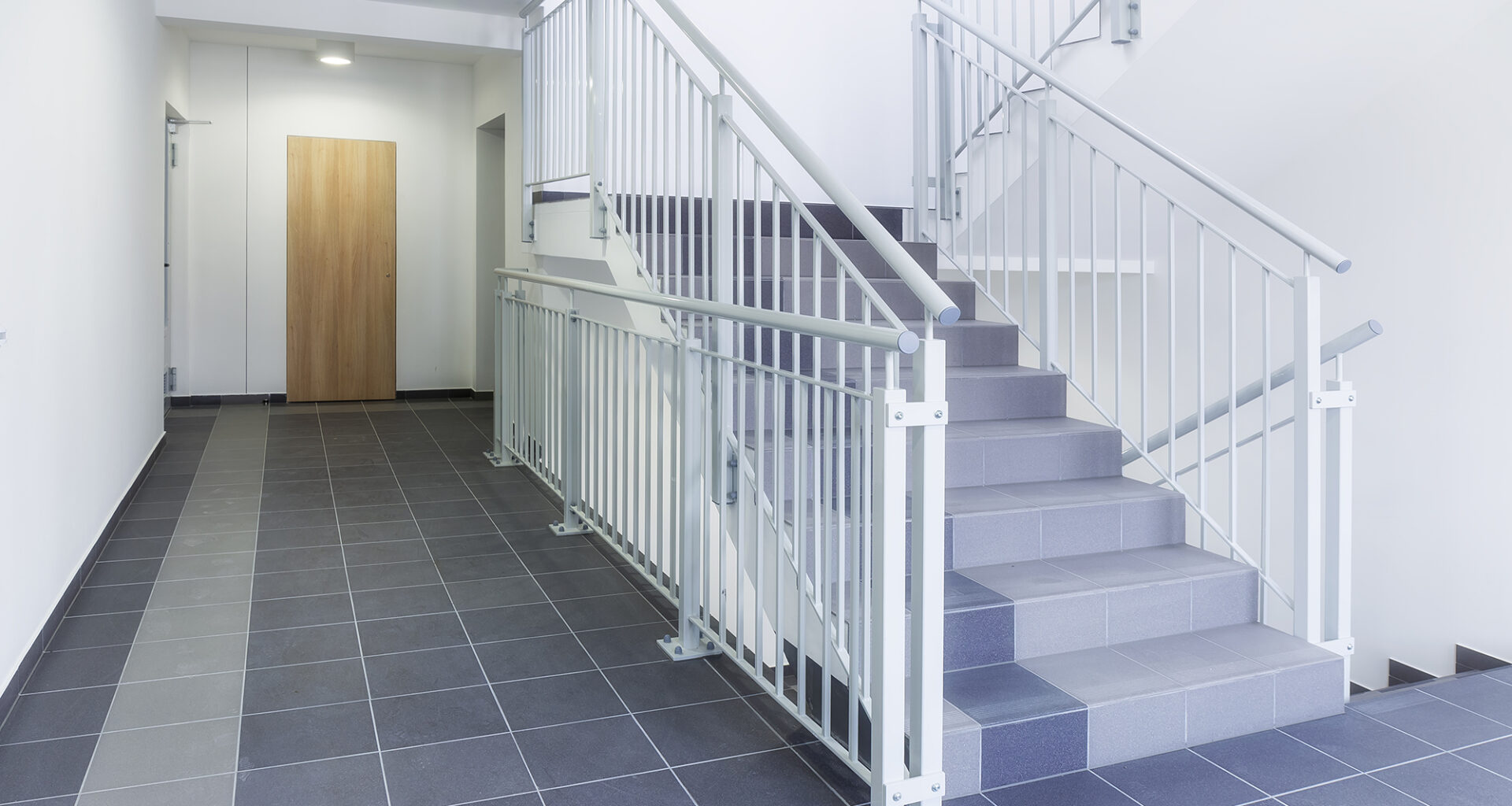
 A staircase in an apartment building. Photo via iStock Photo
Though it doesn’t sound like a big deal that Culver City changed the minimum number of staircases apartment buildings must have, this obscure tweak could supercharge urban housing construction in California, supporters say.
As CalMatters’ Ben Christopher explains, nearly every other city in the U.S. requires buildings taller than three stories to have at least two staircases that are connected by a corridor. But in September, the Los Angeles County city passed an ordinance that allows complexes up to six stories tall, under certain conditions, to have only one staircase.
Some pro-housing advocates welcome the shift, arguing it not only could boost city housing construction, but it could also encourage building more attractive units that have more windows and are better lit.
Bubba Fish, the Culver City councilmember who introduced the single-stair ordinance: “This is bigger than a staircase. The vast majority of the world builds apartments this way. We are an outlier. It touches on the housing crisis, the affordability crisis.”
But despite data that found that single-stair buildings and other residential structures have both low and equal fatality rates, critics say the rule change is dangerous because it gives occupants one fewer means of escape during a fire or other emergency.
Sean DeCrane, with the International Association of Fire Fighters union: “What if something happens and that one stairwell is blocked?”
Regardless of the concerns, Culver City is moving ahead with its new standard. It will also likely be the last California city to do so for some time: Legislators passed a law this summer to freeze changes to local building codes through at least 2031. The city passed its ordinance before the law went into effect, giving itself six years to show California how effective this new policy could be.
🗓️CalMatters Events in your community:
San Jose: What will power California’s AI future? Join us today for a timely conversation on how California can balance the rapid rise of AI-driven data centers with its clean-energy goals. Speakers include Lori Mitchell, Director of San Jose Clean Energy and Ahmad Thomas, CEO of Silicon Valley Leadership Group. Register.
Other Stories You Should Know
Now featuring: CalMatters’ photojournalism
 Gov. Gavin Newsom speaks to the press after California voters passed Proposition 50 at the California Democratic Party headquarters in Sacramento on Nov. 4, 2025. Photo by Jungho Kim for CalMatters
From CalMatters visual editor Miguel Gutierrez Jr.:
The visuals team at CalMatters understands the power that photography brings to our reporting. This week, we’re highlighting five photos that show exactly why.
In the photo above by Jungho Kim, Gov. Gavin Newsom’s profile is illuminated by a distant light, as he addresses supporters after the passage of Proposition 50. The frame is clean and simple and the governor is the focus of this victory lap.
In the first photo below, Jules Hotz captures the intimacy and privacy of voting. She places herself low and uses the empty voting booths to layer the frame. The focus is solely on the voter and their right to cast a secret ballot, a core value of the U.S.
Next, photographer Fred Greaves takes us underwater for a rare glimpse of the invasive golden mussel. The mussels are clustered on a submerged object and a distorted reflection is visible above.
In the third photo, taken by me, former Newsom aide Dana Williamson is surrounded by the press as she leaves the federal courthouse in Sacramento. The image captures the frenzy of the moment, as Williamson walks to a waiting vehicle.
Lastly, National Guard troops sort produce at an L.A. County food bank. The slightly tilted image gives a sense of motion and urgency. The red bell peppers stand out against the muted browns of the boxes and the troops’ uniforms.
 A voter fills out their ballot at the Main Street Branch Library Orange County voting center in Huntington Beach on Nov. 4, 2025. Photo by Jules Hotz for CalMatters
 An underwater view of golden mussels growing on a dock at a Delta boatyard in Stockton on Oct. 23, 2025. Photo by Fred Greaves for CalMatters
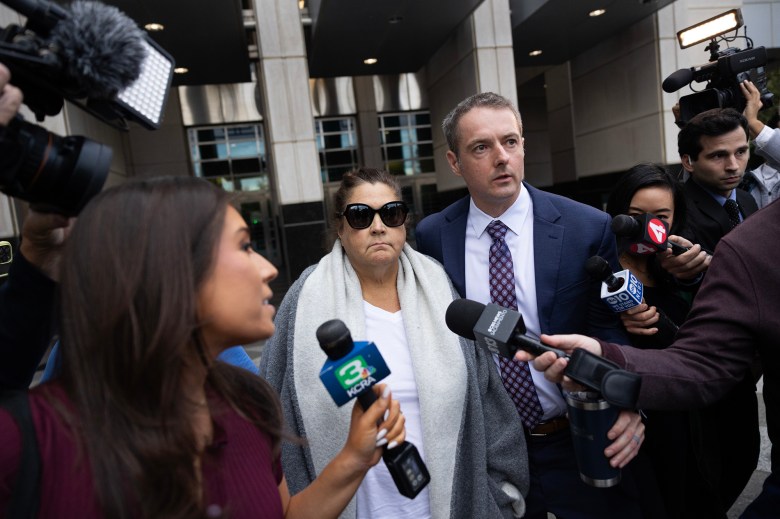 Newsom’s former chief of staff, Dana Williamson, exits the Robert T. Matsui Federal Courthouse in Sacramento after her arraignment on Nov. 12, 2025. Photo by Miguel Gutierrez Jr., CalMatters
 National Guard troops sort fresh produce at Los Angeles Regional Food Bank in preparation for the end of SNAP benefits in Los Angeles on Oct. 30, 2025. Photo by J.W. Hendricks for CalMatters
UC, union still at odds
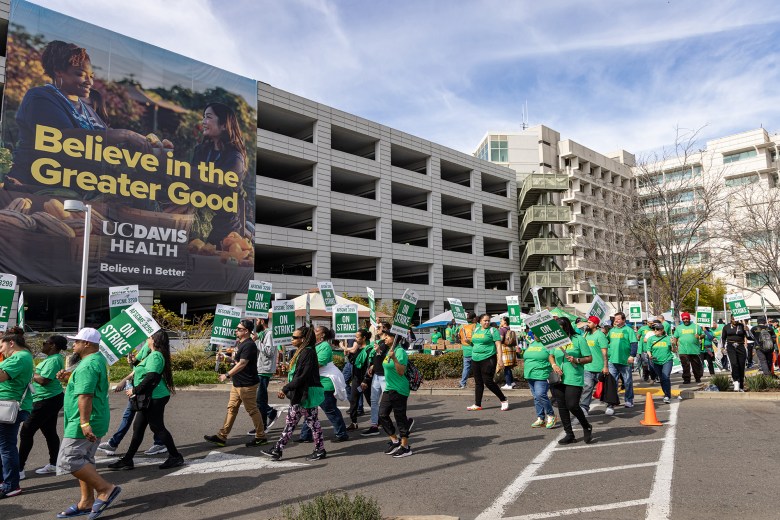 University of California’s service and patient care workers strike at UC Davis Medical Center in Sacramento on Feb. 26, 2025. Photo by Penny Collins, Reuters
The union representing 37,000 custodians, hospital technicians, food service workers and other staff at the University of California are wrapping up their two-day strike today.
After 16 months of negotiations, AFSCME Local 3299 is striking for higher wages, better staffing management and housing benefits. Locations for the walkoff include nine universities across the state and nine UC medical centers.
The university system said in a statement that the union has not “presented any substantive counterproposals since April 2025,” and that the UC in June began implementing some provisions of its most recent offer, including a $25 hourly minimum wage.
Union members from the California Nurses Association and the University Professional and Technical Employees were expected to also strike Monday with AFSCME, but both unions reached tentative agreements with the UC last week. As a result, the university system averted a much larger strike that would have totaled more than 80,000 workers.
And lastly: Sober housing and HOA fines
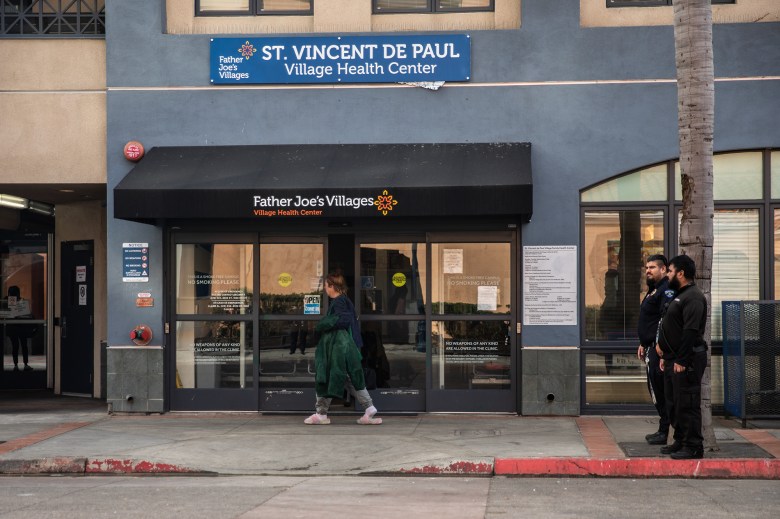 The entrance of the St. Vincent De Paul Village Family Health Center at Father Joe’s Villages in San Diego on Jan. 31, 2025. Photo by Adriana Heldiz, CalMatters
Newsom vetoed a bill in October that would have let cities and counties spend up to 10% of state homelessness funds on recovery housing, where people live in a sober environment. CalMatters’ Marisa Kendall and video strategy director Robert Meeks have a video segment on why he rejected the proposal as part of our partnership with PBS SoCal. Watch it here.
And check out another video based on reporting by CalMatters’ Nadia Lathan about a bill that did pass — a new state law that caps homeowners association fines at $100. Watch it here.
SoCalMatters airs at 5:58 p.m. weekdays on PBS SoCal.
California Voices
CalMatters columnist Dan Walters: The arrest of Newsom’s ex-aide Williamson opens a window into the secretive world of California’s professional political operatives.
CalMatters contributor Pedro Rios: Once Border Patrol takes over key positions in ICE, there will likely be a dramatic shift with how immigration agents conduct enforcement operations — one marked with more cruelty and little accountability.
Other things worth your time:
CA Republicans are divided on Trump’s immigration enforcement policies, poll finds // Los Angeles Times
Feds: Ex-Newsom aide used job to pressure CA into settling suit with former client // The Sacramento Bee
Scott Wiener defeated CA’s NIMBYs. Can he fix America’s housing crisis? // Mother Jones
US Rep. Eric Swalwell’s campaign for CA governor looks inevitable // Politico
More people are leaving CA than any other state. Where are they moving? // The Fresno Bee
After nearly three years, these Bay Area cities still lack a state-approved housing plan // The Mercury News
November deluge breaks rainfall records. New storm will bring snow to Southern CA // LAist