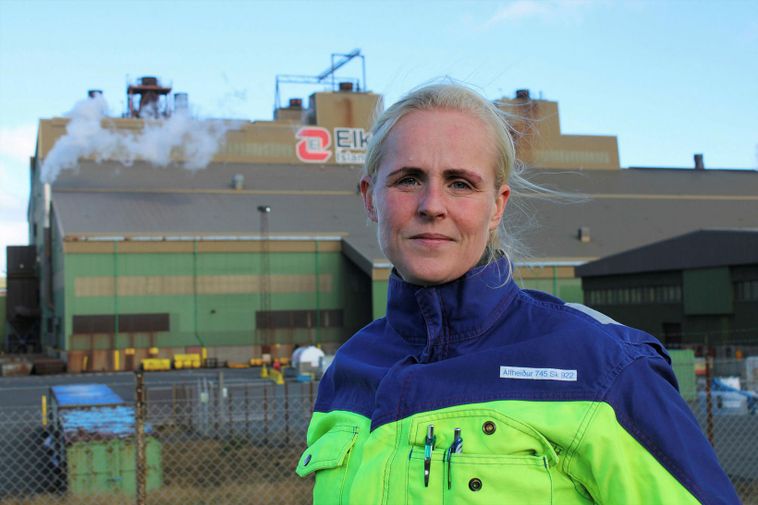
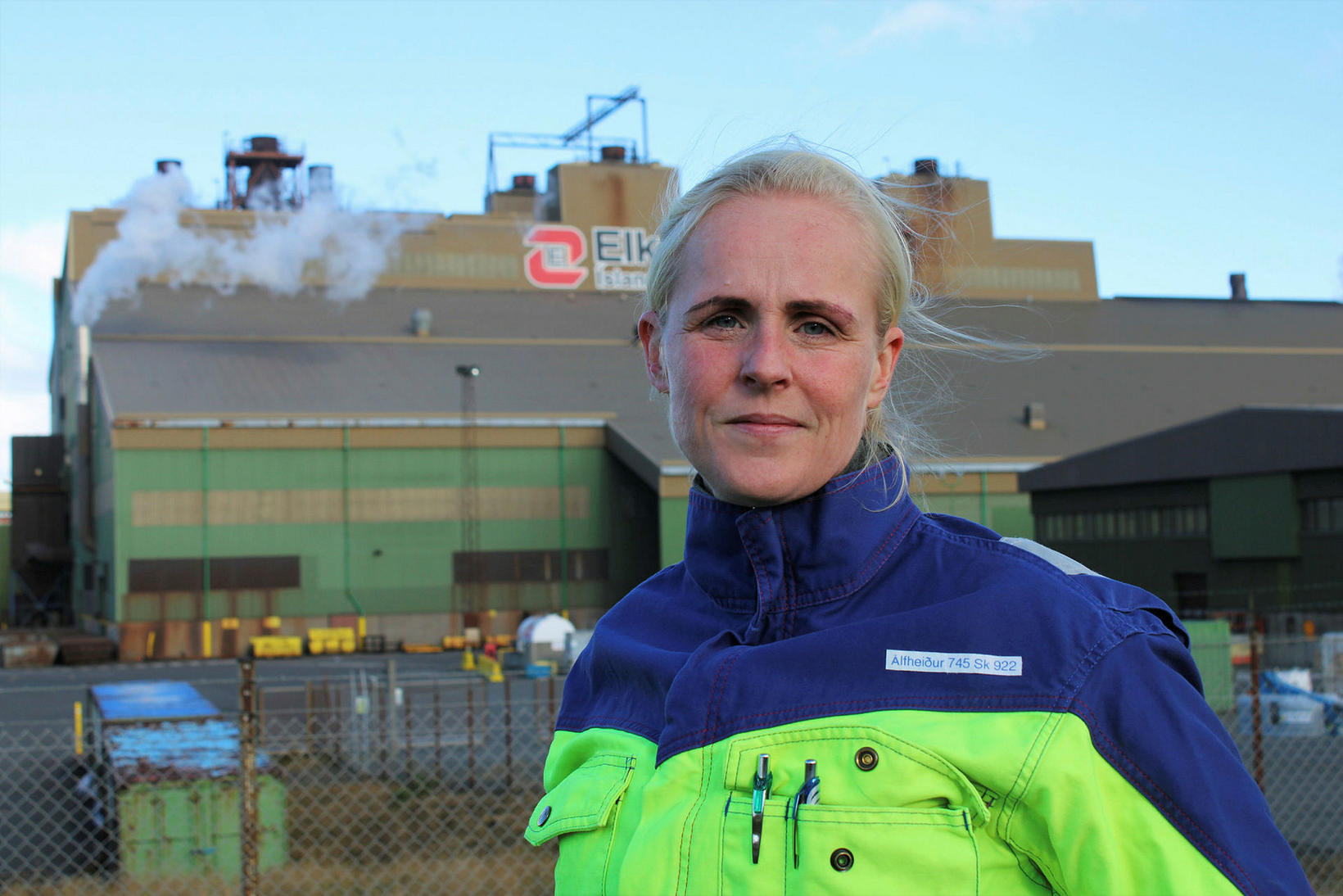
Álfheiður Ágústsdóttir, CEO of Elkem in Iceland.
mbl.is/Sigurður Bogi
The CEO of Elkem in Iceland says the European Commission’s decision not to grant Iceland and Norway an exemption from safeguard tariffs on ferrosilicon is a terrible disappointment. A new reality has now taken hold, and the company must wait to see how events unfold.
“We’re still landing after the decision, and now we need to see how the markets will react to this, and then plan accordingly. That’s what we’re focusing on at the moment,” says Álfheiður Ágústsdóttir, CEO of Elkem in Iceland, noting that Elkem also sells to Asia and the United States.
“But there is so much uncertainty about what will actually happen in the markets: how will prices shift? How might volumes move between producers across different markets? We simply have to monitor this new reality and try to understand how to operate within it. But of course, it is extremely disappointing that the EEA countries are now on the outside and no longer part of the internal market.”
Clause for further dialogue included in the decision
The vote on the safeguard measures was postponed twice after it became clear the countries would not receive exemptions. When asked whether there was any hope that the situation might change, Álfheiður says it was known that they were facing a steep uphill struggle. She believes both Iceland and Norway did everything within their power to try to prevent the European Union’s decision.
“I don’t see anything we could have done differently or better in that regard. The positive news, perhaps, is that the decision includes a clause allowing for dialogue with us as the impacts start to emerge. That at least leaves a window open for discussions as things become clearer.”
Positive and negative scenarios already mapped out
When asked, she says it is not yet possible to determine whether there will be cutbacks or layoffs at Grundartangi.
“We always keep the toolbox ready here at Grundartangi, and we will do everything in our power to navigate these circumstances as well as we can. This does, of course, weaken our ability to respond if we experience shocks in other markets, so naturally we have mapped out both worst-case scenarios and more positive ones. But now we need to let things play out.”
Legal action discussions likely
When mbl.is spoke with Álfheiður last week about the measures, she said filing a breach-of-agreement case before the EFTA Court had not been discussed, although many have argued that the European Union is violating the EEA Agreement with these actions.
She says legal action has still not been discussed at this point, but she does expect such conversations to take place in the coming days.
“But as I’ve said: we now simply have to absorb this new reality. The one positive aspect is that the uncertainty is gone. There is a decision, and now we can start working from that.”