Published on
November 19, 2025

In a stunning revelation, archaeologists in Toulon, southern France, have discovered the remnants of a new coastal settlement in the 2nd century BC. This excavation, the very first conducted under the premises of Toulon’s strategically important naval base, exposes new Mediterranean trading relations and the role of the base in the naval expansion of France.
The new findings are transforming our understanding of Toulon’s evolution from a pre-Roman settlement to a pivotal position in the maritime defense of France. The excavation’s leader, the French National Institute for Preventive Archaeological Research (Inrap), comments on the unprecedented discovered, describing it as the first maritime history of the entire region, which opens a new chapter in the history of Toulon’s naval heritage and culture.
Because of the new findings, the excavation has also opened new avenues for tourism, which especially focuses on the important or previously unknown artefacts discovered. With the new findings, the city of Toulon is likely to attract those interested in naval heritage and ancient history to explore the remnants of the past.
Toulon’s New Role as a Cultural Tourism Hub
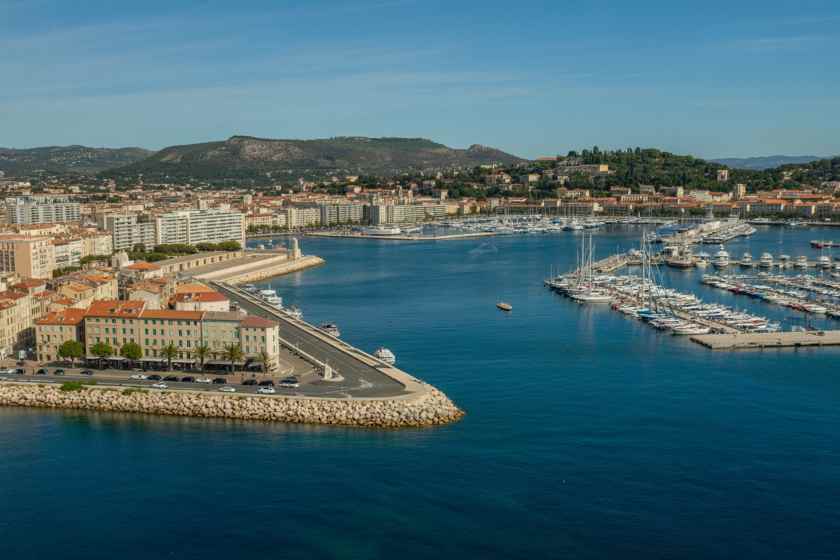
Toulon, a southern French Mediterranean port city, has long been known for its naval significance as a city with one of the largest naval bases in the country. However, the recent find of a 2000-year-old port built at the same time as the naval base represents a broadening of Toulon’s cultural appeal. For centuries, Toulon has been a major port, and the cultural discovery represents a significant connection to the Mediterranean trade route arteries that supported the early civilisation.
Like many of the southern ports, Toulon attracted military and maritime enthusiasts as it was the birthplace of French naval power. With the recent discovery of the site, Toulon will have major archaeological and historical appeal as well. Visitors can now experience a major port of the naval base which has been active for centuries, while also walking on the overdue and ancient sites to view the base facilities. This will provide a major experience of the diversity of Toulon through time.
The site offers an experience where people can see different levels of a historical layer. A settlement of Toulon once existed before the empire of Rome. Today, Toulon is a military port. However, it will have a different narrative supporting a rich piece of history. This diverse and rich piece of history is to be discovered and explored.
Discovering New Archaeological Sites
An excavation project at Toulon naval base stayed out of the public eye until recently. Now that the excavation is completed, the base is expected to be opened to the public for site visits that were previously restricted. Visitors will be able to view the ancient ruins of early Mediterranean commerce and the trading structures of the site as well as the educational components of the site.
Artefacts recently recovered from the site, including tools, pottery, and trading goods, are expected to be displayed at the local museums, adding to the tourism of the region. This discovery and the artifacts from the site will be a focal point for educational tourism centered on the Mediterranean and early maritime cultural interchanges of the region that led to modern trade.
Along with the archaeological attraction, Toulon’s port is also a superior attraction for tourists fascinated with the maritime history of France. The ancient and modern attractions of Toulon, including museums of the French Navy, the Mediterranean’s historic and scenic beaches, and the historic ruins that illustrate Toulon’s unique position over the centuries offer a diverse experience.
A New Chapter for France’s Maritime and Cultural Tourism
Toulon’s new archaeological site extension enriches France’s diverse and cultural tourism and enhances the depth of the history and the art tourism France offers — and the opening allows tourists a more profound and direct encounter with ancient history, especially its foundations in Mediterranean trade, military defense, and seafaring strength.
The site’s incorporation into the overall Experience of Toulon’s Tourism Integration speaks to an increasing interest in Heritage Tourism. Here, tourists explore the intersection of ancient and modern military history and its varied and complex historical narratives. With the rise of Cultural Tourism in France, and specifically Mediterranean Heritage tours, Toulon has begun to improve and position itself as a more dynamic, vital, and important port of call.
In keeping with global tourism trends, the project, as a site for one of the world’s archaeological finds, is anticipated to significantly integrate the New Model of Sustainable Tourism. Instead of integrating in the architectural sense, which is the norm, Toulon is destined to care for of a site, protect its history, and by doing so enrich the world of travel for generations.
An uplift for Economic Activities in the Toulon Area
Since the site runs the risk of becoming a major attraction in the city of Toulon soon, there will be a good number of visitors, and all of the nearby businesses, including restaurants, hotels, and sightseeing agencies, will enjoy the benefits of increased foot traffic and increased cash flow. Cultural tourism has and will continue to positively impact the economy of Toulon. This addition will undoubtedly fuel more investments in other cultural and heritage sites.
The site opening will contribute to the tourism offerings and amenities. These amenities currently include the captivating coastal scenery, the gorgeous old town of the city, and the extending lively markets. Toulon is soon to be a tourist destination for those in search of a combination of the new archaeological site, and a plethora of cultural and natural possibilities.
