Diplomatic dispute deepens between Tokyo and Beijing over Taiwan remarks by Japanese Prime Minister Sanae Takaichi.
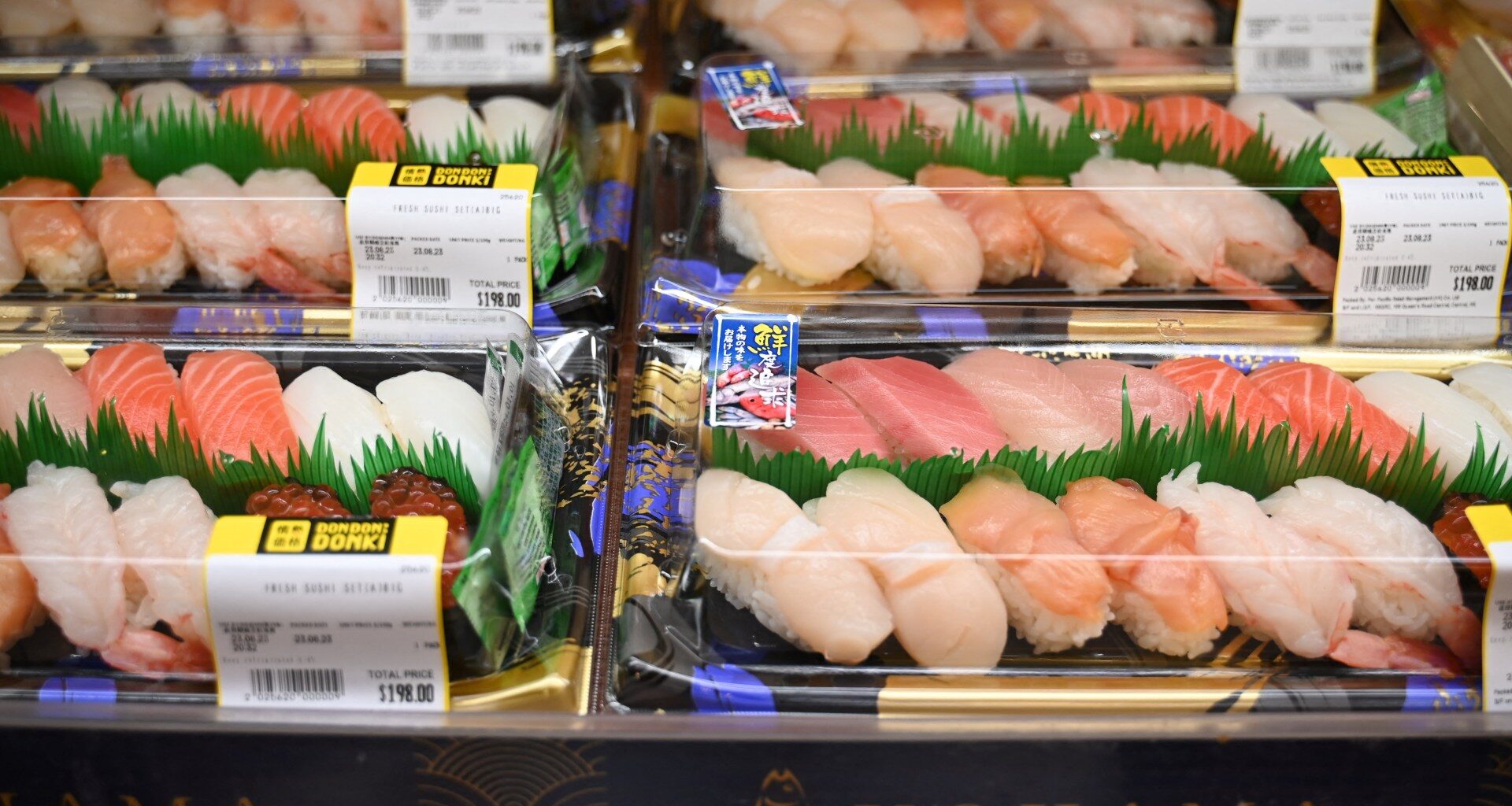
China will again ban all imports of Japanese seafood as a diplomatic dispute between the two countries escalates, Japanese media report.
Japanese public broadcaster NHK and Kyodo News agency said on Wednesday that the seafood ban follows after China earlier this month lifted import restrictions on Japanese marine products, which were imposed by Beijing in 2023 after the release of treated radioactive water from Japan’s crippled Fukushima nuclear plant into the sea.
Recommended Stories list of 4 itemsend of list
Kyodo News, referencing sources with knowledge of the matter, said China has told Japan that the reimposition of the ban was due to the need for further monitoring of the water from Fukushima released into the Pacific Ocean.
But the ban comes amid a deepening crisis in relations between Beijing and Tokyo over remarks by Japanese Prime Minister Sanae Takaichi. The premier told parliament on November 7 that a Chinese attack on Taiwan, which threatened Japan’s survival, was one of the few cases that could trigger a military response from Tokyo.
Takaichi’s comments were met with a wave of criticism by Chinese officials and state media, prompting Japan to warn its citizens in China to take safety precautions and avoid crowded places.
In a post on X following Takaichi’s comments, the Chinese consul general in Osaka, Xue Jian, threatened to “cut off that dirty neck”, apparently referring to the Japanese prime minister. Tokyo said it had summoned the Chinese ambassador over the now-deleted social media post.
Beijing has also advised Chinese citizens to avoid travelling to Japan and demanded that Takaichi retract her remarks, though Tokyo said they were in line with the government’s position.
Seeking to defuse the row, Masaaki Kanai, Japan’s top official in the Ministry of Foreign Affairs for the Asia Pacific region, held talks on Tuesday in Beijing with his Chinese counterpart, Liu Jinsong.
“During the consultations, China once again lodged a strong protest with Japan” over “Takaichi’s erroneous remarks”, Chinese Ministry of Foreign Affairs spokeswoman Mao Ning said.
“Takaichi’s fallacies seriously violate international law and the basic norms governing international relations”, Mao said, adding the Japanese premier’s comments “fundamentally damage the political foundation of China-Japan relations”.
‘Very dissatisfied’
Al Jazeera’s Katrina Yu, reporting from Beijing, said the visit by Kanai to Beijing was seen as an effort by Tokyo to de-escalate tensions and communicate to China that Japan’s stance on independently-ruled Taiwan, which Beijing claims as its own territory, has not changed despite Takaichi’s remarks.
“It seems there were no concrete outcomes, but what we have seen, though, is some footage following the meeting of these two diplomats parting ways, and I think it really speaks for itself. We have very cold body language from both of these diplomats,” Yu said.
“Liu Jinsong had his hands in his pockets, refusing to shake hands with the Japanese senior diplomat,” Yu said, adding that the Chinese official said afterwards that he was “very dissatisfied” with the meeting.
Liu Jinsong, director-general of the Department of Asian Affairs of the Chinese Foreign Ministry, met with Masaaki Kanai, director-general of the Japanese Foreign Ministry’s Asian and Oceanian Affairs Bureau, on Tuesday.
Following the meeting, Masaaki Kanai has left the Chinese… pic.twitter.com/rdAy2YJruQ
— China News 中国新闻网 (@Echinanews) November 18, 2025
Before the most recent seafood ban, China accounted for more than one-fifth of Japan’s seafood exports, according to official data.
The dispute has also engulfed other areas of China-Japan relations, with China Film News, which is supervised by the state-backed China Film Administration, announcing that the release of two imported Japanese movies would be postponed amid the dispute.
The two movies were originally expected to be released on December 6 and November 22, respectively, according to review site Douban.