Sign up for the Slatest to get the most insightful analysis, criticism, and advice out there, delivered to your inbox daily.
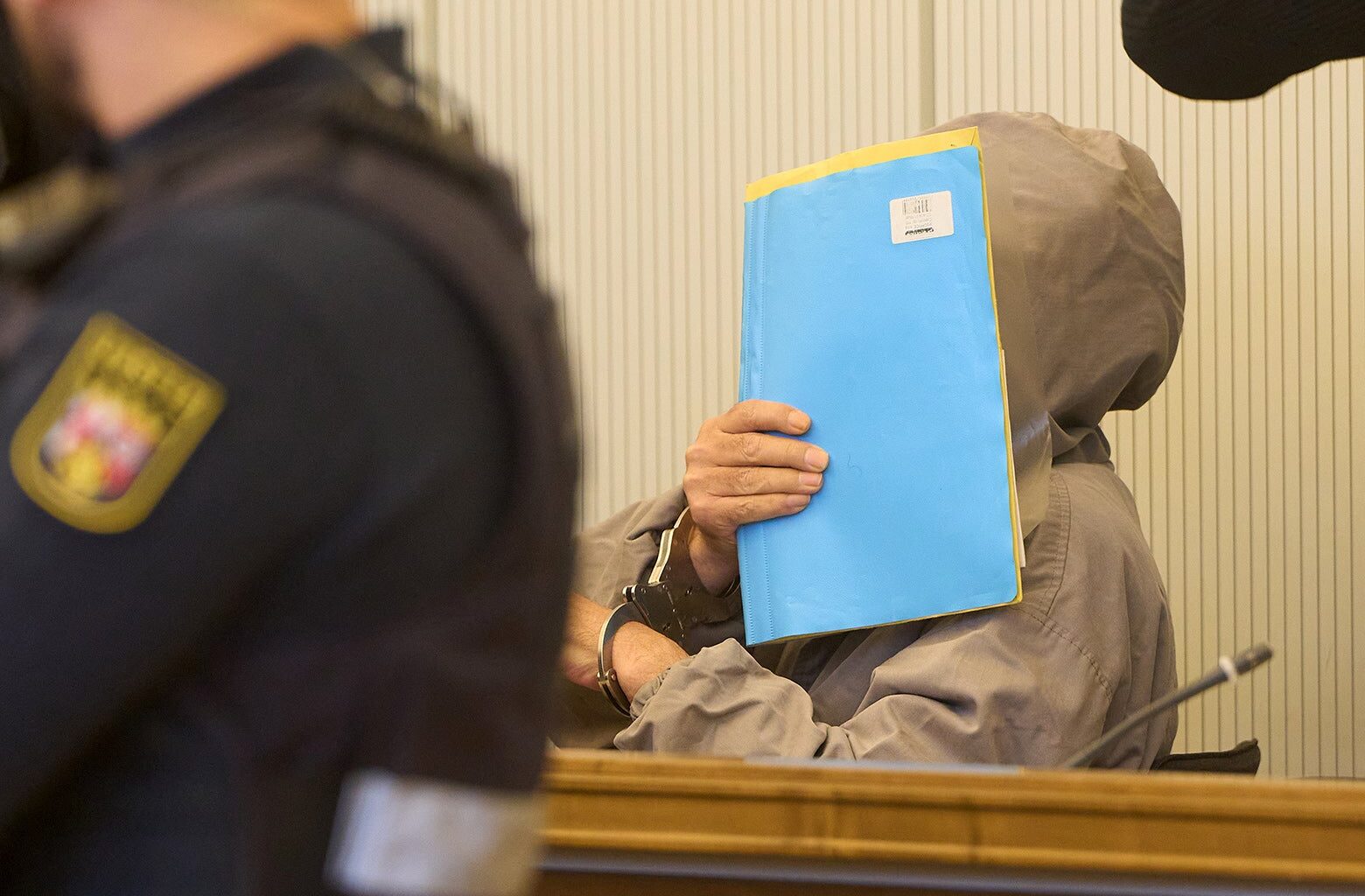
On a quiet Wednesday morning in Koblenz, Germany, a courtroom opened its doors to a proceeding unlike any that has come before it: the world’s first war crimes trial centered on the deliberate starvation of civilians.
For decades, the principle has existed only on paper. Since 1977, the Geneva Conventions have classified the deprivation of food as a prosecutable war crime—yet no court has ever tested that rule. Now, for the first time, judges, prosecutors, and witnesses will attempt to define what it means to starve a population on purpose.
The witnesses, as well as the victims, are Palestinians.
This trial, however, is not happening in the Hague. It is happening in the Higher Regional Court of Koblenz, Germany—one that has become a global hub for accountability in the Syrian conflict.
The International Criminal Court revived worldwide attention on the issue in 2024, when prosecutors issued arrest warrants for Israel’s prime minister and former defense minister, citing “reasonable grounds to believe” they bore responsibility for using starvation as a method of warfare in Gaza. That case has not yet reached trial.
In Koblenz, prosecutors have charged five men linked to the Assad regime—four members of a pro-government militia and one Syrian intelligence officer. Four face counts of torture and murder. One faces an additional charge, the unprecedented allegation of having ordered starvation as a weapon.
A conviction would do more than punish individuals. It would define the crime itself. To understand the stakes, the court will revisit one of the most harrowing chapters of the Syrian civil war: the siege of Yarmouk.
Once a thriving Palestinian district just five miles from central Damascus, Yarmouk became, by 2013, the most heavily besieged area in the country. What began as a cordon tightened into a noose. Medicine was blocked. Food convoys were turned back. Electricity, water, and basic medical supplies vanished. Civilians survived on grass, leaves, and animal feed.

Deborah Amos
The Leader Behind the “Biggest Plot Twist in History” Steps on the World Stage
Read More
Aid workers still recount those days with visceral clarity.
“I will tell you the story of one cow,” says Kenon al-Qudsi, recalling a 10-day effort to smuggle just 55 kilograms of meat into the district through makeshift tunnels—tunnels soon sealed off by the regime. Doctors, including pediatrician and public-health advocate Annie Sparrow, remember hospitals without blood bags, antibiotics, or power. “Without blood bags, you can’t donate or receive blood,” she explains. “Treatable injuries became death sentences.”
Aerial bombardments continued even as civilians starved.
The world briefly saw what Yarmouk had become in 2014, when a single humanitarian convoy was permitted into the ruins. As it arrived, thousands of skeletal residents emerged in silence—a mass of hollowed faces amid smashed concrete. The United Nations Relief and Works Agency launched a global campaign, projecting the image onto screens in New York’s Times Square and Tokyo’s Shibuya Crossing. It was a plea for help—but the siege dragged on for four more years.
Yarmouk finally fell in 2018 after a monthlong assault against armed rebels, including Islamist fighters of ISIS, that eventually displaced every remaining resident.
“We named it, at the time, a concentration camp,” says Qudsi.
The strategy used against Yarmouk was not unique. Similar sieges unfolded across Syria—in Duma, Zabadani, and beyond. “The Syrian regime weaponized hunger to crush rebellion,” says Anwar al-Bunni, the Berlin-based Syrian human rights lawyer who helped collect testimony for the German case. Nor is the tactic confined to Syria. From Gaza to Sudan, Yemen to Ethiopia, and across parts of Ukraine, starvation has returned as a deliberate tool of war. Modern battlefields are increasingly urban; sieges increasingly prolonged; hunger increasingly systematic.
In the 19th century, military doctrine openly sanctioned starvation. The U.S. Army’s Lieber Code declared it “lawful to starve the hostile belligerent.” Major powers relied on blockades and deprivation in both world wars. But after 1977, international law drew a clear line: Civilians cannot be starved—ever.
The rule existed. What it lacked was enforcement.
Trump’s Scheme to Gift the GOP Extra House Seats Just Blew Up in His Face
Republicans Are Suing to Kill California’s Pro-Democratic Gerrymander. They Have a Huge Problem.
This Content is Available for Slate Plus members only
I Went to See the Future of the Democratic Party. I Found Something Far More Entertaining.
There’s a Surprise Controversial Character in the New Epstein Emails. I Talked to Him.
The Koblenz prosecutors face a steep climb. To secure a conviction, they must prove intent—not only that starvation occurred, but that it was meant to happen to civilians, not just fighters.
That line, scholars warn, is inherently fraught. Alex de Waal, author of Mass Starvation: The History and Future of Famine, argues that intent is often indirect: “There can be an indirect intent, where it’s evident that starvation will occur in the normal course of events—and those responsible know it, yet choose not to prevent it.”
Germany’s verdict will resonate far beyond Koblenz. It will set legal guidance for prosecutors in the Hague. It will help define what “starvation as a method of warfare” means in practice. And it will test whether one of humanity’s oldest tactics—simple, devastating, and brutally effective—can finally be brought within the reach of modern justice.
In Germany five men will stand trial. Millions of victims, past and future, are watching. Whether the law can catch up to starvation as a weapon is the question this courtroom will now attempt to answer.

Sign up for Slate’s evening newsletter.