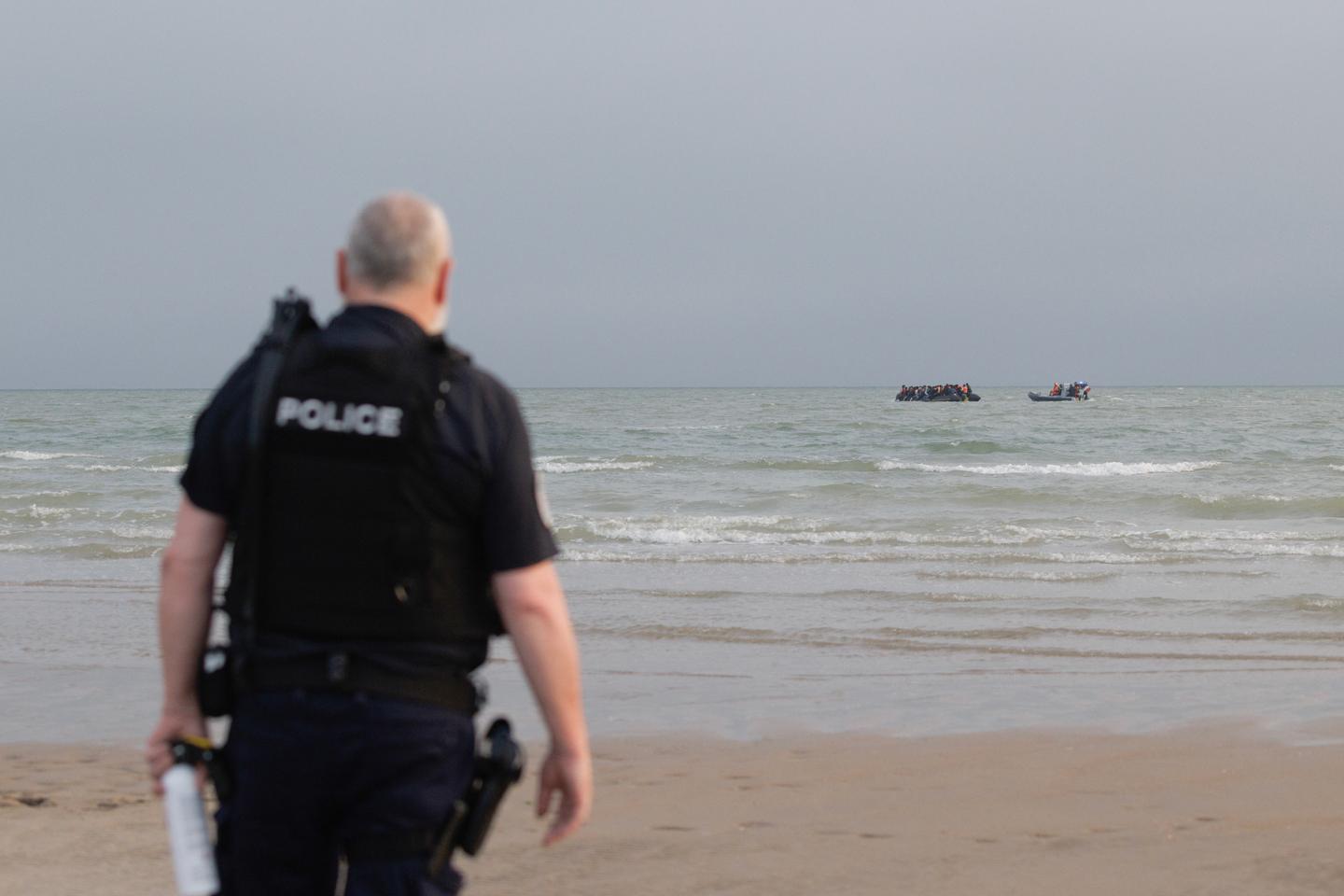
 A police officer watches as a boat carrying migrants is approached by a French maritime gendarmerie vessel on the beach at Gravelines, France, July 2, 2025. DAN KITWOOD / GETTY IMAGES VIA AFP
They are known as “captains,” “pilots” or “helmsmen.” Often, however, they have never steered a boat before in their lives. As a result, it is not always clear how they ended up at the controls of an inflatable dinghy, embarking on the perilous journey across the English Channel. Many originate from Sudan or the Horn of Africa, placing them at the lower end of the social hierarchy among migrants along the northern coast hoping to reach England. Their precarious situation makes them more willing to take risks to secure a spot on a boat, even if it means agreeing to pilot it.
Several of them have been detained and prosecuted for these actions. They are charged with aiding illegal residency and, in cases where journeys ended in disaster, with injuries or involuntary manslaughter. The situation raises legal questions.
On Tuesday, November 18, the tribunal judiciaire in Paris acquitted a 31-year-old Sudanese man, Ibrahim A., who was charged for piloting a dinghy on the night of August 11, 2023. The boat tore apart at sea, resulting in the deaths of seven Afghans. The prosecution had sought a two-year suspended prison sentence: “As the pilot” of the boat, the Sudanese man should be “convicted of involuntary manslaughter.” At the same time, the prosecutor acknowledged the “victim status” of this Masalit (a persecuted community from Darfur) in light of his exile. The prosecutor argued that the law “only grants immunity when the act in question was not compensated in any way,” asserting that the young man paid a reduced fare of €400 for his crossing in exchange for piloting.
You have 78.04% of this article left to read. The rest is for subscribers only.